Alcohols, Phenols and Ethers
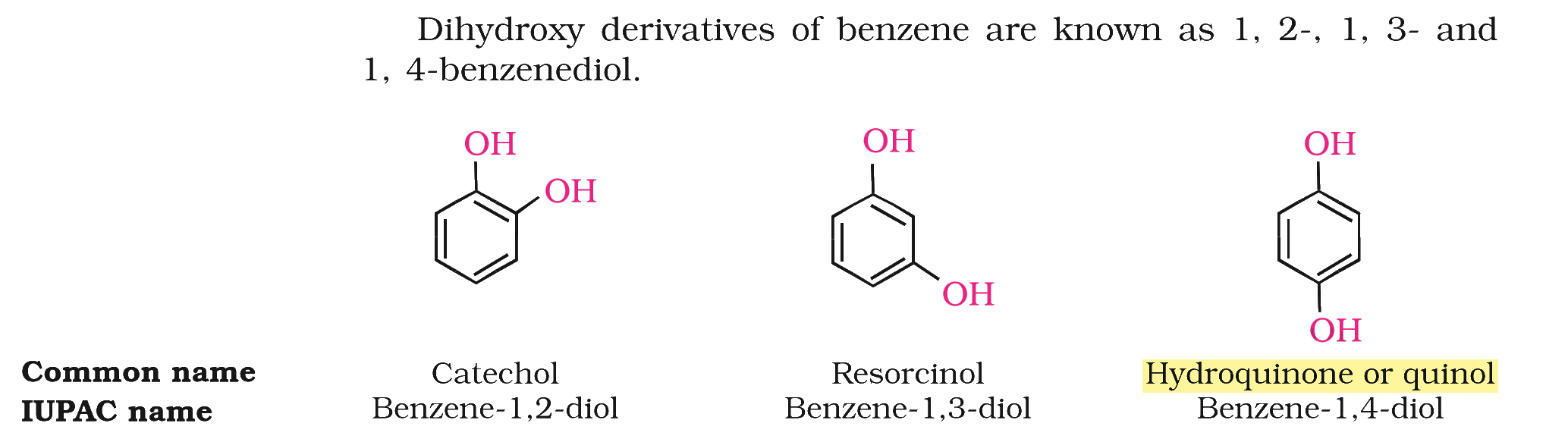
Alcohols and phenols are formed when a hydrogen atom in a hydrocarbon, aliphatic and aromatic respectively, is replaced by –OH group. These classes of compounds find wide applications in industry as well as in day-to-day life. For instance, have you ever noticed that ordinary spirit used for polishing wooden furniture is chiefly a compound containing hydroxyl group, ethanol. The sugar we eat, the cotton used for fabrics, the paper we use for writing, are all made up of compounds containing –OH groups. The common name of an alcohol is derived from the common name of the alkyl group and adding the word alcohol to it. For example, CH3OH is methyl alcohol. The simplest hydroxy derivative of benzene is phenol. It is its common name and also an accepted IUPAC name. As structure of phenol involves a benzene ring, in its substituted compounds the terms ortho (1,2-disubstituted), meta (1,3-disubstituted) and para (1,4-disubstituted) are often used in the common names.
In ethers, the four electron pairs, i.e., the two bond pairs and two lone pairs of electrons on oxygen are arranged approximately in a tetrahedral arrangement. The bond angle is slightly greater than the tetrahedral angle due to the repulsive interaction between the two bulky (–R) groups.
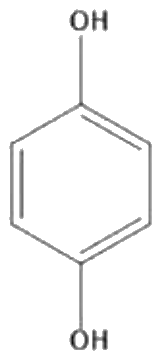
What is the common name for the following structure given below?
Answer & explanation
Correct answer: option 3
The correct answer is Option (3) → Hydroquinone
Many substituted phenols are known by common names. The three dihydroxybenzenes differ only in the positions of the two –OH groups, and the methylphenols are called cresols.
In the given structure the two –OH groups are para to each other (positions 1 and 4), so it is benzene-1,4-diol, commonly called hydroquinone (or quinol).
NCERT (2026-27 edition):
Nomenclature – …