When a government spends more than it collects by way of revenue, it incurs a budget deficit. There are various measures that capture government deficit and they have their own implications for the economy. Figure out the statements which describe the nature of fiscal deficit in the economy.
A. Large portion of revenue deficit in fiscal deficit indicates larger investment in the economy.
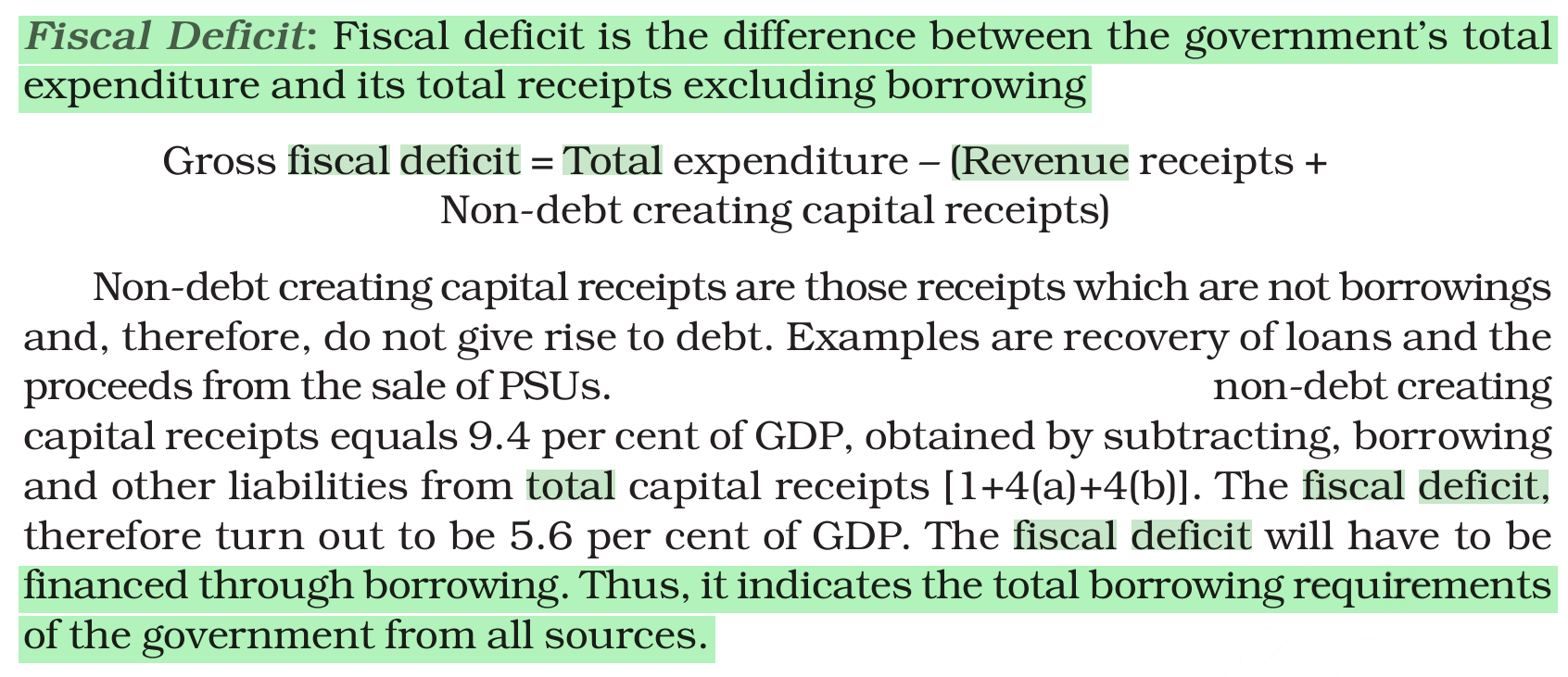
B. It indicates the total borrowing requirements of the government from all sources.
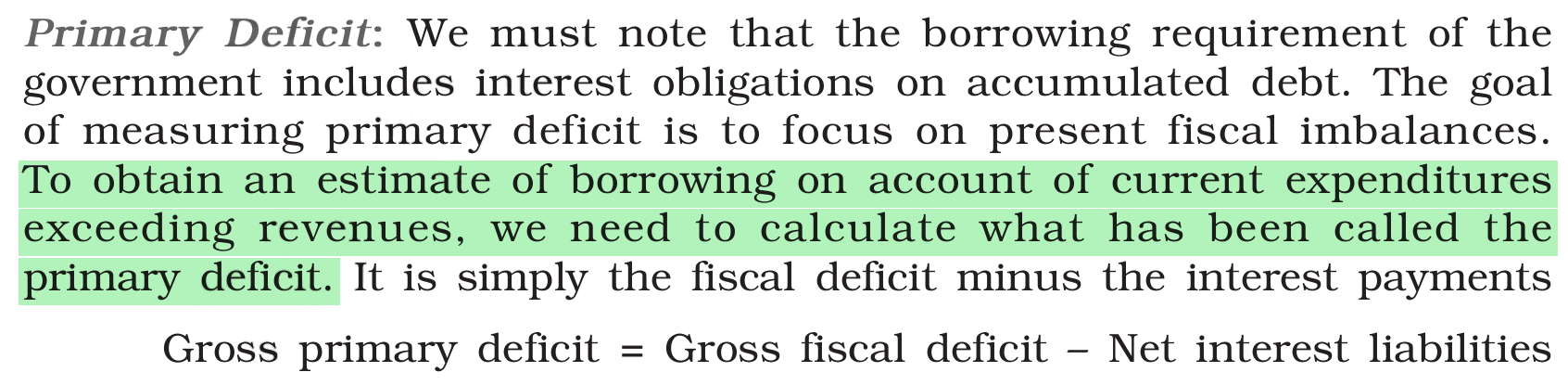
C. It is calculated to obtain an estimate of borrowing on account of current expenditures exceeding revenues.
D. It is the difference between the government’s total expenditure and its total receipts excluding borrowing.
Choose the correct answer from the options given below:
Answer & explanation
Correct answer: option 4
The correct answer is Option (4) → B and D only
When the government spends more than it receives, the gap is measured in three ways, each telling something different:
Revenue deficit = revenue expenditure − revenue receipts. Revenue expenditure (salaries, subsidies, interest) creates no assets, so borrowing to cover this gap pays for consumption, not investment.
Fiscal deficit = total expenditure − total receipts excluding borrowing. All of this gap has to be borrowed, so it shows the government’s total borrowing requirement from all sources.
Primary deficit = fiscal deficit − interest payments. Interest is the cost of past borrowing, so taking it out gives an estimate of the borrowing on account of current expenditures exceeding revenues.
Taking the statements one by one:
A. Large portion of revenue deficit in fiscal deficit indicates larger investment in the economy. Incorrect. Revenue deficit is part of fiscal deficit. When it makes up a large share, much of the borrowing is being used to meet consumption expenditure rather than investment.
B. It indicates the total borrowing requirements of the government from all sources. Correct. The fiscal deficit is financed by borrowing at home, from the RBI and from abroad, so it measures the government’s total borrowing requirement.
C. It is calculated to obtain an estimate of borrowing on account of current expenditures exceeding revenues. Incorrect. This is the purpose of the primary deficit. The fiscal deficit itself still includes the borrowing needed to pay interest on past debt.
D. It is the difference between the government’s total expenditure and its total receipts excluding borrowing. Correct. This is the definition: gross fiscal deficit = total expenditure − (revenue receipts + non-debt creating capital receipts).
NCERT: Introductory Macroeconomics — Chapter 5: Government Budget and the Economy (2025-26)
|