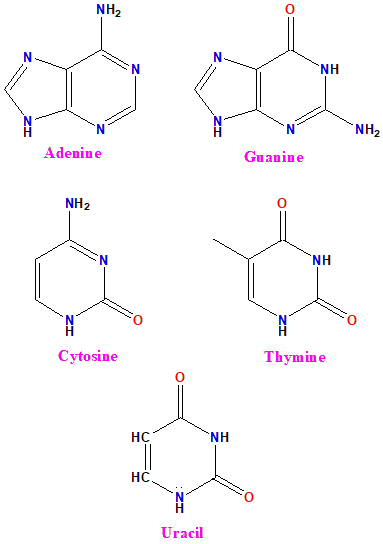
Identify the following compound.
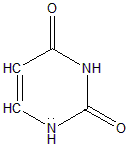
Answer & explanation
Correct answer: option 1
The correct answer is option 1. Uracil.
Uracil is one of the four nucleobases found in RNA (ribonucleic acid), which is a vital molecule involved in the transfer of genetic information. It is a heterocyclic aromatic compound with the chemical formula \(C_4H_4N_2O_2\). Here are some key points about uracil:
1. Chemical Structure: Uracil is a pyrimidine base, belonging to the same family as thymine and cytosine. Its structure consists of a pyrimidine ring composed of carbon and nitrogen atoms.
2. Role in RNA: Uracil pairs with adenine through hydrogen bonding in RNA, forming the AU (adenine-uracil) base pair. This is in contrast to DNA, where thymine replaces uracil and pairs with adenine (forming the AT base pair). The presence of uracil in RNA allows the molecule to convey genetic information and participate in protein synthesis.
3. Absence in DNA: Unlike adenine, guanine, cytosine, and thymine, uracil is not present in the structure of DNA. Thymine replaces uracil in DNA, forming the base pair with adenine. This difference in nucleobases distinguishes RNA from DNA.
4. RNA Functions: Uracil-containing RNA molecules play crucial roles in various cellular processes, such as transcription (the synthesis of RNA from DNA templates) and translation (the process of synthesizing proteins based on RNA instructions).
5. Uracil in Other Molecules: Besides its role in RNA, uracil is found in other biologically significant molecules. For instance, it is a component of cofactors like uridine diphosphate (UDP) and uridine triphosphate (UTP), which are involved in various metabolic pathways.
6. Degradation and Salvage Pathways: Uracil is subject to degradation pathways within cells. Additionally, cells have salvage pathways that allow them to recycle uracil for the synthesis of new RNA molecules.
In summary, uracil is a fundamental component of RNA, contributing to the genetic code and essential cellular processes. Its unique role in RNA structure and function highlights the diversity of nucleobases and their importance in the molecular biology of living organisms.
The structure of the nucleobases is as follows: