
Read the given passage and answer the following questions:
The oviducts (fallopian tubes), uterus and vagina constitute the female accessory ducts. Each fallopian tube is about 10-12 cm long and extends from the periphery of each ovary to the uterus, the part closer to the ovary is the funnel-shaped infundibulum. The edges of the infundibulum possess finger-like projections called fimbriae, which help in collection of the ovum after ovulation. The infundibulum leads to a wider part of the oviduct called ampulla. The last part of the oviduct, isthmus has a narrow lumen and it joins the uterus. The uterus is single and it is also called womb. The shape of the uterus is like an inverted pear. It is supported by ligaments attached to the pelvic wall. The uterus opens into vagina through a narrow cervix. The cavity of the cervix is called cervical canal which alongwith vagina forms the birth canal. The wall of the uterus has three layers of tissue. The external thin membranous perimetrium, middle thick layer of smooth muscle, myometrium and inner glandular layer called endometrium that lines the uterine cavity. The endometrium undergoes cyclical changes during menstrual cycle while the myometrium exhibits strong contraction during delivery of the baby.
In the mammary gland, the alveoli whose cells secrete milk open into the:
Answer & explanation
Correct answer: option 3
The correct answer is Option (3) → Mammary tubules
Each breast has 15-20 mammary lobes, and each lobe has clusters of cells called alveoli. The cells of the alveoli secrete milk, which is stored in their cavities. From there the milk passes through a chain of channels that get wider at each step: alveoli → mammary tubules → mammary duct → mammary ampulla → lactiferous duct.
Option (1) Mammary duct — Incorrect. A mammary duct forms when the tubules of one lobe join. It receives milk from the tubules, not straight from the alveoli.
Option (2) Mammary ampulla — Incorrect. The mammary ampulla is a wider channel formed when several mammary ducts join. It comes later in the pathway.
Option (3) Mammary tubules — Correct. The alveoli open directly into the mammary tubules. This is the first channel the milk enters after it leaves the alveoli.
Option (4) Lactiferous duct — Incorrect. The lactiferous duct is the last channel. It is connected to the mammary ampulla, and the milk is sucked out through it.
NCERT Extract:
The Female Reproductive System – “… The glandular tissue of each breast is divided into 15-20 mammary lobes containing clusters of cells called alveoli (Figure 2.4). The cells of alveoli secrete milk, which is stored in the cavities (lumens) of alveoli. The alveoli open into mammary tubules. The tubules of each lobe join to form a mammary duct. Several mammary ducts join to form a wider mammary ampulla which is connected to lactiferous duct through which milk is sucked out.”
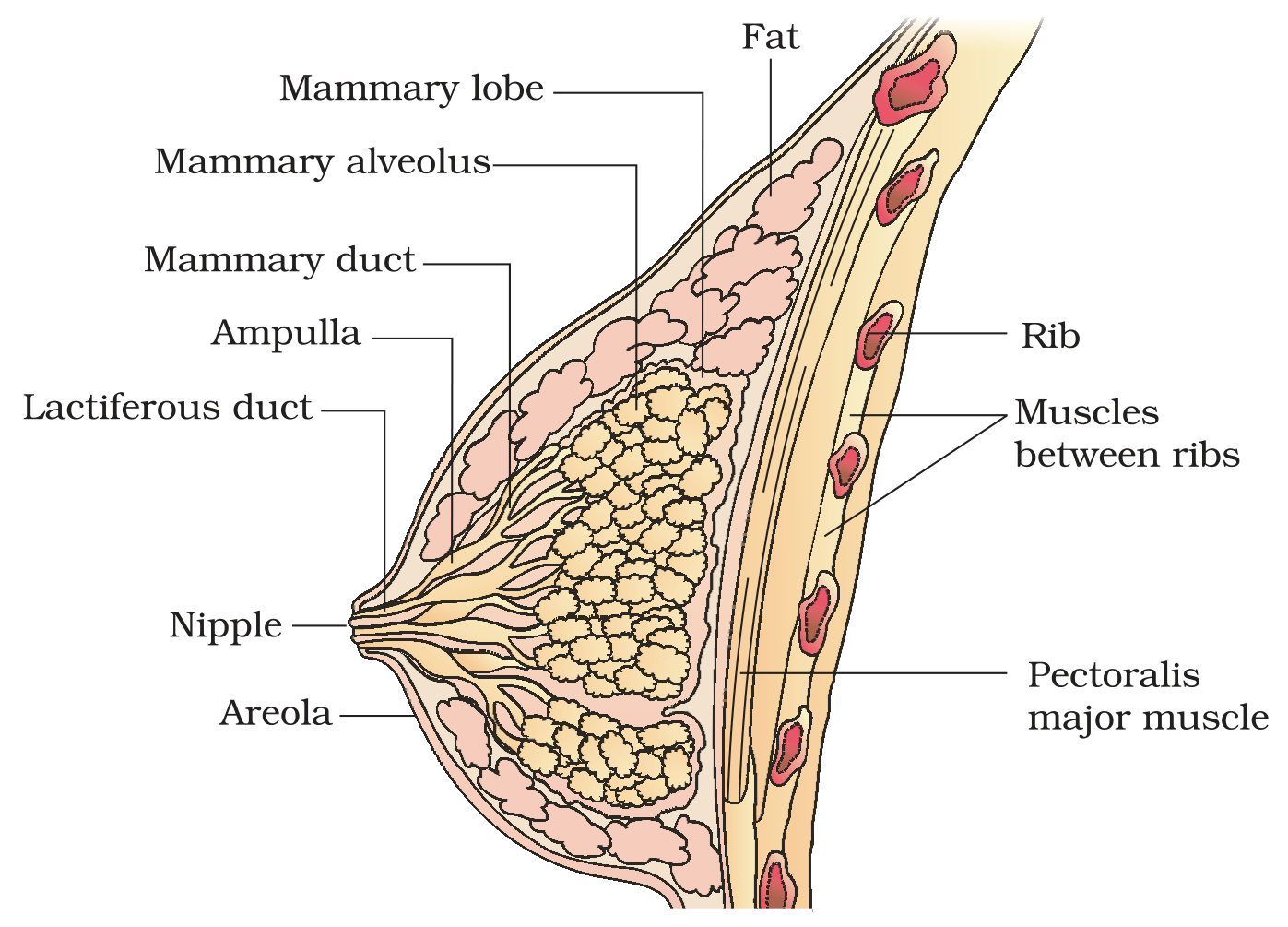
Figure 2.4 A diagrammatic sectional view of Mammary gland