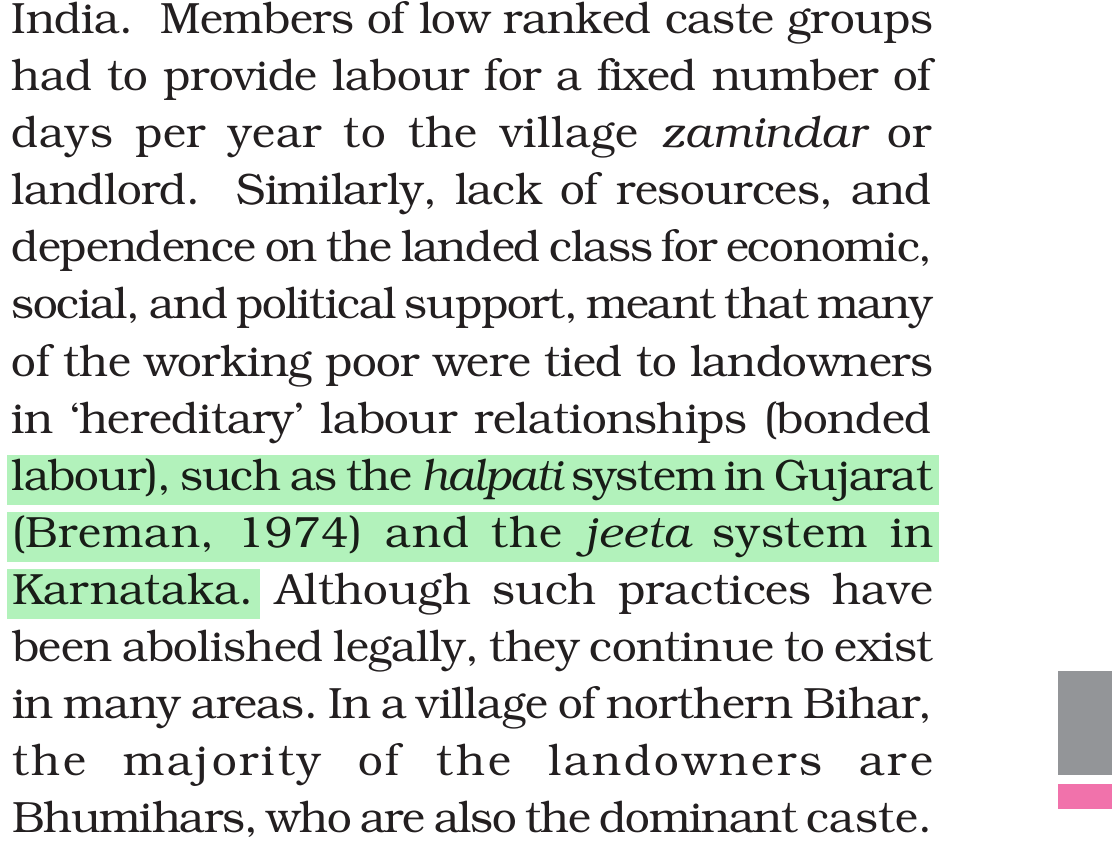
The 'Jeeta' system of bonded labour was prevalent in:
Answer & explanation
Correct answer: option 3
The correct answer is Option (3) → Karnataka
Note: The examples of hereditary bonded labour, the halpati system in Gujarat and the jeeta system in Karnataka, in the section ‘Agrarian Structure: Caste and Class in Rural India’ of the chapter ‘Change and Development in Rural Society’, were there in the pre-rationalised NCERT, which NTA followed in 2023. These examples have been deleted from the NCERT book (2025-26), though the chapter and its lines on hereditary labour relationships are still there.
NCERT (2025-26): “4.1 Agrarian Structure: Caste and Class in Rural India … In most regions of the country, a ‘proprietary caste’ group owns most of the resources and can command labour to work for them. Until recently, practices such as begar or free labour were prevalent in many parts of northern India. Members of low ranked caste groups had to provide labour for a fixed number of days per year to the village zamindar or landlord. Many of the working poor were tied to landowners in ‘hereditary’ labour relationships. Although such practices have been abolished legally, they continue to exist in many areas.”
Section 4.1, the halpati and jeeta systems (Pre-rationalised NCERT) |