
What is the main factor that restricts the number of trophic levels in the grazing food chain?
Answer & explanation
Correct answer: option 2
The correct answer is Option (2) → Transfer of energy following the 10% law
Energy flows one way in a food chain: from the sun to producers and then to herbivores and carnivores. At each step most of the energy is used or lost as heat. After a few steps too little energy is left to support another level.
Option (1) Availability of primary producers — Incorrect. Producers form the base and capture the energy that enters the chain. But even with plenty of producers, the energy still shrinks by about 90 per cent at each step, and that is what limits the number of levels.
Option (2) Transfer of energy following the 10% law — Correct. Under the 10 per cent law, only about one-tenth of the energy reaches each higher level, so the chain runs out of energy after a few levels.
Option (3) Predation pressure from higher trophic levels — Incorrect. Predators keep prey populations under control, but predation does not decide how many levels the chain can have. The limit comes from the energy available at the top.
Option (4) Environmental conditions — Incorrect. Climate, light and nutrients affect how much the producers make (productivity). They do not explain why every food chain stops after a few levels.
NCERT Extract:
Energy Flow – “… The number of trophic levels in the grazing food chain is restricted as the transfer of energy follows 10 per cent law – only 10 per cent of the energy is transferred to each trophic level from the lower trophic level. In nature, it is possible to have so many levels – producer, herbivore, primary carnivore, secondary carnivore in the grazing food chain (Figure 12.3).”
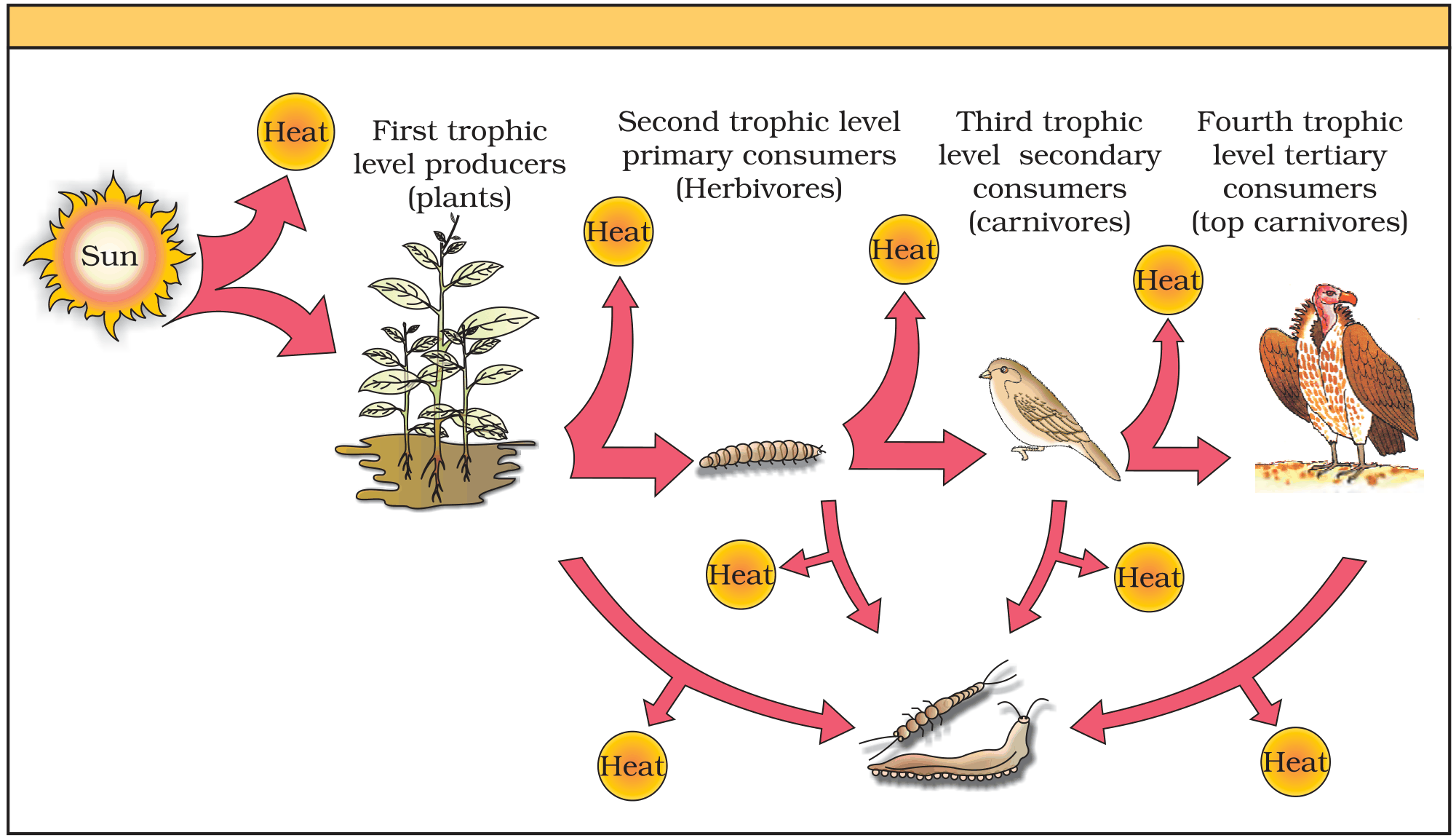
Figure 12.3 Energy flow through different trophic levels