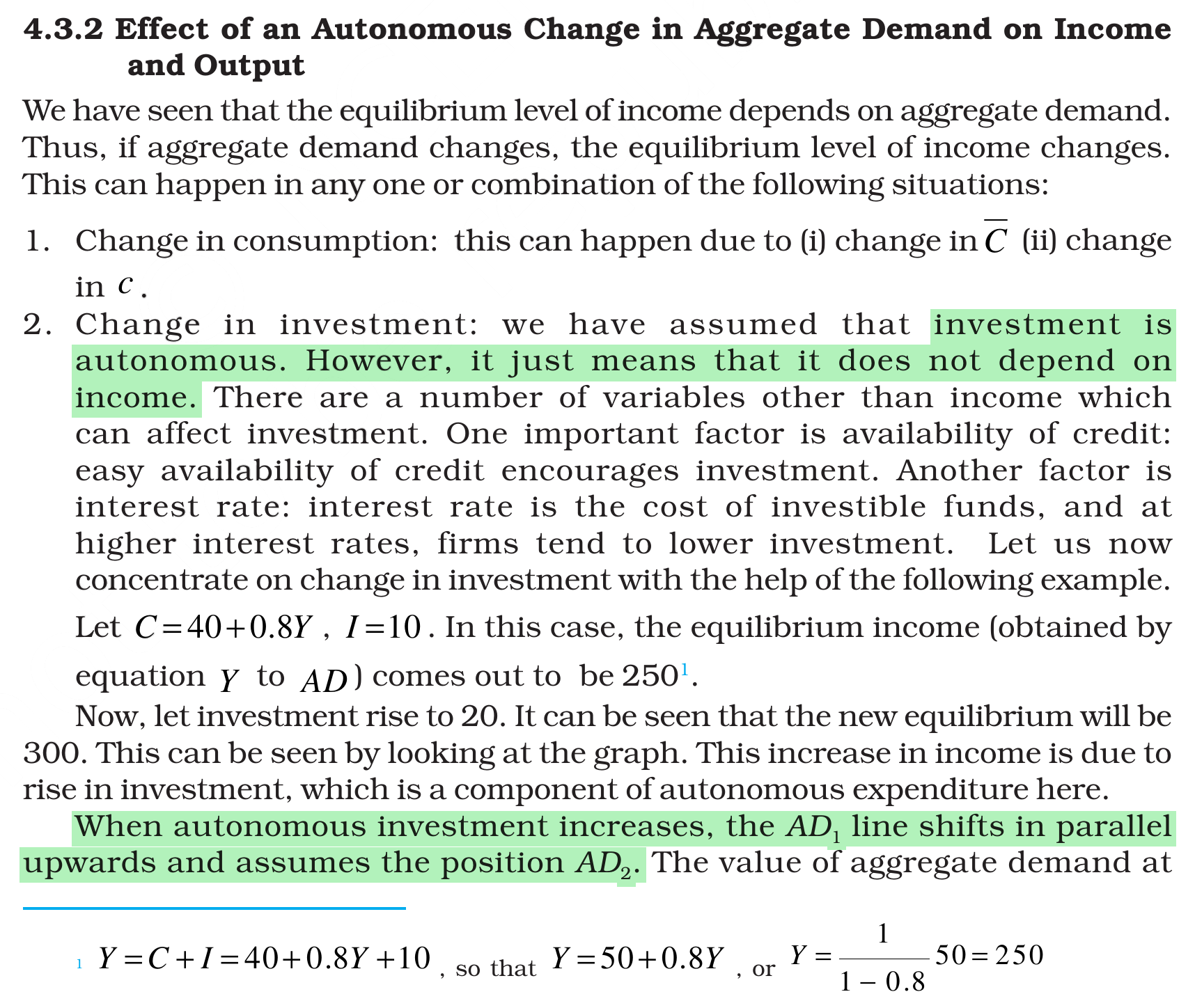
When autonomous investment increases, the Aggregate Demand curve will ____________.
Answer & explanation
Correct answer: option 2
The correct answer is Option (2) → Shift parallel upwards
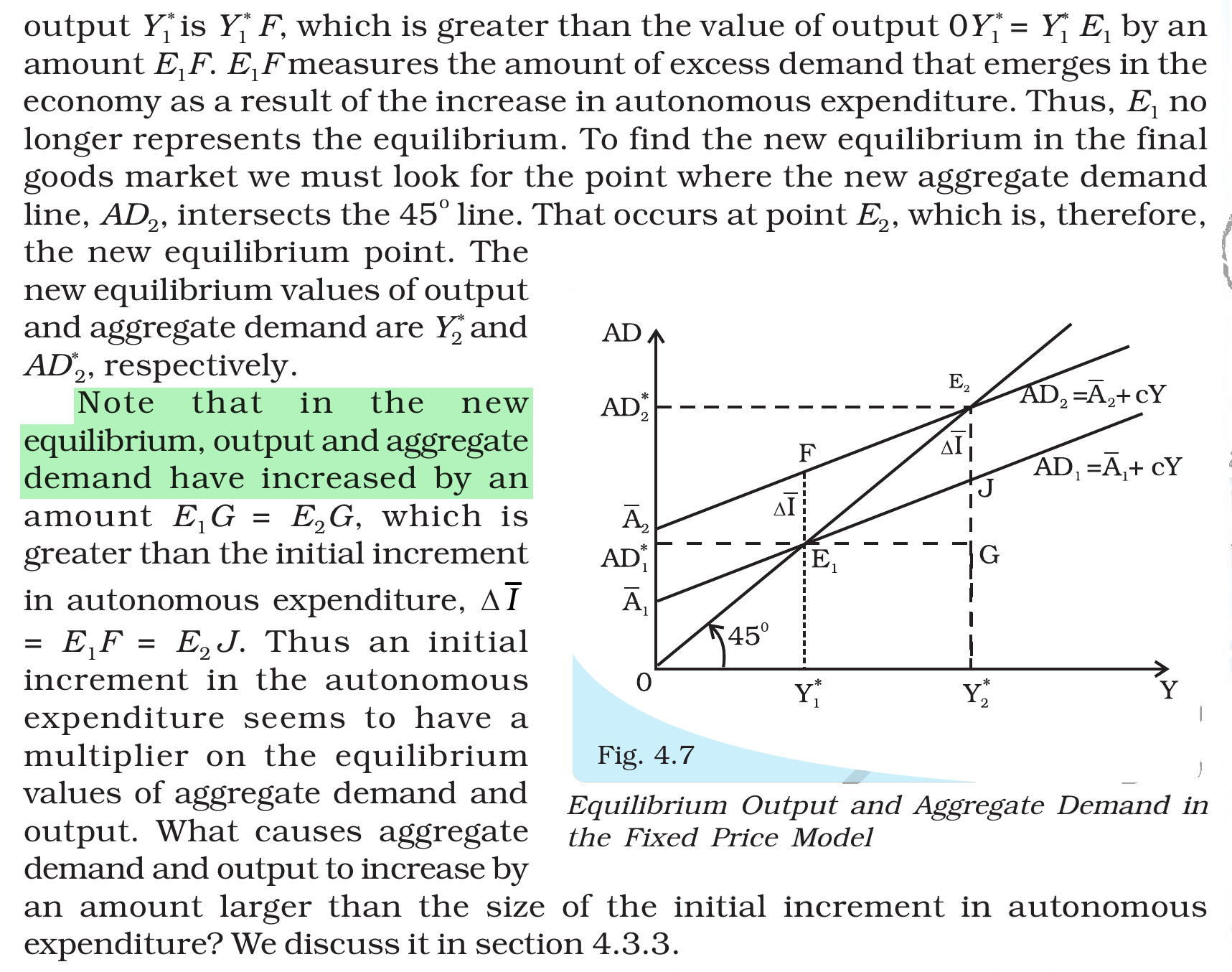
Add up what households plan to spend on consumption and what firms plan to spend on investment, and you get aggregate demand. Drawn against income it is a straight line, AD = autonomous expenditure + cY. Its height at zero income, the intercept, is the autonomous expenditure, the part of spending that does not depend on income (autonomous consumption plus autonomous investment); its slope is c, the marginal propensity to consume.
Autonomous investment sits in that intercept, so a rise in it adds the same amount to spending at every level of income. The intercept goes up while the slope c stays the same, and the whole line moves up without turning: it shifts parallel upwards.
Why the other options are incorrect
Option (1) Shift parallel downwards — Incorrect. A downward shift would follow a fall in autonomous investment.
Option (3) No change — Incorrect. Autonomous investment is part of the intercept, so a change in it must move the curve.
Option (4) Swing upwards on y-axis — Incorrect. A swing, a change in slope, comes from a change in the marginal propensity to consume.
Note: A same/similar question was asked in CUET (UG) in the papers below.
| 2026 | 2025 | 2024 | 2023 | 2022 |
| 11-05 S2 | 03-06 S2* | – | – | – |
* A similar question.
NCERT: Introductory Macroeconomics — Chapter 4: Determination of Income and Employment (2025-26)
|