
Read the following statements:
A. Out of the four megaspores produced during meiosis, all four megaspores develop into the embryo sac.
B. The surviving megaspore undergoes three rounds of mitotic division without cytokinesis to form eight haploid nuclei.
C. Three antipodal cells are located at the micropyle end of the embryo sac.
D. The central cell of the embryo sac contains two polar nuclei.
E. The egg cell and synergids are located near the chalazal end of the embryo sac.
Choose the correct statements.
Answer & explanation
Correct answer: option 2
The correct answer is Option (2) → B and D
A. Out of the four megaspores produced during meiosis, all four megaspores develop into the embryo sac. — False. In most flowering plants only one megaspore is functional and the other three degenerate. An embryo sac formed from a single megaspore is called monosporic development.
B. The surviving megaspore undergoes three rounds of mitotic division without cytokinesis to form eight haploid nuclei. — True. The nucleus of the functional megaspore divides mitotically three times (2, 4, then 8 nuclei). These divisions are free nuclear: no cell wall forms right after them.
C. Three antipodal cells are located at the micropyle end of the embryo sac. — False. The three antipodals lie at the chalazal end, opposite the micropyle.
D. The central cell of the embryo sac contains two polar nuclei. — True. Two of the eight nuclei, the polar nuclei, stay in the large central cell, below the egg apparatus.
E. The egg cell and synergids are located near the chalazal end of the embryo sac. — False. The egg cell and the two synergids form the egg apparatus at the micropylar end, where the pollen tube enters.
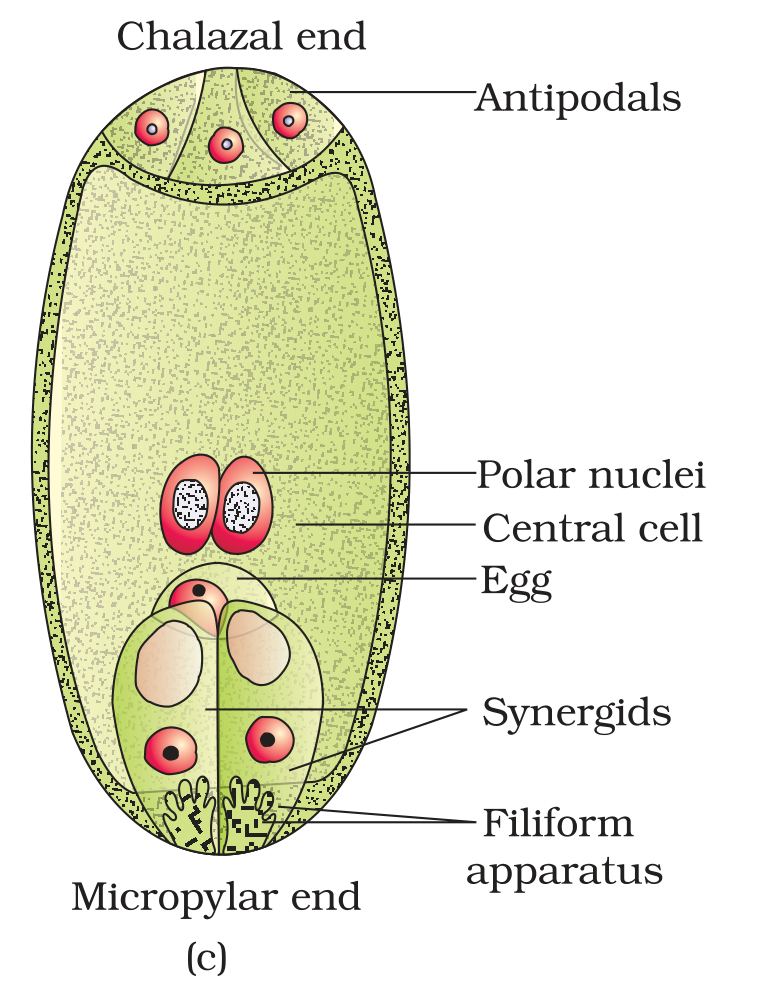
Figure 1.8 (c) A diagrammatic representation of the mature embryo sac
NCERT Extract:
The Pistil, Megasporangium (Ovule) and Embryo Sac – “… Female gametophyte : In a majority of flowering plants, one of the megaspores is functional while the other three degenerate. Only the functional megaspore develops into the female gametophyte (embryo sac).”
The Pistil, Megasporangium (Ovule) and Embryo Sac – “… The nucleus of the functional megaspore divides mitotically to form two nuclei which move to the opposite poles, forming the 2-nucleate embryo sac. Two more sequential mitotic nuclear divisions result in the formation of the 4-nucleate and later the 8-nucleate stages of the embryo sac. It is of interest to note that these mitotic divisions are strictly free nuclear, that is, nuclear divisions are not followed immediately by cell wall formation. … Six of the eight nuclei are surrounded by cell walls and organised into cells; the remaining two nuclei, called polar nuclei are situated below the egg apparatus in the large central cell. There is a characteristic distribution of the cells within the embryo sac. Three cells are grouped together at the micropylar end and constitute the egg apparatus. The egg apparatus, in turn, consists of two synergids and one egg cell. … Three cells are at the chalazal end and are called the antipodals.”