CUETMOCK
  • Pricing
  • Mentors
Log inStart freeStart free mocks→

First test, then trust

Try a free CUET mock test.

Join 5,00,000+ students who rehearsed exam day on the exact NTA screen before sitting CUET. On the web and on Android.

Start free mocks →Get the Android app
CUETMOCK

India's #1 CUET Mock Test Platform. Original NCERT-based questions on the exact NTA exam screen — trusted by 5,00,000+ students since CUET 2022.

Get it onGoogle PlayScan to download the CUETMOCK app

Mock tests

  • CUET mock test series
  • Browse all papers
  • Commerce mocks
  • Humanities (Arts) mocks
  • Science mocks
  • Languages & GAT mocks
  • Free practice questions
  • Pricing

Resources

  • CUET exam guide
  • CUET syllabus
  • Universities accepting CUET
  • Expert blogs
  • News & notifications
  • Webinars & counselling
  • CUET score calculator
  • How we estimate your rank
  • FAQs

Company

  • About us
  • Our leadership & team
  • Our toppers
  • Mentors
  • For schools
  • Contact us
  • Terms
  • Privacy
  • Refund policy

Talk to us

+91 7696 6630 56info@cuetmock.comWhatsApp us

Our other platforms

  • JEE Mock — For IIT-JEE aspirants
  • NEET Mock — For NEET aspirants

Newsletter

Exam updates, study material and offers — no spam.

© 2026 NYC Ventures Pvt. Ltd.

701-702, Royal Business Park, Zirakpur, Punjab - 140603

  • Terms of use
  • Privacy policy
  • Refund policy
  • Contact us

iCUETMOCK is an independent preparation platform, not affiliated with the National Testing Agency (NTA). Always check exam details on the official NTA website.

  • Home
  • Mock tests
  • CUET guide
  • Pricing
  • Log in
Home/Practice questions/History
HistoryModern India: Colonialism and the Countryside

Who was the Raja of Burdwan when the Permanent Settlement was imposed?

Who was the Raja of Burdwan when the Permanent Settlement was imposed?

Answer & explanation+

Correct answer: option 2

The correct answer is Option (2) → Maharaja Tejchand

When the Permanent Settlement was imposed, Tejchand was the Raja of Burdwan.


NCERT: Themes in Indian History Part III — Chapter 9: Colonialism and the Countryside (2026-27)

NCERT extract

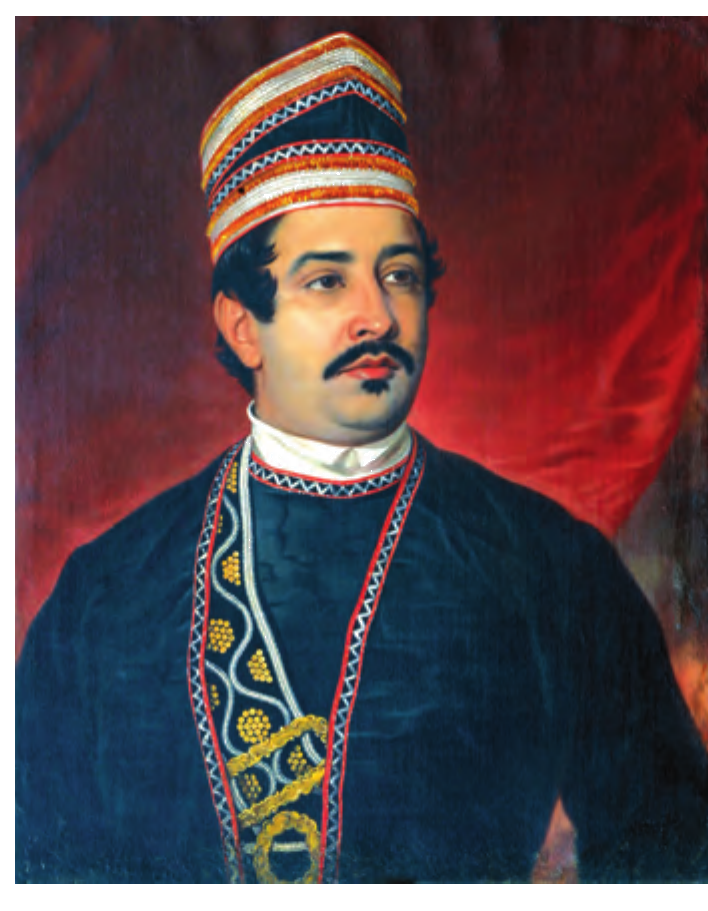
Fig. 9.6 Maharaja Mehtab Chand (1820-79) When the Permanent Settlement was imposed, Tejchand was the Raja of Burdwan. Subsequently under Mehtab Chand the estate prospered. Mehtab Chand helped the British during the Santhal rebellion and the 1857 revolt.

Advertisement

Practise more on Modern India: Colonialism and the Countryside

Chapter-wise mocks on the real NTA exam screen, with solutions and your rank. Your first mocks are free.

Start free mocks →

Advertisement

Next questions

  1. Which statement is incorrect regarding Sawai Ishwari Singh's patronage to art?Fine Arts · The Rajasthani Schools of Painting
  2. Bharmaur tribal area comprises Bharmaur and Holi tehsils of the Chamba district of Himachal Pradesh. It is a notified tribal area since 21…Geography · India-People and Economy: Planning and Sustainable development in Indian Context
  3. From the given options, select the correctly spelt word:English · Spelling Check
  4. If cos 50° + sin 50° = K, then what is the value of cos3 50° - sin3 50°?General Aptitude Test · Quantitative Reasoning
  5. Which of the following correctly states the meaning of the ‘green revolution’ in India?Economics · Indian Economic Development: Indian Economy:1950-1990
  6. The figure given below shows Miller's experiment. Identify the parts labelled A and B.Biology · Evolution
  7. Looking at a photo of a man, Sanjay said, "His mother is the wife of my father's son”. If he has no brothers and sisters then at whose phot…General Aptitude Test · Verbal Reasoning
  8. The area bounded by the curves y = cos x and y = sin x between the ordinates x = 0 and x =(3π)/2, isMaths. Section B1 · Application of Integrals
  9. Identify, which of the following combination of items are correct for components of Product Mix? A. Labelling, packaging B. Order processin…Business Studies · Marketing
  10. How does the gopi on the extreme left enact Krishna in the painting?Fine Arts · The Pahari Schools of Painting