Match the List I with List II.
|
List I |
List II |
|
A. Managers are not in the position to change plans |
I. Planning is a time consuming process |
|
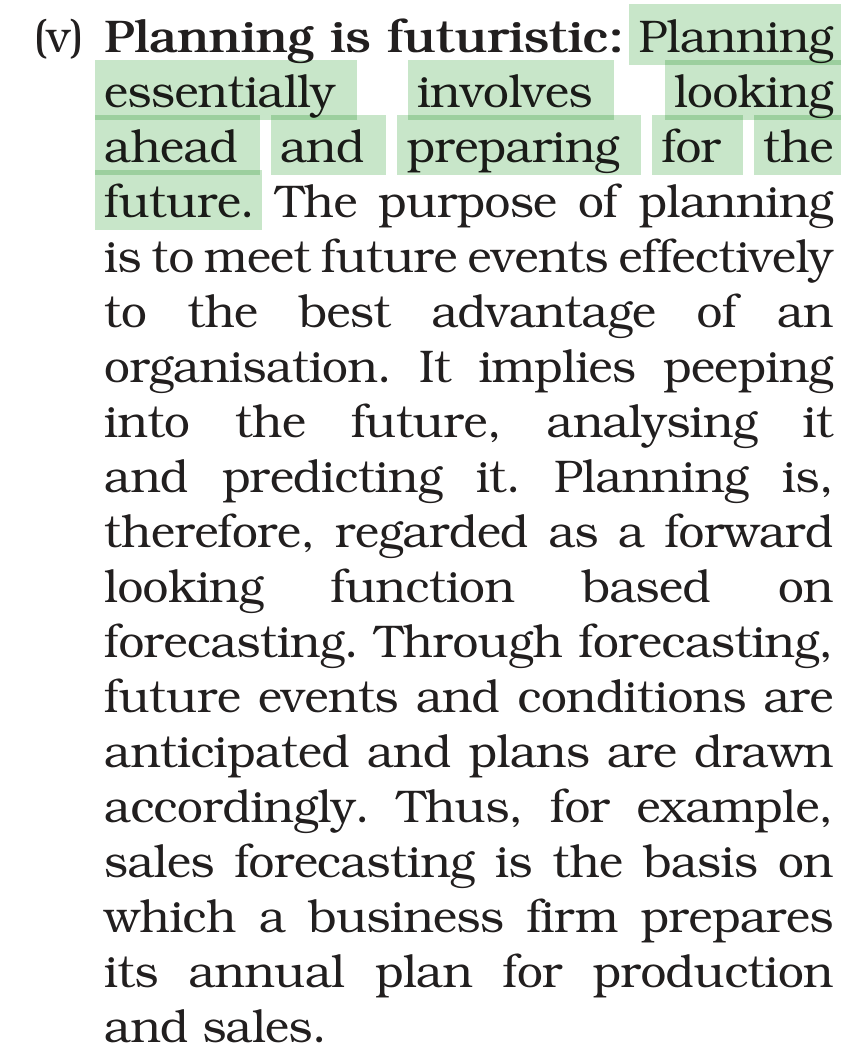
B. Planning essentially involves looking ahead |
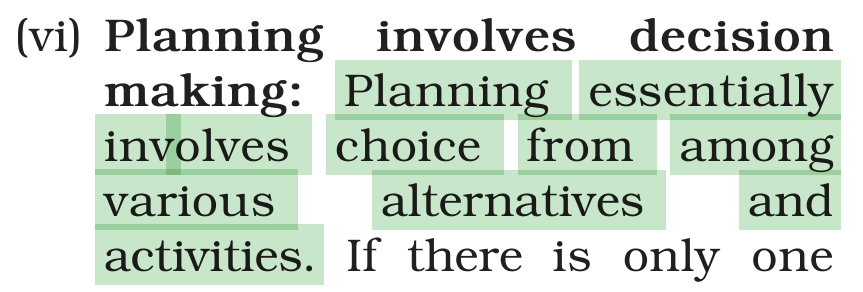
II. Planning involves decision making |
|
C. Planning involves choice from among various alternatives |
III. Planning is futuristic |
|
D. Sometimes plans are to be drawn overboards with time |
IV. Planning leads to rigidity |
Choose the correct answer from the options given below.
Answer & explanation
Correct answer: option 4
The correct answer is Option (4) → (A)-(IV), (B)-(III), (C)-(II), (D)-(I)
(A) Managers are not in the position to change plans – (IV) Planning leads to rigidity — A well-defined plan fixes the future course of action, so managers may not be able to change it.
(B) Planning essentially involves looking ahead – (III) Planning is futuristic — Planning means looking ahead and preparing for the future.
(C) Planning involves choice from among various alternatives – (II) Planning involves decision making — Choosing from alternatives is decision making.
(D) Sometimes plans are to be drawn overboards with time – (I) Planning is a time consuming process — Drawing plans can take so much time that little is left to carry them out.
NCERT (2026-27 Edition): “(i) Planning leads to rigidity: In an organisation, a well-defined plan is drawn up with specific goals to be achieved within a specific time frame. These plans then decide the future course of action and managers may not be in a position to change it. This kind of rigidity in plans may create difficulty. …” “(v) Planning is a time-consuming process: Sometimes plans to be drawn up take so much of time that there is not much time left for their implementation.”
|