Match List-I with List-II:
| List-I Year | List-II Excavations | ||
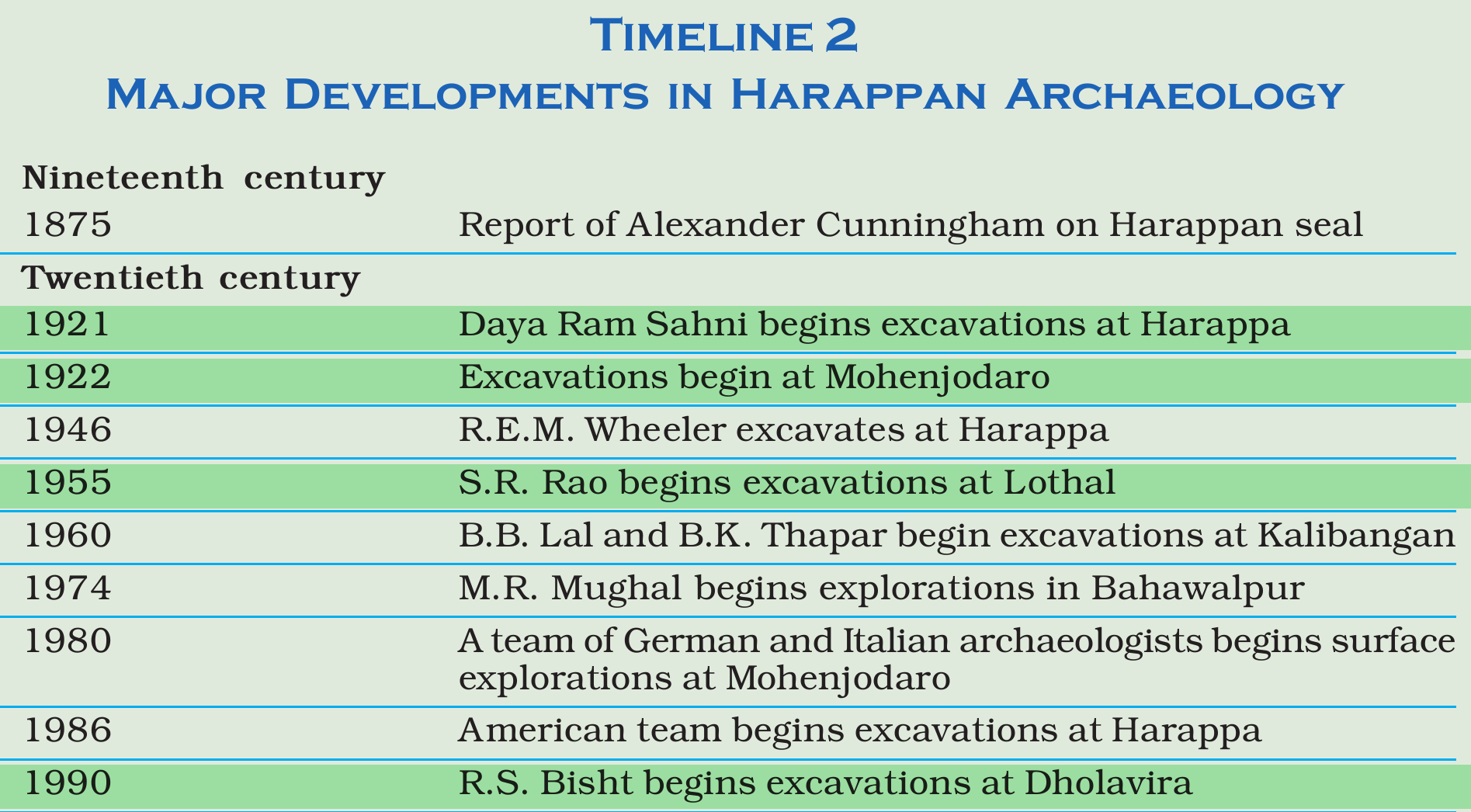
| (A) | 1921 | (I) | R.S. Bisht begins excavations at Dholavira |
| (B) | 1922 | (II) | S.R. Rao begins excavations at Lothal |
| (C) | 1990 | (III) | Daya Ram Sahni begins excavations at Harappa |
| (D) | 1955 | (IV) | Excavations begin at Mohenjodaro |
Choose the correct answer from the options given below:
Answer & explanation
Correct answer: option 4
The correct answer is Option (4) → (A) - (III), (B) - (IV), (C) - (I), (D) - (II)
(A) 1921 — this matches (III) Daya Ram Sahni begins excavations at Harappa. Sahni found seals at Harappa in layers much older than the Early Historic levels, and their importance began to be realised. Harappa was the first site of the civilisation to be discovered.
(B) 1922 — this matches (IV) Excavations begin at Mohenjodaro, just a year after Harappa. Mohenjodaro became the best-known Harappan site.
(C) 1990 — this matches (I) R.S. Bisht begins excavations at Dholavira, the Harappan city in Gujarat.
(D) 1955 — this matches (II) S.R. Rao begins excavations at Lothal, also in Gujarat.
Note: A same/similar question was asked in CUET (UG) in the papers below.
| 2026 | 2025 | 2024 | 2023 | 2022 |
| 21-05 S1 23-05 S2* | – | – | – | – |
* A similar question.
NCERT: Themes in Indian History Part I — Chapter 1: Bricks, Beads and Bones (2025-26)
|