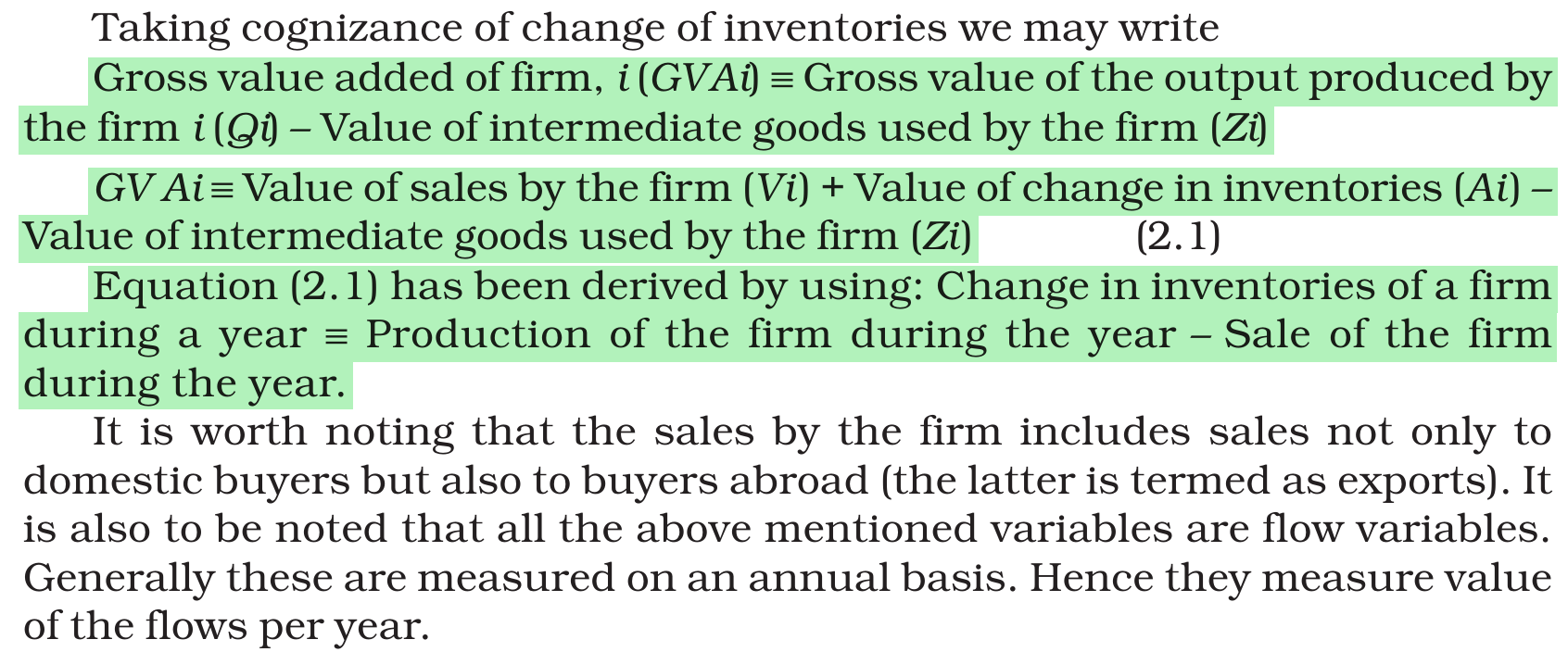
Match List - I with List - II.
| List - I | List - II |
| (A) Value of output | (I) Sales + Change in stock |
| (B) Operating surplus | (II) Sales + Change in stock - Intermediate consumption |
| (C) Profit | (III) Rent + Interest + Royalty + Profit |
| (D) Value added | (IV) Corporation tax + Undistributed profit + Dividend |
Choose the correct answer from the options given below :
Answer & explanation
Correct answer: option 3
The correct answer is Option (3) → (A)-(I), (B)-(III), (C)-(IV), (D)-(II)
A firm’s output is valued first. Taking away the inputs bought from other firms gives value added, which is then shared among the factors of production.
| List-I | List-II | Reason |
|---|---|---|
| (A) Value of output | (I) Sales + Change in stock | Output includes what is sold and what is produced but kept as unsold stock (inventories). |
| (B) Operating surplus | (III) Rent + Interest + Royalty + Profit | After wages are paid, the rest of value added goes as rent, interest and profits, together called operating surplus. Royalty, a payment for the use of a natural resource such as a mine, is counted with rent. |
| (C) Profit | (IV) Corporation tax + Undistributed profit + Dividend | A company pays tax on its profit, gives dividends to shareholders and keeps the rest as undistributed profit. |
| (D) Value added | (II) Sales + Change in stock − Intermediate consumption | Value added is the value of output minus the intermediate goods used up. |
Note: The term ‘royalty’ in List-II (III) is not in any NCERT book (2026-27, 2025-26, 2023-24 or pre-rationalised); it is explained here for the benefit of the students.
NCERT (2026-27): Introductory Macroeconomics — Chapter 2: National Income Accounting
|