Country Z buys far more goods from abroad than it sells. Its imports of oil and machinery keep rising, while its exports grow slowly. Its citizens working abroad send money home to their families, but this covers only a small part of the gap. Foreign firms have set up new plants in Z, and Z’s companies have borrowed from banks abroad. Even so, the money coming into Z during the year is less than the money going out. Z follows a fixed exchange rate, and its central bank has stepped in to meet the shortfall.
In Country Z’s balance of payments, the money its companies have borrowed from banks abroad is:
Answer & explanation
Correct answer: option 1
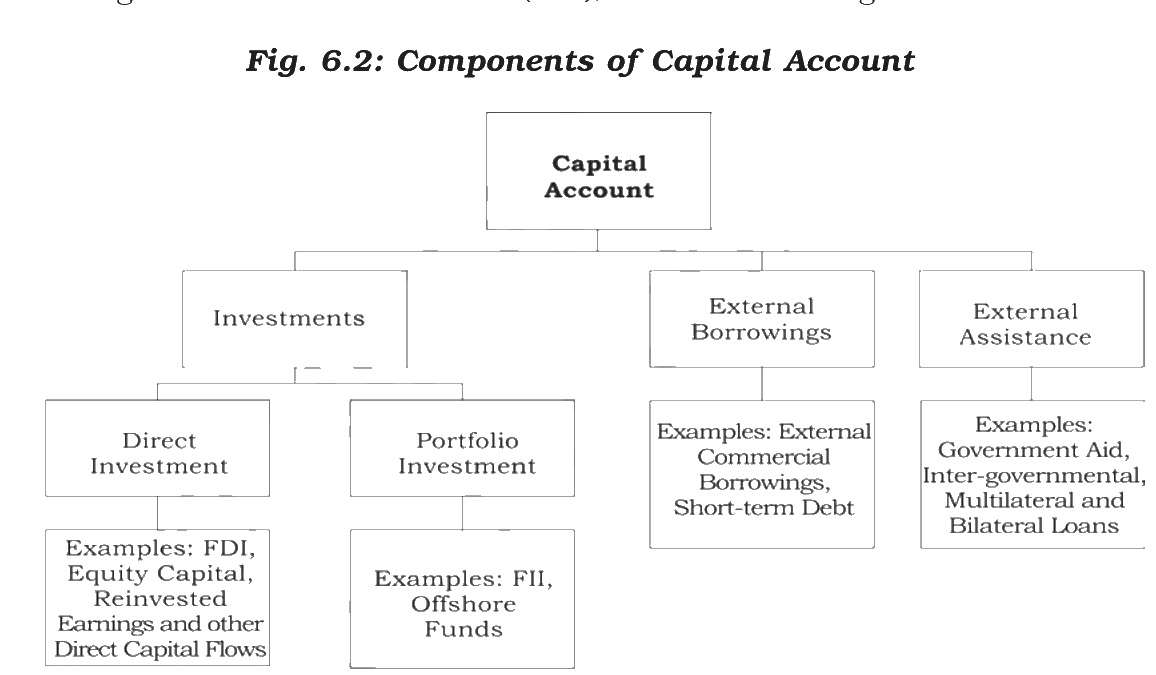
The correct answer is Option (1) → a capital inflow, recorded under external borrowings in the capital account
A loan from a foreign bank brings money into Z, so it is a capital inflow. Loans from abroad fall under external borrowings in the capital account.
Repaying such a loan later would be an outflow. External assistance means aid and loans between governments, not company loans from banks.
NCERT (2026-27): “Balance on Capital Account Capital account is in balance when capital inflows (like receipt of loans from abroad, sale of assets or shares in foreign companies) are equal to capital outflows (like repayment of loans, purchase of assets or shares in foreign countries). …”
|