CUETMOCK
  • Pricing
  • Mentors
Log inStart freeStart free mocks→

First test, then trust

Try a free CUET mock test.

Join 5,00,000+ students who rehearsed exam day on the exact NTA screen before sitting CUET. On the web and on Android.

Start free mocks →Get the Android app
CUETMOCK

India's #1 CUET Mock Test Platform. Original NCERT-based questions on the exact NTA exam screen — trusted by 5,00,000+ students since CUET 2022.

Get it onGoogle PlayScan to download the CUETMOCK app

Mock tests

  • CUET mock test series
  • Browse all papers
  • Commerce mocks
  • Humanities (Arts) mocks
  • Science mocks
  • Languages & GAT mocks
  • Free practice questions
  • Pricing

Resources

  • CUET exam guide
  • CUET syllabus
  • Universities accepting CUET
  • Expert blogs
  • News & notifications
  • Webinars & counselling
  • CUET score calculator
  • How we estimate your rank
  • FAQs

Company

  • About us
  • Our leadership & team
  • Our toppers
  • Mentors
  • For schools
  • Contact us
  • Terms
  • Privacy
  • Refund policy

Talk to us

+91 7696 6630 56info@cuetmock.comWhatsApp us

Our other platforms

  • JEE Mock — For IIT-JEE aspirants
  • NEET Mock — For NEET aspirants

Newsletter

Exam updates, study material and offers — no spam.

© 2026 NYC Ventures Pvt. Ltd.

701-702, Royal Business Park, Zirakpur, Punjab - 140603

  • Terms of use
  • Privacy policy
  • Refund policy
  • Contact us

iCUETMOCK is an independent preparation platform, not affiliated with the National Testing Agency (NTA). Always check exam details on the official NTA website.

  • Home
  • Mock tests
  • CUET guide
  • Pricing
  • Log in
Home/Practice questions/History
HistoryAncient India: Thinkers, Beliefs and Buildings

Match List - I with List - II. List – I (Sanchi Sculptures) List – II…

Match List - I with List - II.

List – I (Sanchi Sculptures)

List – II (Symbolic Meaning)

(A) Empty seat

(I) Auspicious Symbol

(B) Wheel

(II) Strength and Wisdom

(C) Shalabhanjika

(III) First Sermon of Buddha

(D) Elephants

(IV) Meditation of Buddha

Choose the correct answer from the options given below:

Answer & explanation+

Correct answer: option 4

The correct answer is Option (4) → (A)-(IV), (B)-(III), (C)-(I), (D)-(II)

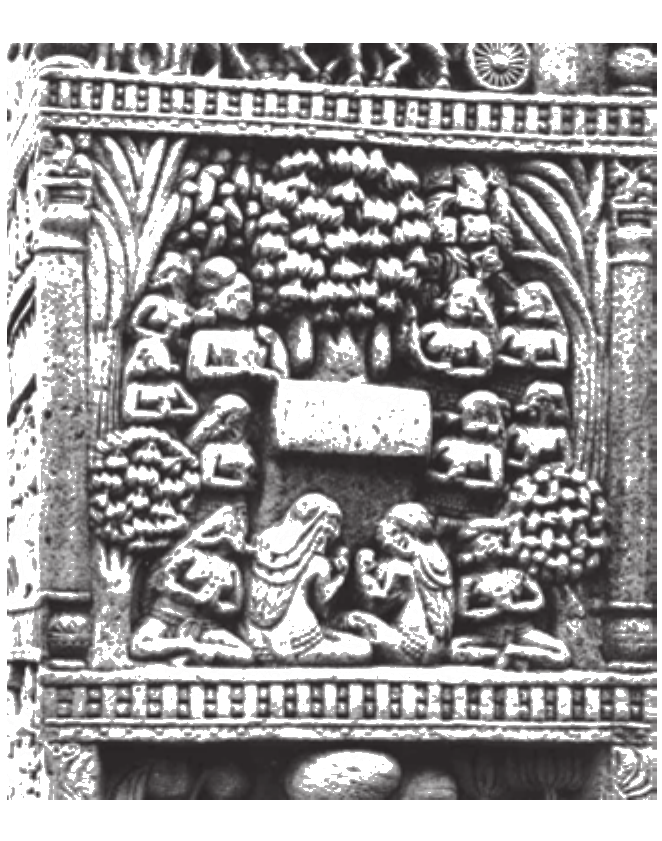
(A) Empty seat — this matches (IV) Meditation of Buddha. Early sculptors showed the Buddha’s presence through symbols; the empty seat indicated the meditation of the Buddha.

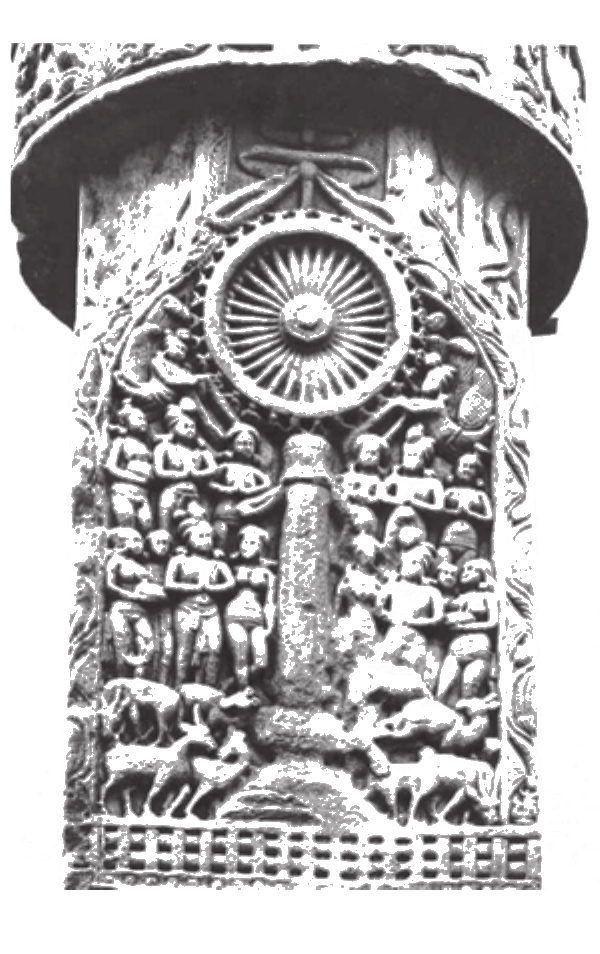
(B) Wheel — this matches (III) First Sermon of Buddha. The wheel stood for the first sermon of the Buddha, delivered at Sarnath.

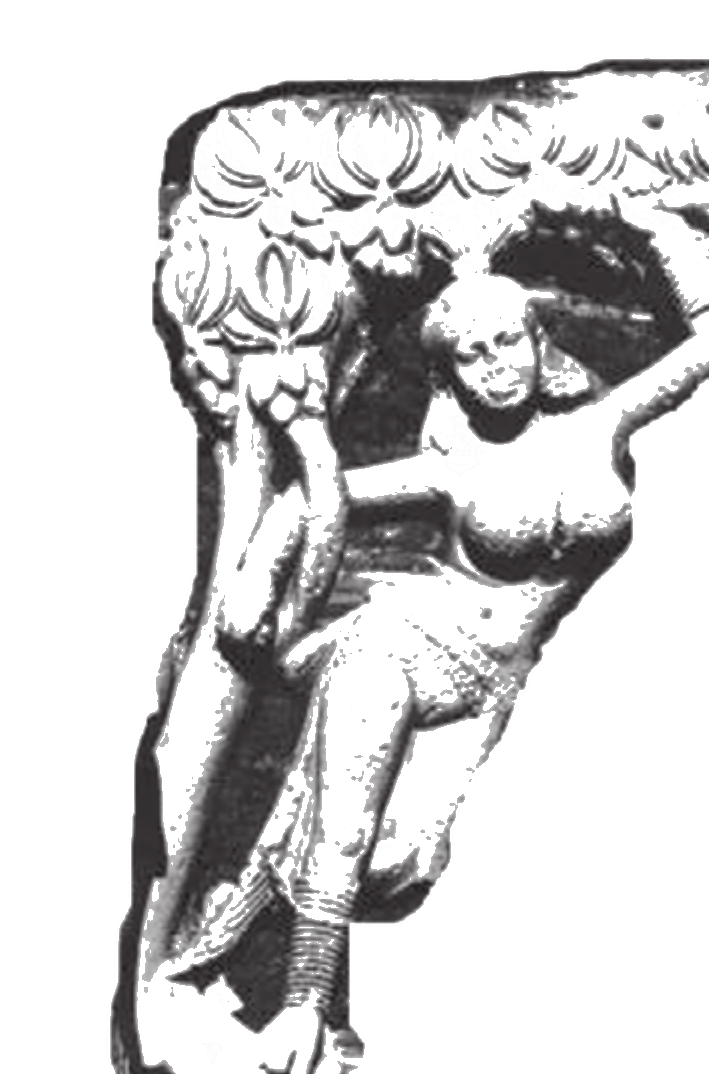
(C) Shalabhanjika — this matches (I) Auspicious Symbol. The shalabhanjika, a woman whose touch made trees flower and bear fruit, was probably regarded as an auspicious symbol and so used to decorate the stupa.

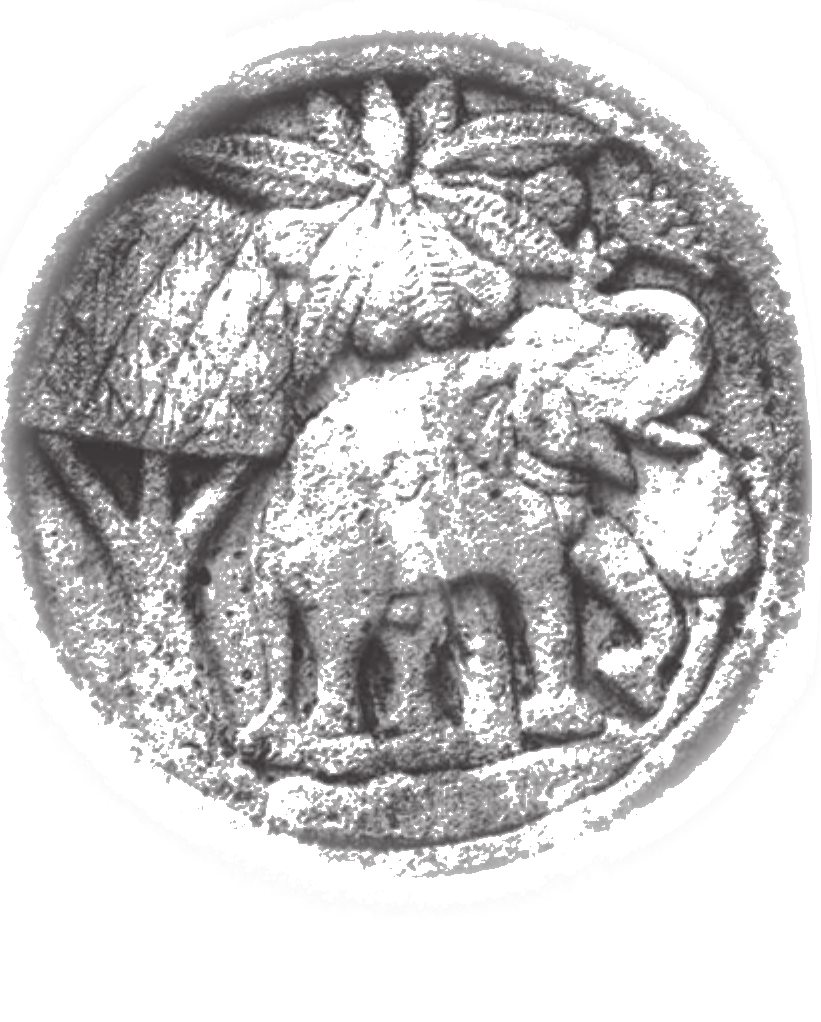
(D) Elephants — this matches (II) Strength and Wisdom. Animals were often used as symbols of human attributes; elephants signified strength and wisdom.


NCERT (2026-27): “9.2 Symbols of worship … Many early sculptors did not show the Buddha in human form – instead, they showed his presence through symbols. The empty seat (Fig. 4.14) was meant to indicate the meditation of the Buddha, and the stupa … was meant to represent the mahaparinibbana. Another frequently used symbol was the wheel (Fig. 4.16). This stood for the first sermon of the Buddha, delivered at Sarnath.…

9.3 Popular traditions … However, after examining other literary traditions, they realised that it could be a representation of what is described in Sanskrit as a shalabhanjika. According to popular belief, this was a woman whose touch caused trees to flower and bear fruit. It is likely that this was regarded as an auspicious symbol and integrated into the decoration of the stupa.…

9.3 Popular traditions … Also, animals were often used as symbols of human attributes. Elephants, for example, were depicted to signify strength and wisdom.…”

NCERT extract

Fig. 4.14 Worshipping the Bodhi tree

NCERT extract

Fig. 4.16 Setting in motion the wheel of dharma

NCERT extract

Fig. 4.17 The woman at the gate

NCERT extract

Fig. 4.18 An elephant at Sanchi

Advertisement

Practise more on Ancient India: Thinkers, Beliefs and Buildings

Chapter-wise mocks on the real NTA exam screen, with solutions and your rank. Your first mocks are free.

Start free mocks →

Advertisement

Next questions

  1. If the base radius of 2 cylinders are in the ratio 3 : 4 and their heights are in the ratio 4 : 9, then the ratio of their volumes is:General Aptitude Test · Quantitative Reasoning
  2. What was the name of the party formed by some Congress leaders under the leadership of Jagjivan Ram?1) The Janata Party2) The Bharatiya Jan…Political Science · Politics in India Since Independence: Crisis of democratic Order
  3. What is the power factor of an ac circuit?Physics · Alternating Current
  4. Choose the correct option to fill in the blank with the appropriate modal in the following sentence: If I were a cosmonaut, I _____ have ta…English · Grammar: Modal
  5. 'अल्प' शब्द का विलोम शब्द कौन सा है?Hindi · Antonyms
  6. The original paintings of Gulistan (1567) are attributed to the artists from which of the following place?Fine Arts · The Mughal School of Miniature Painting
  7. If 2 sec2 θ - 9 sec θ + 7 = 0, then what is the value of cos2 θ + sec2 θ ?General Aptitude Test · Quantitative Reasoning
  8. Study the given bar graph which shows the life time (in hours) of neon lamps and the number of neon lamps and answer the question that foll…General Aptitude Test · Quantitative Reasoning
  9. If θ = 9°, find the value of cotθ . cot2θ . cot3θ . cot4θ . cot5θ . cot6θ. cot7θ . cot8θ . cot9θ.General Aptitude Test · Quantitative Reasoning
  10. A historian is studying the Ashtadhyayi of Panini. What was the subject of this work?History · Ancient India: Kinship, Caste and Class