The Debt Service Coverage ratio is:
Answer & explanation
Correct answer: option 1
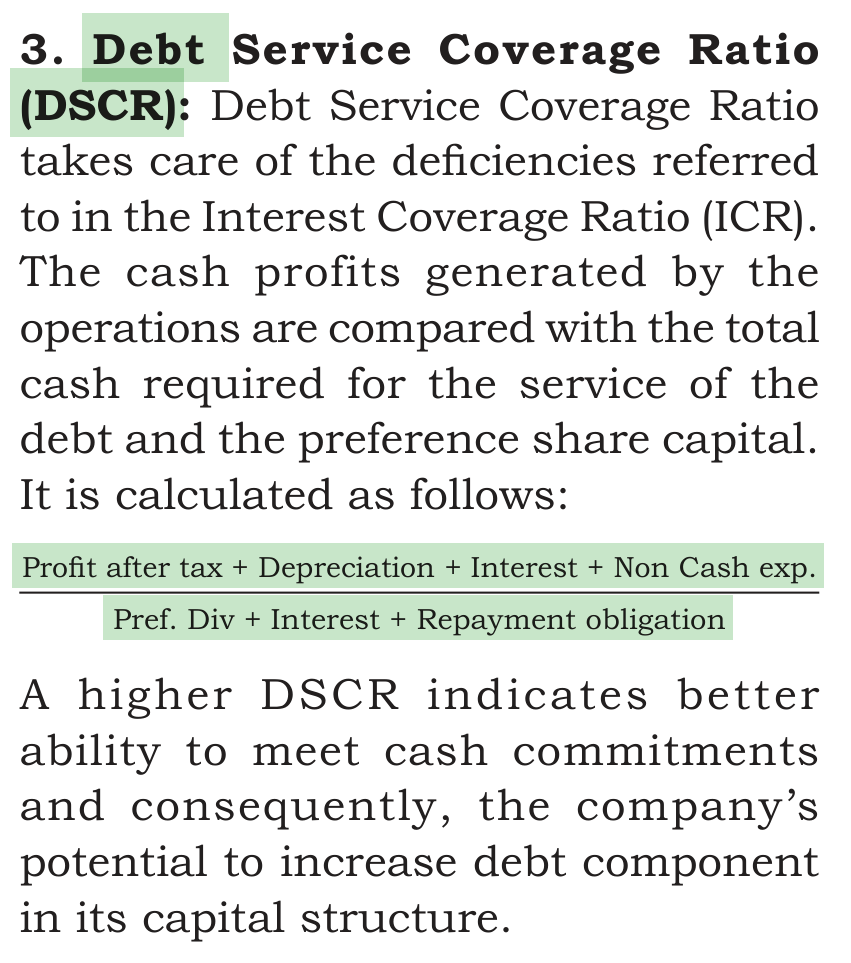
The correct answer is Option (1) → (Profit after tax + Depreciation + Interest + Non Cash exp.) / (Pref. Div + Interest + Repayment obligation)
The Debt Service Coverage Ratio (DSCR) compares the cash profit a firm earns with the cash it must pay out to lenders and preference shareholders. A higher ratio means the firm can safely take on more debt.
Option (1) (Profit after tax + Depreciation + Interest + Non Cash exp.) / (Pref. Div + Interest + Repayment obligation) — Correct. The numerator starts from profit after tax. Depreciation and other non-cash expenses are added back because no cash left the firm for them. Interest is added back because it is paid out of this sum. The denominator is everything owed: preference dividend, interest and repayment of the loan.
Option (2) (Profit before tax + Depreciation + Non Cash exp.) / (Pref. Div + Interest + Payment obligation) — Incorrect. It starts from profit before tax, leaves out interest in the numerator, and names a “payment” obligation instead of the repayment of the loan.
Option (3) (Profit before tax - Depreciation + Interest + Cash exp.) / (Pref. Div + Interest + Payment obligation) — Incorrect. Depreciation is a non-cash expense and must be added back, not taken away. Cash expenses are never added back.
Option (4) (Profit after tax + Interest + Cash exp.) / (Pref. Div + Interest + Repayment obligation) — Incorrect. It leaves out depreciation and adds cash expenses, which have already been paid.
NCERT (2026-27 Edition):
|