
The process of evolution of different species in a given geographical area, starting from a point and literally radiating to other areas of geography is known as -
Answer & explanation
Correct answer: option 4
The correct answer is Option (4) → Adaptive Radiation
(1) Convergent Evolution — Incorrect. Here, unrelated groups living in similar habitats develop similar features. The process described in the question is a spread from one starting point, not a meeting of unrelated lines.
(2) Divergent Evolution — Incorrect. This is the general idea that related species grow different from each other. The particular process of species spreading from one point into many habitats has its own name, adaptive radiation.
(3) Genetic recombination — Incorrect. This is the shuffling of genes during meiosis. It is a source of variation and not a pattern of species spreading.
(4) Adaptive Radiation — Correct. In adaptive radiation, different species evolve in one geographical area, starting from a point and radiating into other habitats. Darwin’s finches in the Galapagos Islands and the marsupials of Australia are examples.
Note: A similar question was also asked in CUET (UG) 2023 on 10-06-2023 (Slot 3).
NCERT Extract:
Adaptive Radiation – “… This process of evolution of different species in a given geographical area starting from a point and literally radiating to other areas of geography (habitats) is called adaptive radiation. Darwin’s finches represent one of the best examples of this phenomenon. Another example is Australian marsupials. A number of marsupials, each different from the other (Figure 6.6) evolved from an ancestral stock, but all within the Australian island continent.”
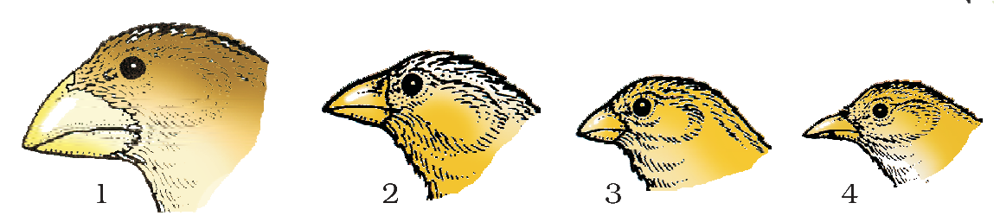
Figure 6.5 Variety of beaks of finches that Darwin found in Galapagos Island