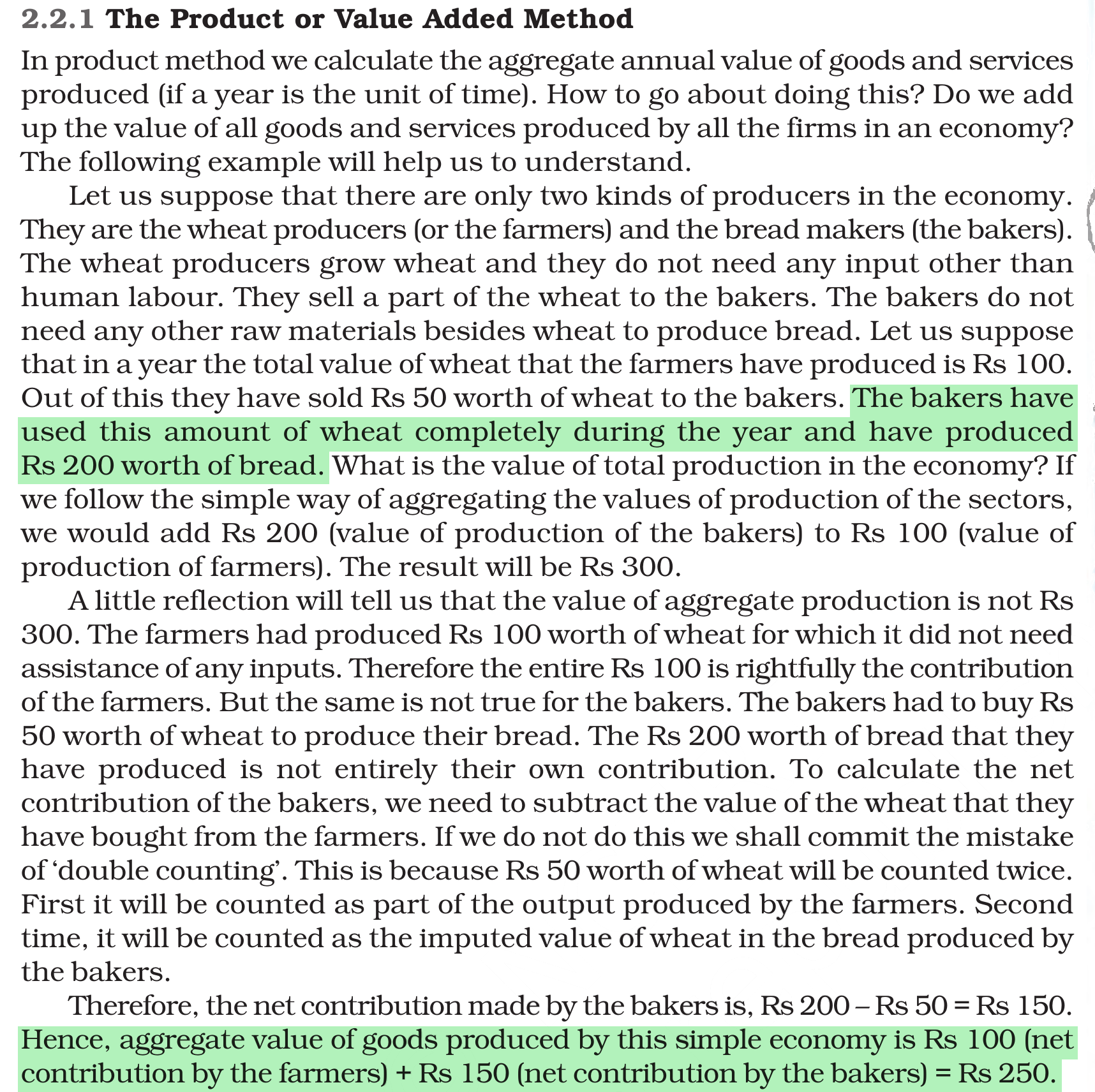
In a year, the total value of wheat produced by farmers is Rs. 100. Out of this, they sold Rs. 50 worth of wheat to bakers. The bakers used this amount of wheat completely during the year and Rs. 200 worth of bread. Estimate aggregate value of goods produced by this economy.
Answer & explanation
Correct answer: option 4
The correct answer is Option (4) → ₹250
The farmers grow wheat, and the bakers turn part of it into bread. To find what the economy has produced, each producer is credited only with its net contribution: the value of its output minus the intermediate goods it bought from other producers and used up. This is the value added method, and the contributions are added up over all producers.
Given:
Value of wheat produced by the farmers = Rs. 100
Wheat sold to the bakers and used up by them = Rs. 50
Value of bread produced by the bakers = Rs. 200
Working it out:
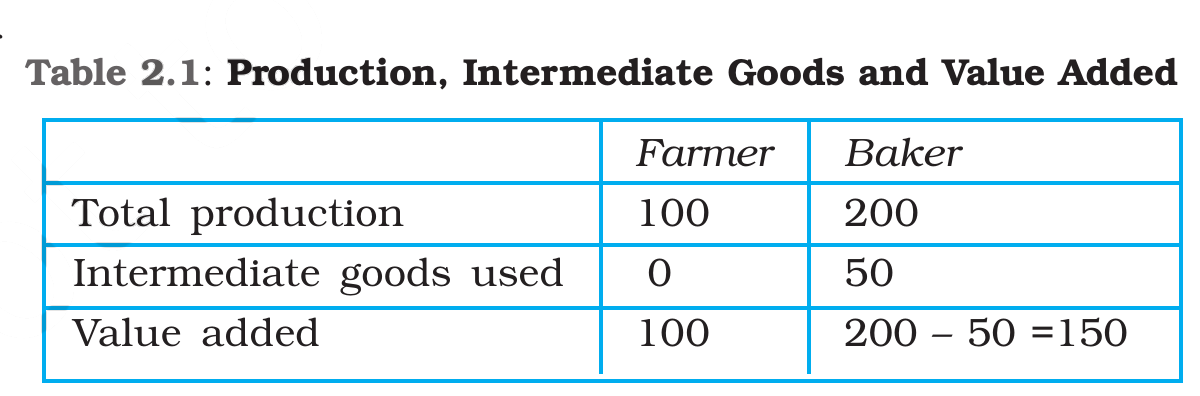
Value added = Value of output − Intermediate goods used
Value added by the farmers = Rs. 100 − 0 = Rs. 100 (they use no input other than their own labour)
Value added by the bakers = Rs. 200 − Rs. 50 = Rs. 150 (the wheat they used up is an intermediate good for them)
Aggregate value of goods produced = Rs. 100 + Rs. 150 = Rs. 250, which is Option (4)
Adding the two outputs as they stand, Rs. 100 + Rs. 200 = Rs. 300, counts the Rs. 50 of wheat twice: once in the farmers’ output and again inside the value of the bread. This is the mistake of double counting, which the value added method avoids.
Note: It seems that there is a mistake in the original NTA paper, which prints “The bakers used this amount of wheat completely during the year and Rs 200 worth of bread” when it should read “... and produced Rs 200 worth of bread”. The question is NCERT’s own example of the value added method, in which the bakers “have produced Rs 200 worth of bread”, so the meaning is clear and the answer is not affected.
NCERT: Introductory Macroeconomics — Chapter 2: National Income Accounting (2025-26)
|