Choose the correct statements with respect to nucleic acids.
Answer & explanation
Correct answer: option 4
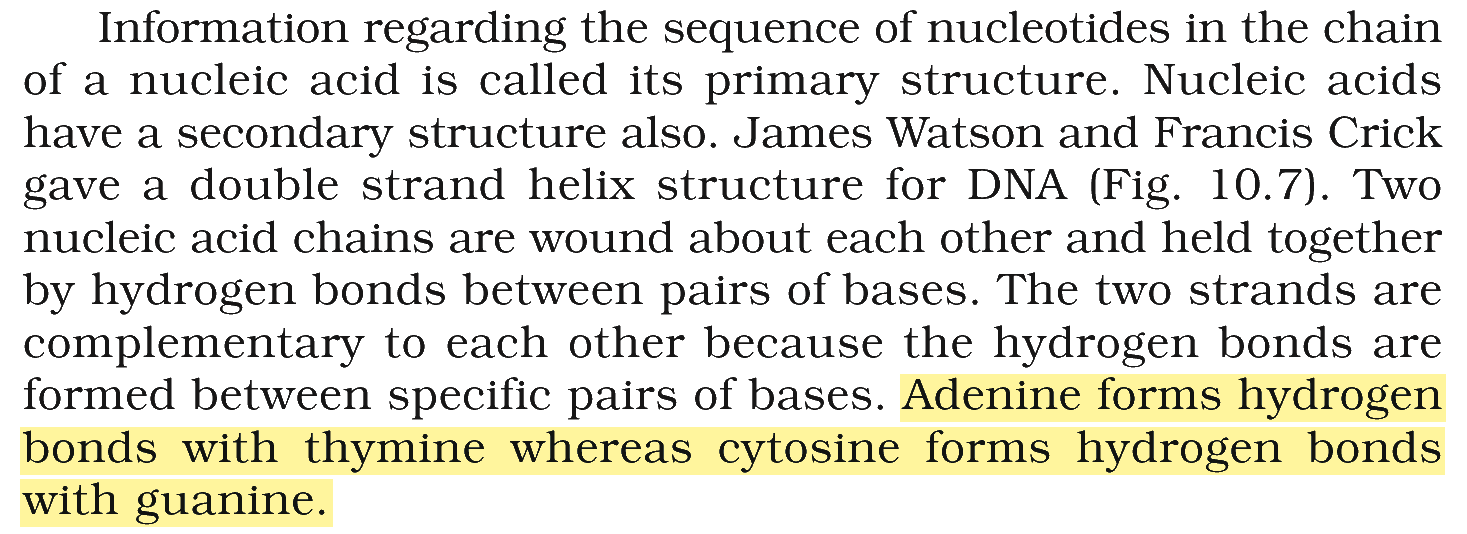
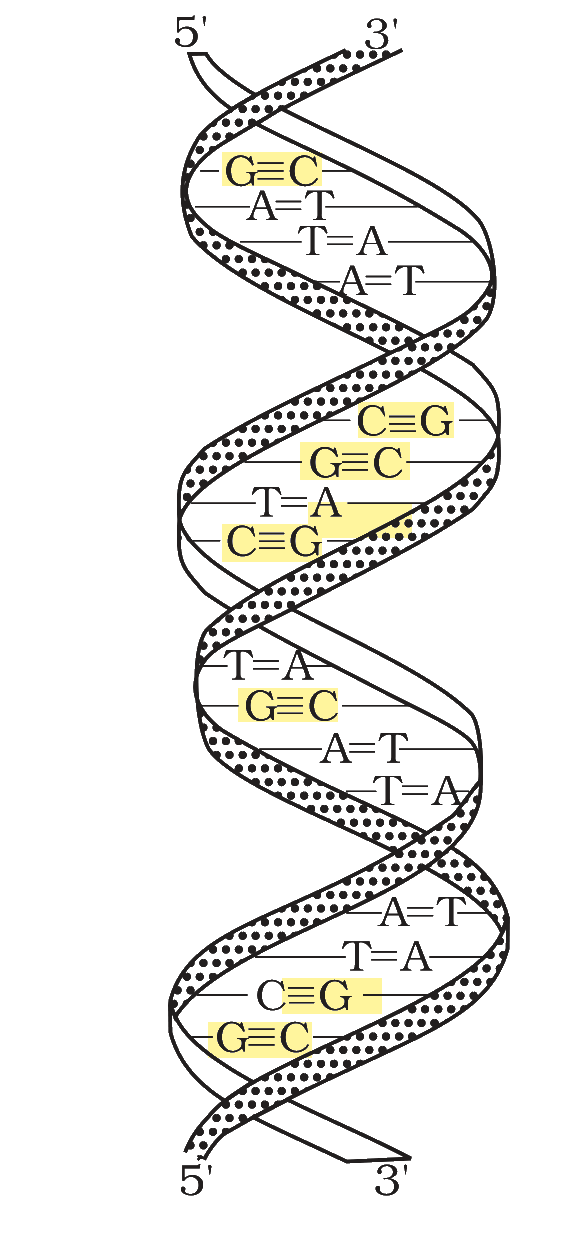
The correct answer is Option (4) → In double helix structure of DNA, cytosine forms hydrogen bond with guanine.
Nucleic acids are long chains built from three parts:
Nucleoside = nitrogenous base + pentose sugar (the base is joined to C1′ of the sugar).
Nucleotide = nucleoside + phosphoric acid (the phosphate is joined at C5′ of the sugar).
Nucleotides are joined into a chain by phosphodiester links between C5′ of one sugar and C3′ of the next.
DNA contains 2-deoxyribose and the bases adenine (A), guanine (G), cytosine (C) and thymine (T). RNA contains ribose and uracil (U) in place of thymine. In the DNA double helix, the two strands are held together by hydrogen bonds between complementary base pairs: A with T (two hydrogen bonds) and G with C (three hydrogen bonds).
So the correct statement is that cytosine forms hydrogen bonds with guanine.
Why the other options are incorrect
Option (1) DNA is a nucleotide, but RNA is a nucleoside — Incorrect. Both DNA and RNA are polynucleotides, long chains of many nucleotides.
Option (2) RNA contains ribose sugar and thymine as one of the nitrogenous bases — Incorrect. RNA does contain ribose, but it has uracil in place of thymine.
Option (3) Nucleotides are joined together by glycosidic linkage — Incorrect. Nucleotides are joined by phosphodiester linkages. A glycosidic bond joins the base to the sugar inside one nucleoside.
NCERT (2026-27 edition):
Structure of Nucleic Acids – …