Match the LIST-I with LIST-II
| LIST-I | LIST-II | ||
|---|---|---|---|
| A. | Sacrificing ratio | I. | New ratio - Old ratio |
| B. | Gaining ratio | II. | Credit Side of Revaluation A/c |
| C. | Undervaluation of Stock | III. | Old ratio - New ratio |
| D. | Overvaluation of Stock | IV. | Debit Side of Revaluation A/c |
Choose the correct answer from the options given below:
Answer & explanation
Correct answer: option 2
The correct answer is Option (2) → A-III, B-I, C-II, D-IV
The first two items are ratios used on reconstitution, and the last two are revaluation entries.
(A) Sacrificing ratio — this matches (III) Old ratio - New ratio. It measures the share of profit a partner gives up, so the new share is taken from the old.
(B) Gaining ratio — this matches (I) New ratio - Old ratio. It measures the share a continuing partner gains from the outgoing partner, so the old share is taken from the new.
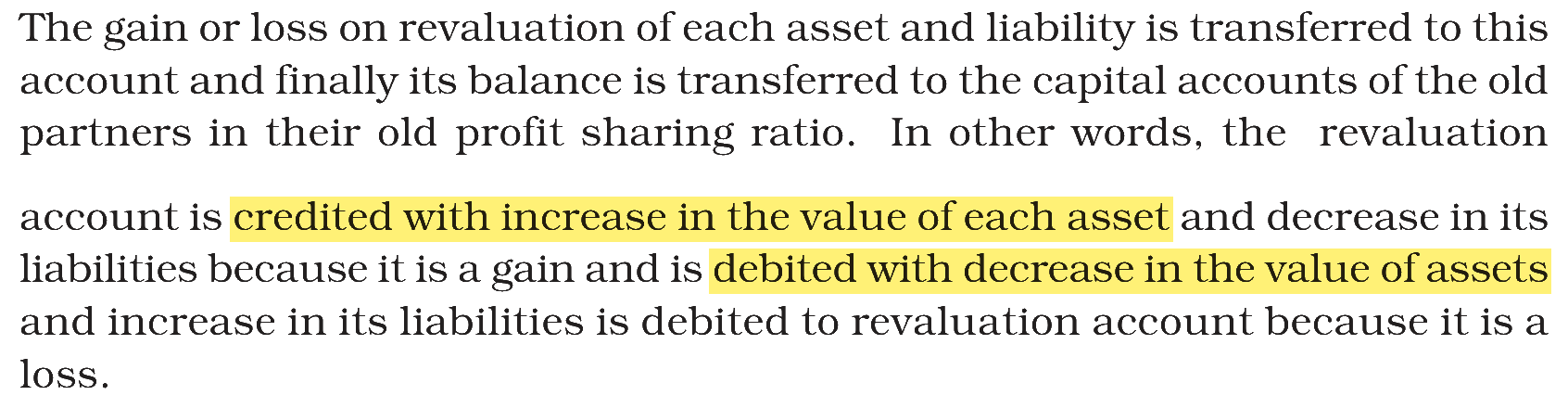
(C) Undervaluation of Stock — this matches (II) Credit Side of Revaluation A/c. Stock shown below its true value is raised to that value; the increase in an asset is a gain, and a gain is credited to the Revaluation A/c.
(D) Overvaluation of Stock — this matches (IV) Debit Side of Revaluation A/c. Stock shown above its true value is brought down; the decrease in an asset is a loss, and a loss is debited to the Revaluation A/c.
NCERT (2026-27 edition):
NCERT (2026-27 edition):
NCERT (2026-27 edition):
|