Match List-I Dissolution transactions with List-II Journal Entries
| LIST-I | LIST-II | ||
|---|---|---|---|
| A. | For sale of assets | I. | No Journal Entry |
| B. | Transfer of assets to realisation account | II. | Bank A/c Dr. To Realisation A/c |
| C. | Creditors took machinery for full settlement of his claims | III. | Realisation A/c Dr. To Assets A/c |
| D. | Dissolution expenses paid | IV. | Realisation A/c Dr. To Bank A/c |
Choose the correct answer from the options given below:
Answer & explanation
Correct answer: option 3
The correct answer is Option (3) → A - II, B - III, C - I, D - IV
On dissolution every asset and every outside liability is taken to the Realisation Account, and what happens to each item afterwards decides the entry.
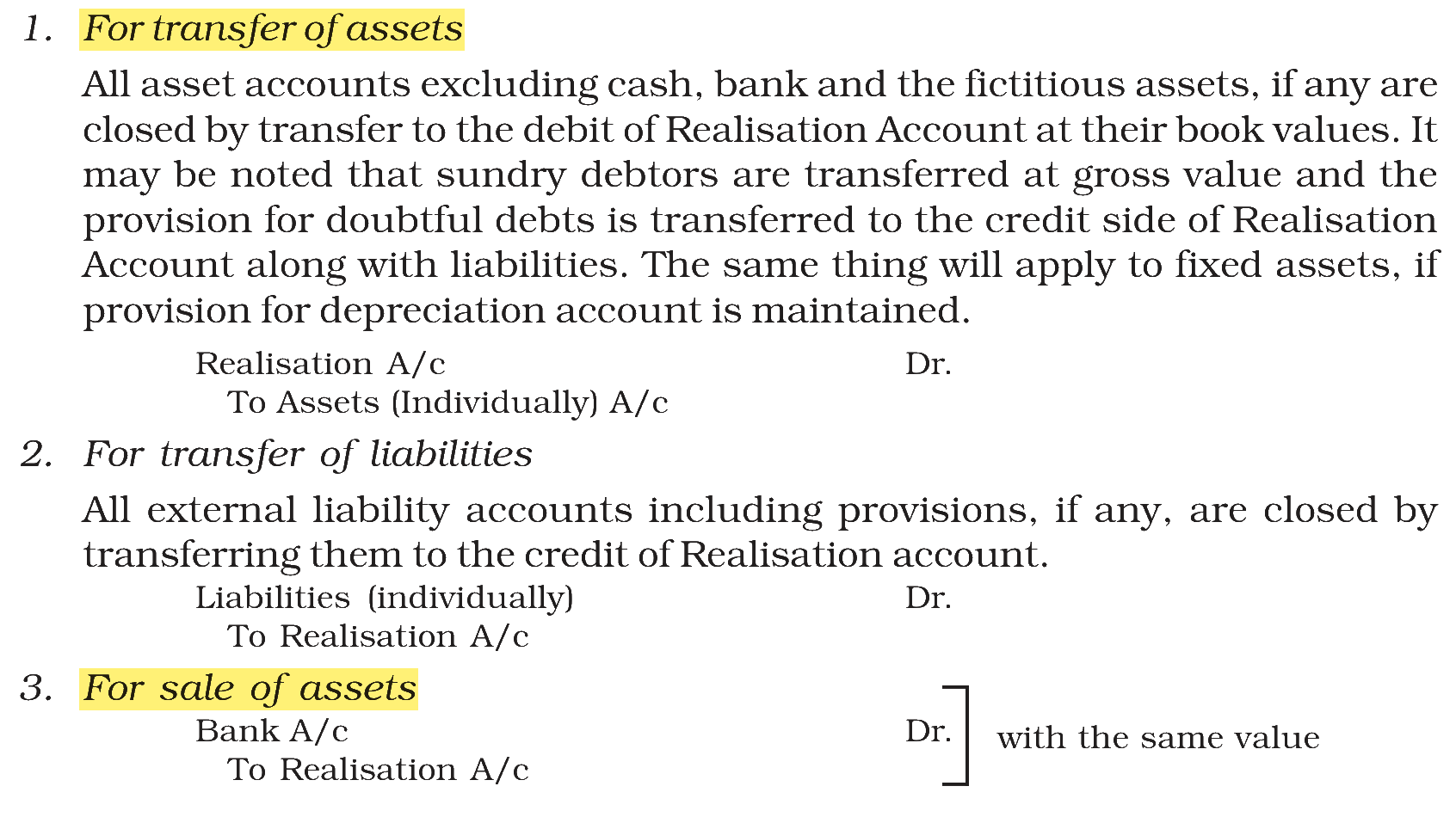
(A) For sale of assets — this matches (II) Bank A/c Dr. To Realisation A/c. Cash comes in and the proceeds are credited to Realisation, so the account shows the gain or loss against book value.
(B) Transfer of assets to realisation account — this matches (III) Realisation A/c Dr. To Assets A/c. All assets other than cash, bank and fictitious assets are closed at book value to the debit of Realisation.
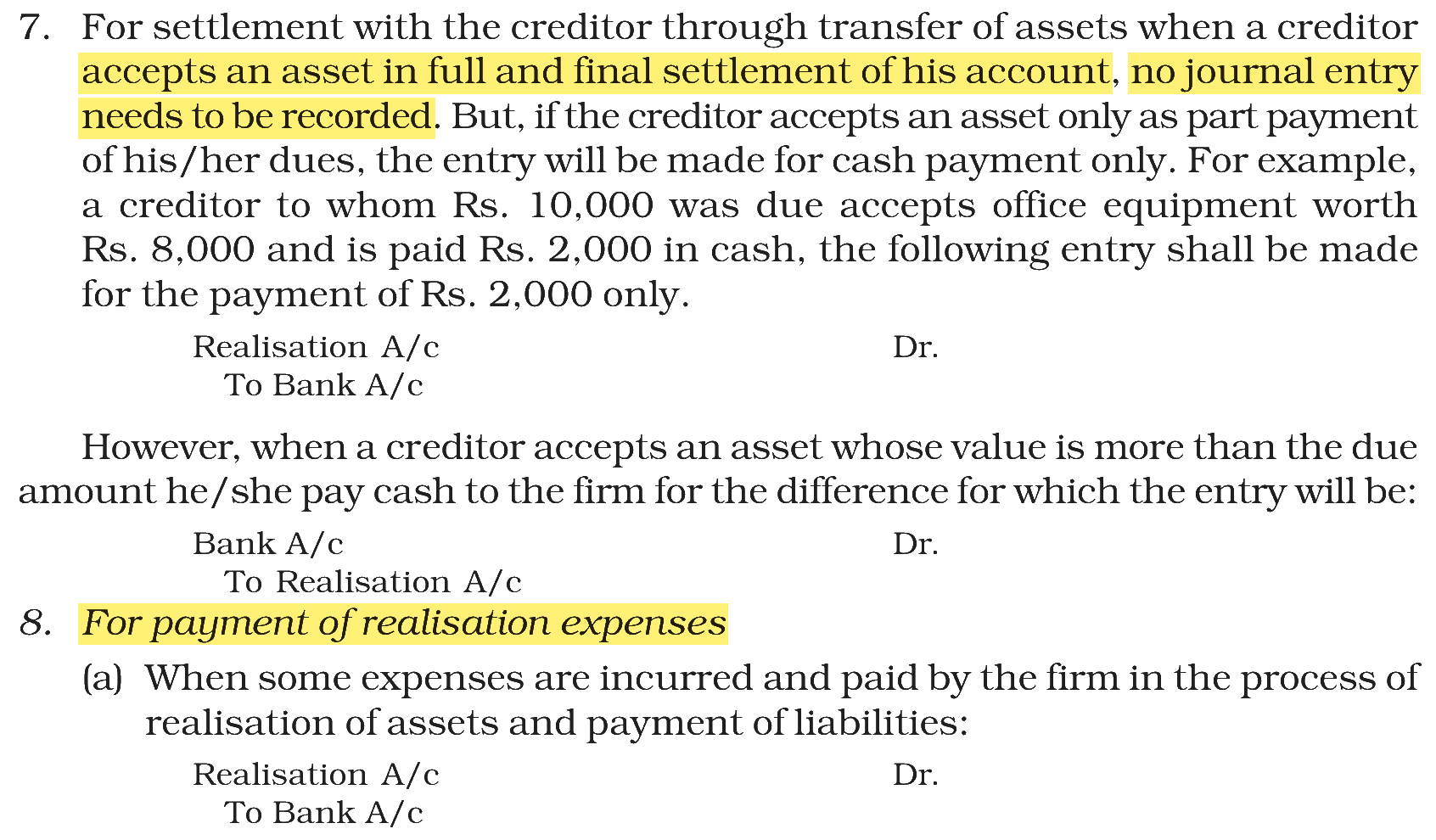
(C) Creditors took machinery for full settlement of his claims — this matches (I) No Journal Entry. The machinery is already on the debit side of Realisation and the creditor on its credit side, so a settlement in kind leaves nothing to record.
(D) Dissolution expenses paid — this matches (IV) Realisation A/c Dr. To Bank A/c. The cost of winding up is a cost of realising the assets, so it is charged to Realisation.
NCERT (2026-27 edition):
|