
Rank the following amines in increasing order of tendency for ease of formation of cation by accepting a proton from acid.
A. 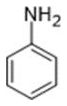
B. 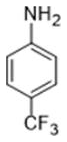
C. 
D. 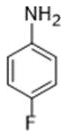
Choose the correct answer from the options given below:
Answer & explanation
Correct answer: option 3
The correct answer is Option (3) → B, D, A, C
The tendency of an amine to accept a proton and form a cation is its basic strength, and it depends on how available the lone pair on nitrogen is. Two factors decide it here:
Alkyl vs aryl amine: in an alkylamine the lone pair stays on nitrogen, and the alkyl group’s +I effect makes it even more available. In an arylamine, the lone pair is delocalised into the benzene ring by resonance, so it is much less available. On this count, cyclohexanamine is far more basic than any of the three anilines.
Substituents on the ring: an electron withdrawing group pulls more electron density away from the nitrogen and lowers the basic strength. –\( \ce{CF3} \) withdraws strongly by its −I effect and has no lone pair to give back. –F also withdraws by −I, but its lone pairs donate partly back to the ring (+R), so it lowers basicity only slightly. On this count: 4-\( \ce{CF3} \) < 4-F < unsubstituted aniline.
Combining the two factors, the increasing order of basic strength is:
\( \displaystyle \text{aniline with -CF}_3 < \text{aniline with -F} < \text{aniline} < \text{alkylamine} \)
Matching the given compounds:
(B) 4-(trifluoromethyl)aniline: arylamine with a strong electron withdrawing group
(D) 4-fluoroaniline: arylamine with a weakly withdrawing group
(A) aniline: arylamine
(C) cyclohexanamine: alkylamine
Shortcut: B (with –\( \ce{CF3} \)) is the weakest base and C (the only alkylamine) is the strongest. Only Option (3) starts with B and ends with C.