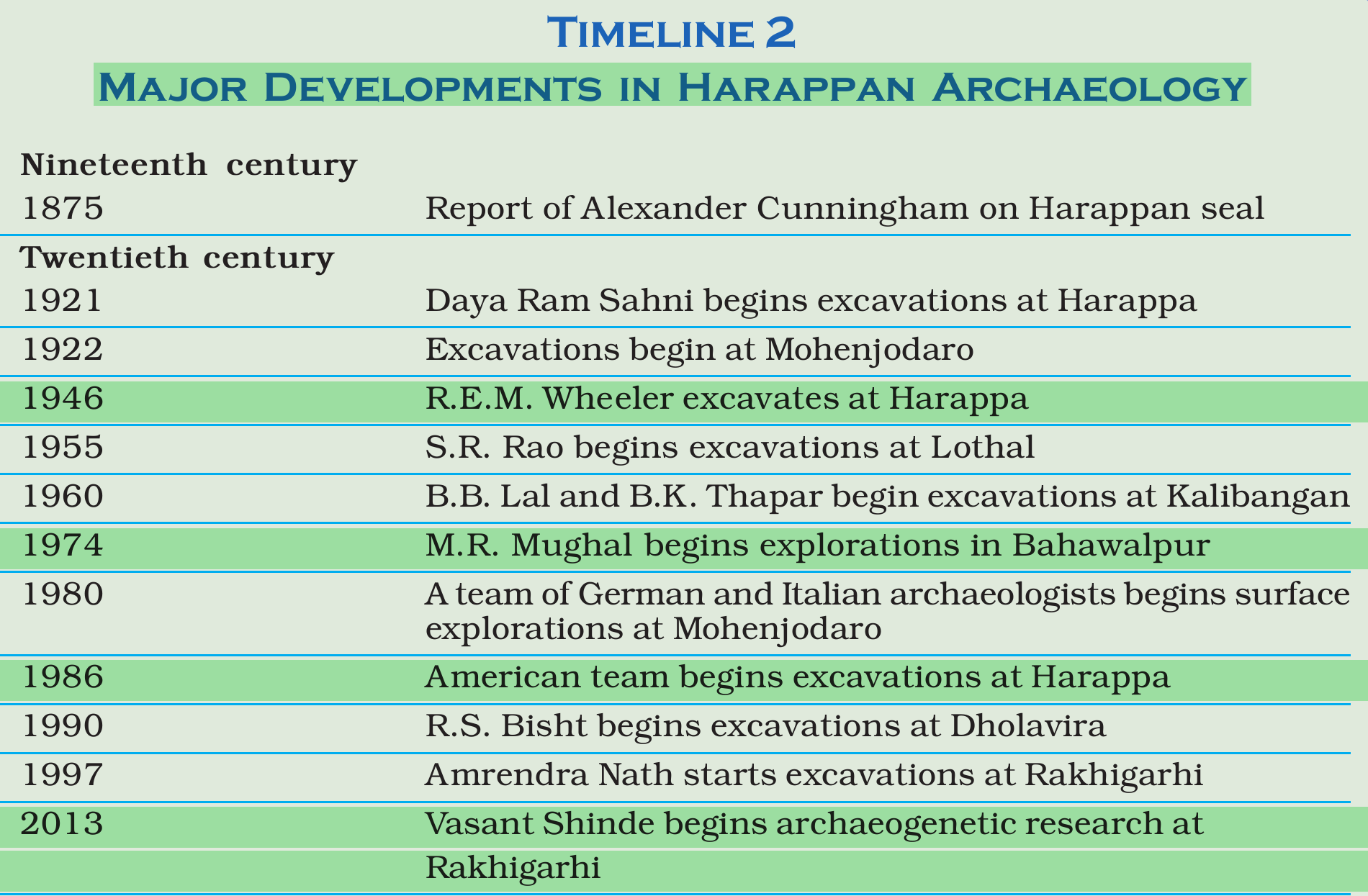
Match the LIST-I with LIST-II:
| LIST-I Year | LIST-II Developments in Harappan Archaeology | ||
| A. | 2013 | I. | M.R. Mughal begins explorations in Bahawalpur |
| B. | 1986 | II. | R.E.M. Wheeler excavates at Harappa |
| C. | 1974 | III. | Vasant Shinde begins archaeogenetic research at Rakhigarhi |
| D. | 1946 | IV. | American team begins excavations at Harappa |
Choose the correct answer from the options given below:
Answer & explanation
Correct answer: option 1
The correct answer is Option (1) → A - III, B - IV, C - I, D - II
(A) 2013 — this matches (III) Vasant Shinde begins archaeogenetic research at Rakhigarhi. Archaeogenetics is the study of the DNA of ancient people; the DNA of a Rakhigarhi skeleton indicates that the Harappans were the indigenous people of the region. It is the latest entry in the timeline.
(B) 1986 — this matches (IV) American team begins excavations at Harappa. Harappa, the first site to be discovered, was dug again and again, from Daya Ram Sahni in 1921 to this team in 1986.
(C) 1974 — this matches (I) M.R. Mughal begins explorations in Bahawalpur, in present-day Pakistan.
(D) 1946 — this matches (II) R.E.M. Wheeler excavates at Harappa. In his report ‘Harappa 1946’ Wheeler suggested that the civilisation ended in deliberate, large-scale destruction and that ‘Indra stands accused’.
NCERT: Themes in Indian History Part I — Chapter 1: Bricks, Beads and Bones (2025-26)
|