Match List-I with List-II
| List-I | List-II |
| (Financial concepts) | (Computation) |
| (A) Financial Leverage | (I) Current Assets - Current Liabilities |
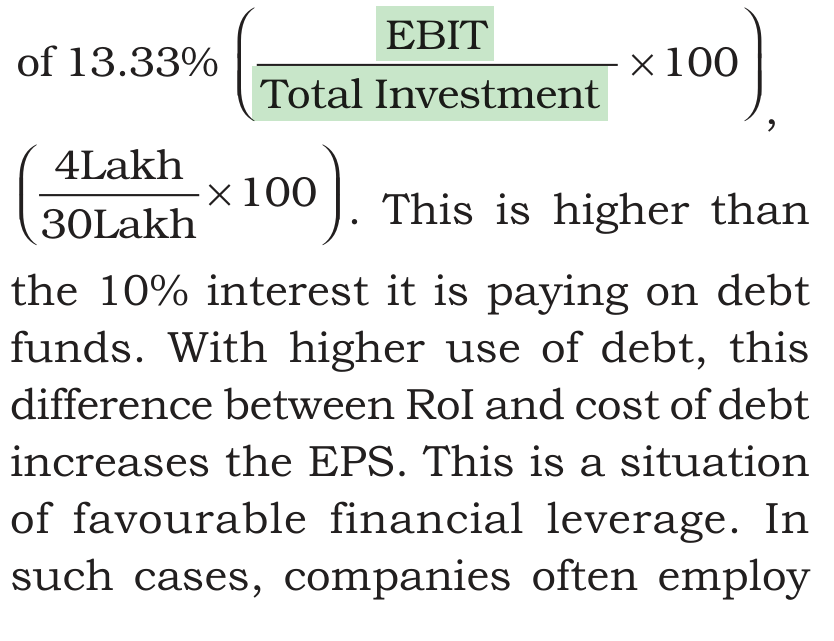
| (B) Return on Investment | (II) \( \displaystyle \frac{\text{EBIT}}{\text{Total Investment}} * 100 \) |
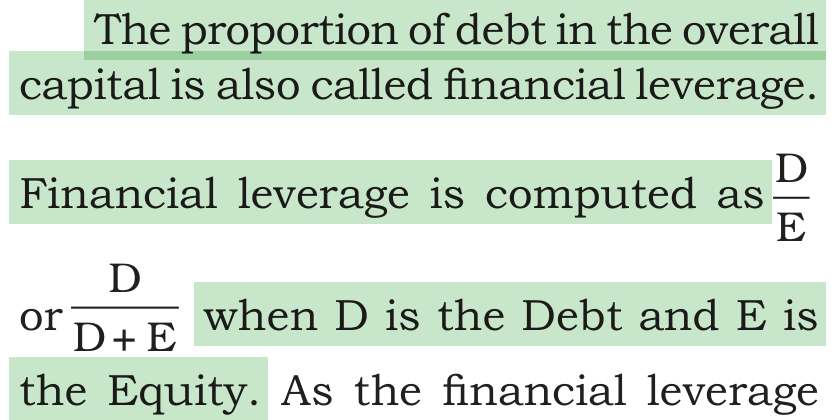
| (C) Interest Coverage Ratio | (III) \( \displaystyle \frac{\text{Debt}}{\text{Debt + Equity}} \) |
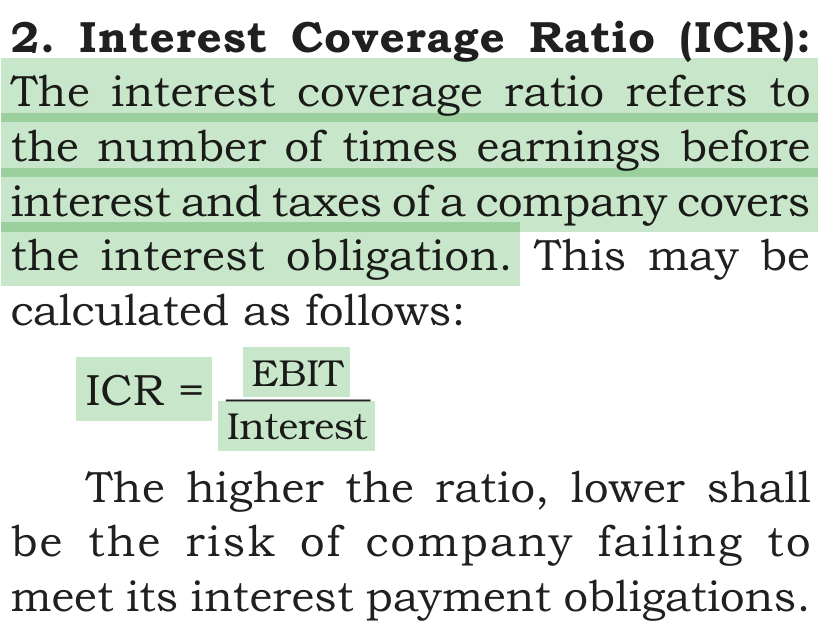
| (D) Net Working Capital | (IV) \( \displaystyle \frac{\text{EBIT}}{\text{Interest}} \) |
Choose the correct answer from the options given below:
Answer & explanation
Correct answer: option 2
The correct answer is Option (2) → (A) - (III), (B) - (II), (C) - (IV), (D) - (I)
(A) Financial Leverage — this matches (III) \( \frac{\text{Debt}}{\text{Debt + Equity}} \). Financial leverage is the proportion of debt in the total capital. So debt is divided by the total of debt and equity.
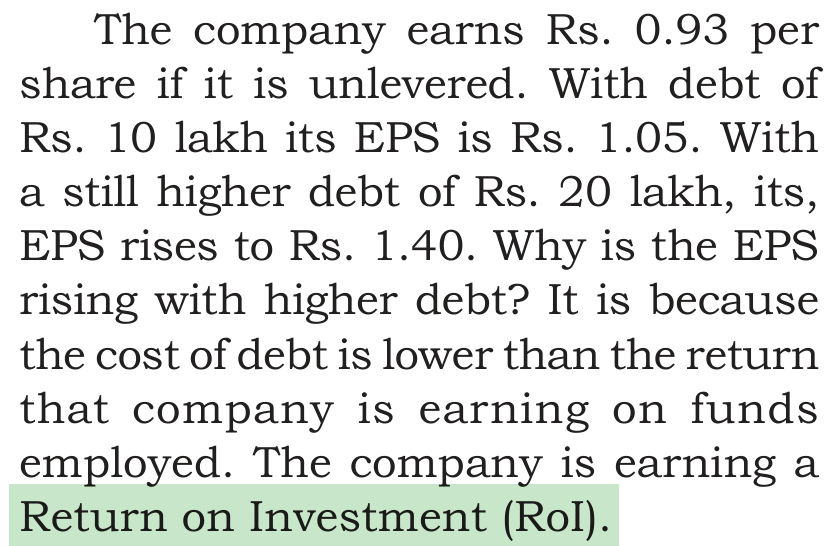
(B) Return on Investment — this matches (II) \( \frac{\text{EBIT}}{\text{Total Investment}} * 100 \). It shows how much the business earns, before interest and tax, on every rupee put into it. The ratio is shown as a percentage, hence the 100.
(C) Interest Coverage Ratio — this matches (IV) \( \frac{\text{EBIT}}{\text{Interest}} \). It tells how many times the earnings before interest and tax cover the interest to be paid. A higher ratio means the firm can safely take more debt.
(D) Net Working Capital — this matches (I) Current Assets - Current Liabilities. Net working capital is the excess of current assets over current liabilities, the part of current assets financed from long-term sources.
NCERT (2026-27 Edition): “Some part of current assets is usually financed through short-term sources, i.e., current liabilities. The rest is financed through long-term sources and is called net working capital. Thus, NWC = CA – CL (i.e. Current Assets - Current Liabilities.) Thus, net working capital may be defined as the excess of current assets over current liabilities.”
|