Match the LIST-I with LIST-II
| LIST-I | LIST-II |
| (Description) | (Methods of floatation) |
| A. Privilege given to existing shareholders to subscribe to a new issue of shares | I. Private Placement |
| B. Allotment of securities by company to institutional investors and selected individuals | II. Offer through Prospectus |
| C. Securities are not issued directly to the public but offered through intermediaries. | III. Rights Issue |
| D. Direct appeal to investors to raise capital through an advertisement | IV. Offer for Sale |
Choose the correct answer from the options given below:
Answer & explanation
Correct answer: option 2
The correct answer is Option (2) → A-III, B-I, C-IV, D-II
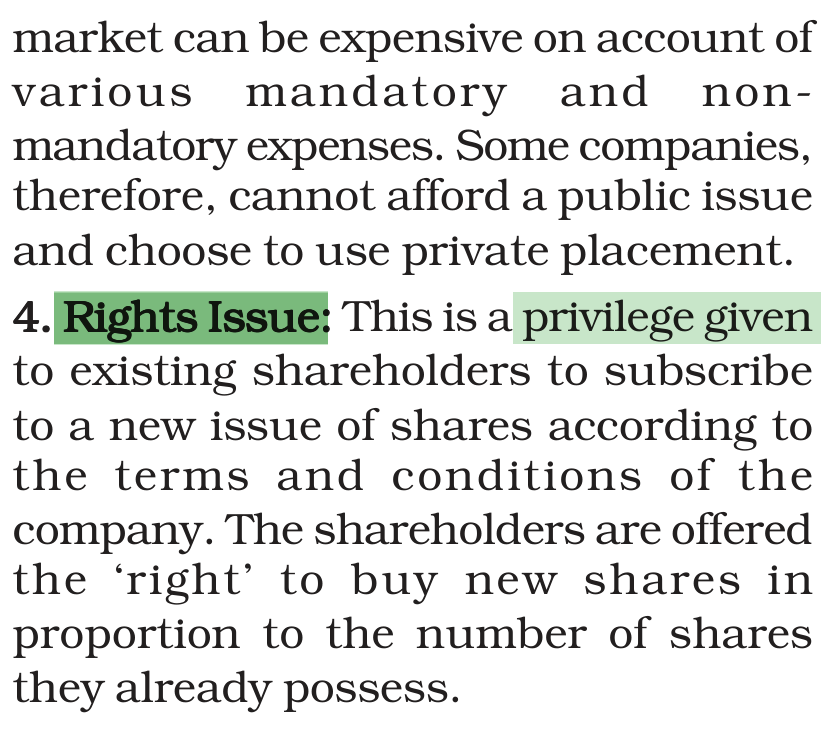
(A) Privilege given to existing shareholders to subscribe to a new issue of shares — this matches (III) Rights Issue. In a rights issue only the existing shareholders are offered the new shares, in proportion to the shares they already hold.
(B) Allotment of securities by company to institutional investors and selected individuals — this matches (I) Private Placement. The securities are sold to a few chosen buyers and not to the public. It is quicker and cheaper than a public issue.
(C) Securities are not issued directly to the public but offered through intermediaries. — this matches (IV) Offer for Sale. The company sells the whole issue to intermediaries such as issuing houses or stock brokers, and they sell it to the public.
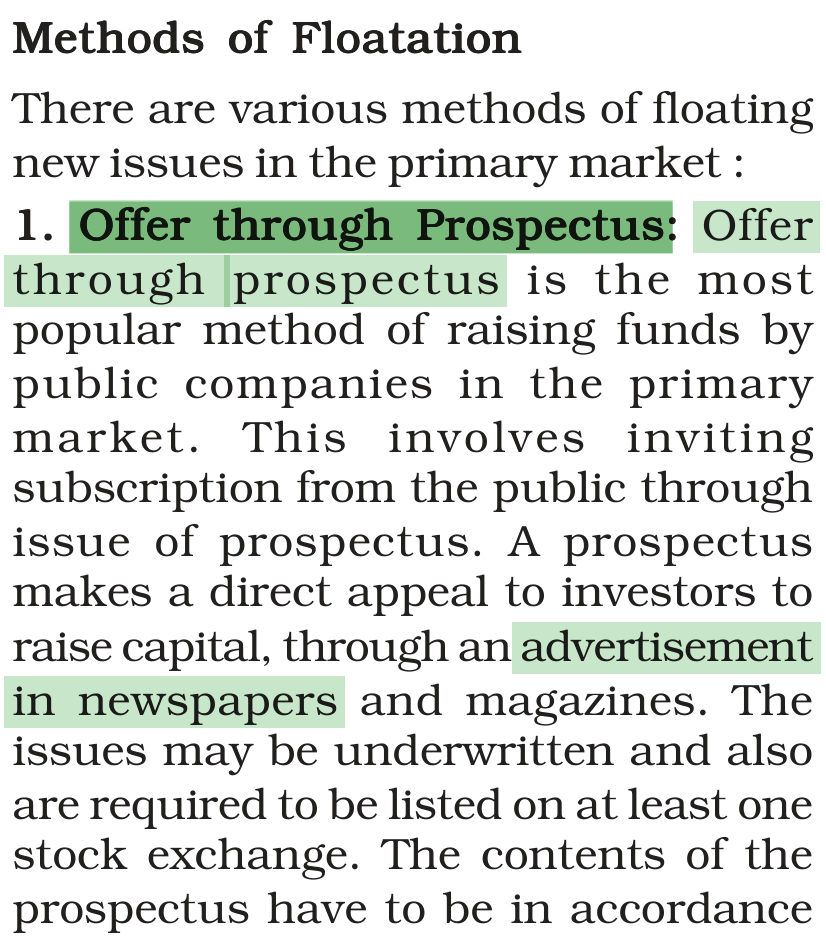
(D) Direct appeal to investors to raise capital through an advertisement — this matches (II) Offer through Prospectus. The company invites the public directly by issuing a prospectus, which is published as an advertisement in newspapers.
Note: Although the chapter ‘Financial Markets’ was dropped from the NCERT textbooks during rationalisation, it has stayed in the NTA syllabus every year since 2022, except for 2025, and it is part of the syllabus again from 2026. This question is therefore based on the pre-rationalised NCERT, an extract from which is given below.
NCERT (Pre-rationalised Edition):
|