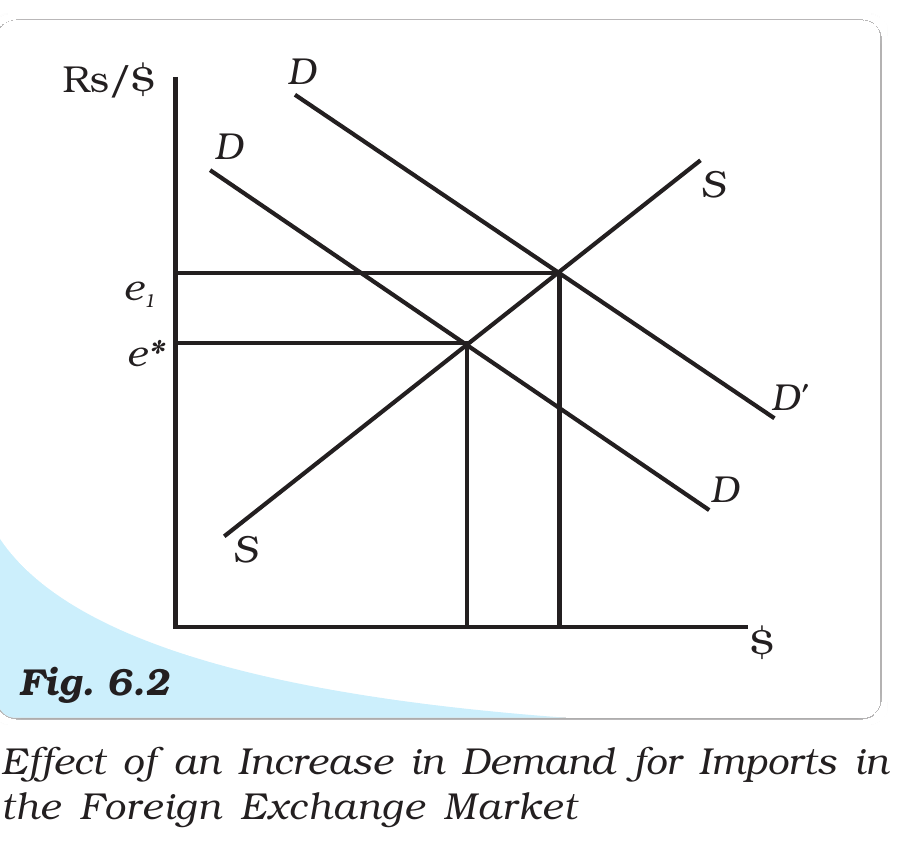
Arrange the following statements in correct sequence as a result of change in demand for import and its impact on exchange rate;
(A) An increase in exchange rate makes domestic goods cheaper, and increases the exports of domestic country.
(B) There is an increase in the income in the domestic country.
(C) It will lead to increase in the import demand.
(D) There will be increase in the exchange rate.
Choose the correct answer from the options given below:
Answer & explanation
Correct answer: option 2
The correct answer is Option (2) → (B), (C), (D), (A)
In a flexible system the exchange rate is the price of foreign currency, set by its demand and supply. A rise in domestic income raises import demand and so the demand for foreign currency; its price, the exchange rate, rises; and the cheaper domestic currency makes exports rise.
(B) There is an increase in the income in the domestic country. — the starting point. With more income, people spend more on all goods, foreign goods among them.
(C) It will lead to increase in the import demand. — a rise in income raises the demand for imports. To pay for imports, residents need foreign currency, so the demand for foreign exchange rises.
(D) There will be increase in the exchange rate. — with supply unchanged, the higher demand for foreign exchange raises its price, so more domestic currency is needed for each unit of foreign currency: the domestic currency depreciates.
(A) An increase in exchange rate makes domestic goods cheaper, and increases the exports of domestic country. — finally, foreigners now get more domestic currency for their money, so domestic goods become cheaper for them and exports rise.
NCERT (2025-26): “Interest Rates and the Exchange Rate … Income and the Exchange Rate When income increases, consumer spending increases. Spending on imported goods is also likely to increase. When imports increase, the demand curve for foreign exchange shifts to the right. There is a depreciation of the domestic currency. If there is an increase in income abroad as well, domestic exports will rise and the supply curve of foreign exchange shifts outward. On balance, the domestic currency may or may not depreciate. What happens will depend on whether exports are growing faster than imports.…”
|