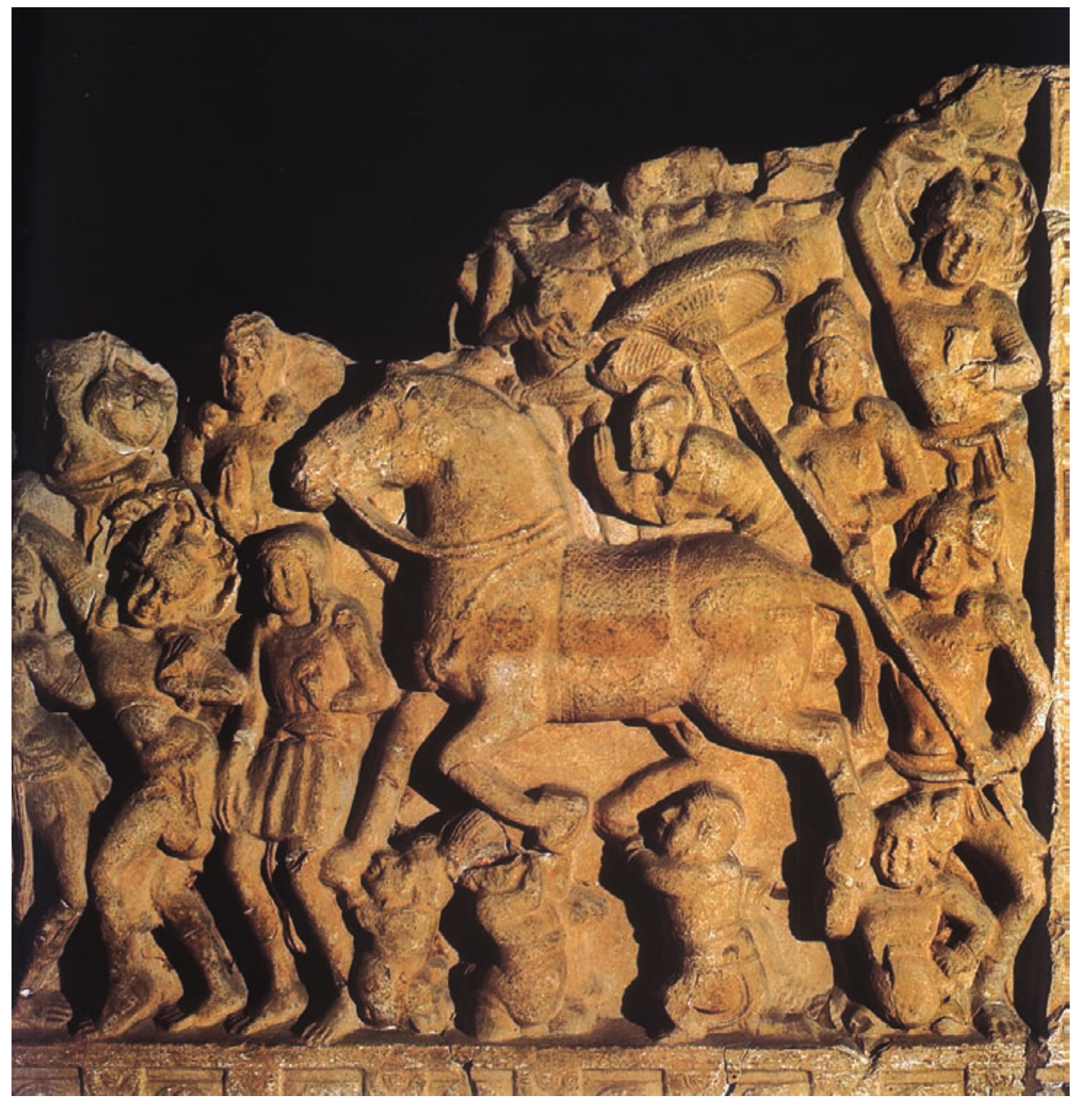
A sculpture c. 200 CE from Amaravati depicts the departure of the ____________ from his palace.
Answer & explanation
Correct answer: option 1
The correct answer is Option (1) → Buddha
The Amaravati sculpture (Andhra Pradesh, c. 200 CE) shows the departure of the Buddha from his palace. Siddhartha, as the Buddha was named at birth, grew up in a sheltered palace life. After he saw an old man, a sick man and a corpse, and then a peaceful homeless mendicant, he left the palace to search for his own truth.
NCERT (2025-26): “4. The Buddha and the Quest for Enlightenment … He had a sheltered upbringing within the palace, insulated from the harsh realities of life. One day he persuaded his charioteer to take him into the city. His first journey into the world outside was traumatic. He was deeply anguished when he saw an old man, a sick man and a corpse. He realised in that moment that the decay and destruction of the human body was inevitable. He also saw a homeless mendicant, who, it seemed to him, had come to terms with old age, disease and death, and found peace. Siddhartha decided that he too would adopt the same path. Soon after, he left the palace and set out in search of his own truth.…”
Fig. 4.7 A sculpture (c. 200 CE) from Amaravati (Andhra Pradesh), depicting the departure of the Buddha from his palace |