Match List-I with List-II
| List-I | List-II |
| Solution formed by mixing | Example |
| (A) Solid solute in gas solvent | (I) Acetone in water. |
| (B) Liquid solute in liquid solvent | (II) Hydrogen in palladium. |
| (C) Solid solute in solid solvent | (III) Camphor in nitrogen gas. |
| (D) Gas solute in solid solvent | (IV) Copper in gold. |
Choose the correct answer from the options given below:
Answer & explanation
Correct answer: option 3
The correct answer is Option (3) → (A) - (III), (B) - (I), (C) - (IV), (D) - (II)
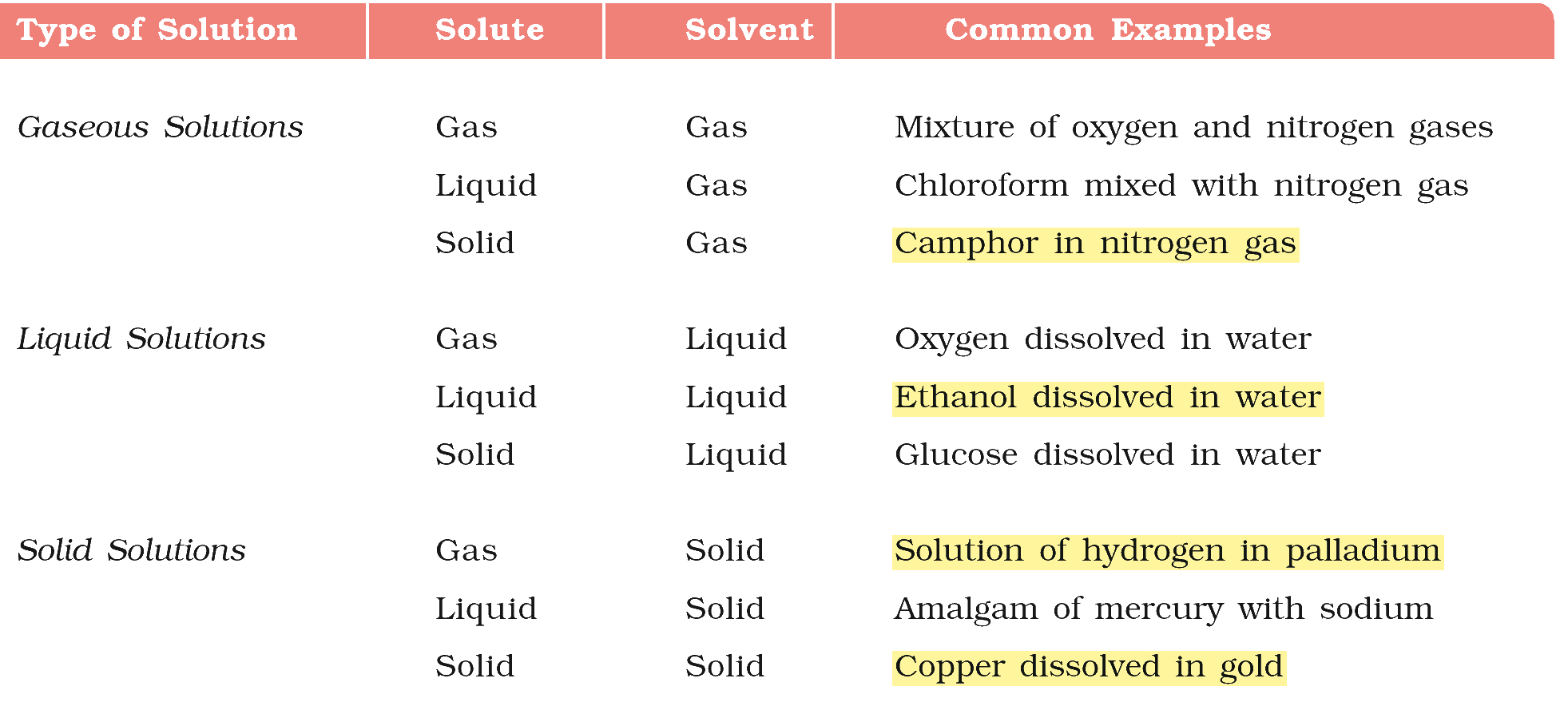
A solution is named by the physical state of its solvent, the component present in the larger amount. With three states for the solvent and three for the solute, there are nine types of binary solution; each item here is one of them:
(A) Solid solute in gas solvent — This matches (III) Camphor in nitrogen gas. Camphor vapour spreads through nitrogen, giving a gaseous solution.
(B) Liquid solute in liquid solvent — This matches (I) Acetone in water. Both components are liquids that mix completely, like ethanol in water.
(C) Solid solute in solid solvent — This matches (IV) Copper in gold. Copper atoms take the place of gold atoms in the solid metal lattice, forming an alloy.
(D) Gas solute in solid solvent — This matches (II) Hydrogen in palladium. Palladium absorbs large volumes of hydrogen gas into its solid lattice.
Shortcut: The pair (A)–(III) appears in Options (2) and (3), and (B)–(I) then leaves only Option (3).
NCERT (2026-27 edition):
Types of Solutions – …