Read the passage and answer the questions:
Pollution
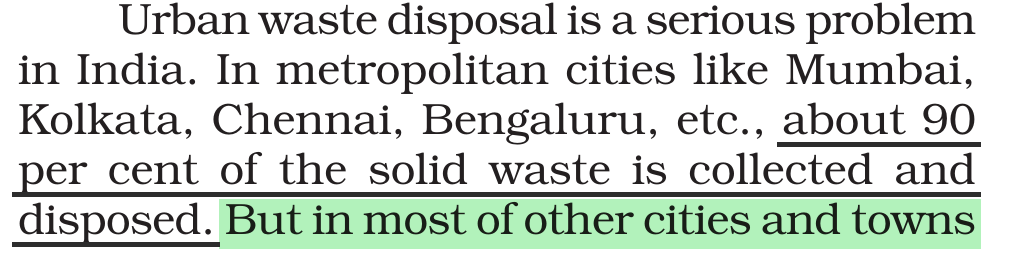
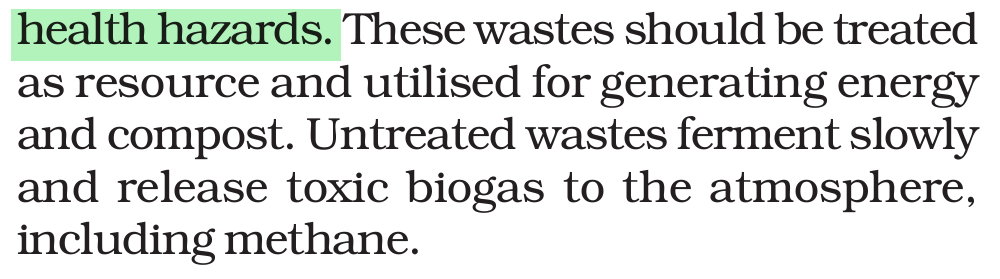
Water pollution is a source of various water-borne diseases like diarrhoea, intestinal worms, hepatitis. Air pollution also causes various diseases related to respiratory, nervous and circulatory systems. Smoky fog over cities called as urban smog is caused by atmospheric pollution. Rainwater analysis of urban environment has indicated that pH value of the first rain after summer is always lower than the subsequent rains. Urban waste disposal is a serious problem in India. In metropolitan cities like Mumbai, Kolkata, Chennai, Bengaluru, etc., about 90 per cent of the solid waste is collected and disposed. But in most of other cities and towns in the country, about 30 to 50 per cent of the waste generated are left uncollected which accumulate on streets, in open spaces between houses and in wastelands leading to serious health hazards. These wastes should be treated as resource and utilised for generating energy and compost. Untreated wastes ferment slowly and release toxic biogas to the atmosphere, including methane. Based on the universal law ‘Polluter pays’ effort to restore the ecology and safeguard the human health with people’s participation has taken place in Daurala near Meerut. At national level the first major legislative provision to address pollution was the Water Prevention and Control of Pollution Act 1974 followed by Environment Protection Act, 1986.
About how much solid waste generated in non-metropolitan cities and towns in India is left uncollected?
Answer & explanation
Correct answer: option 4
The correct answer is Option (4) → 30 to 50 percent
In metropolitan cities such as Mumbai, Kolkata, Chennai and Bengaluru about 90 per cent of the solid waste is collected and disposed. In most other cities and towns, about 30 to 50 per cent of the waste is left uncollected; it piles up on streets, in open spaces and in wastelands and becomes a serious health hazard.
Note: This passage is put together from lines of the NCERT chapter ‘Geographical Perspective on Selected Issues and Problems’ (India – People and Economy): water and air pollution, urban waste disposal and the Daurala case study. Its last sentence on the pollution laws comes from the chapter ‘Water Resources’. Even the little Daurala case-study box, tucked beside the main text, got a starring role in this paper. Read the boxes as carefully as the chapter around them.
NCERT: India - People and Economy — Chapter 9: Geographical Perspective on Selected Issues and Problems, Urban Waste Disposal (2025-26)
|