Match List-I with List-II
| List-I (Events) | List-II (Year) | ||
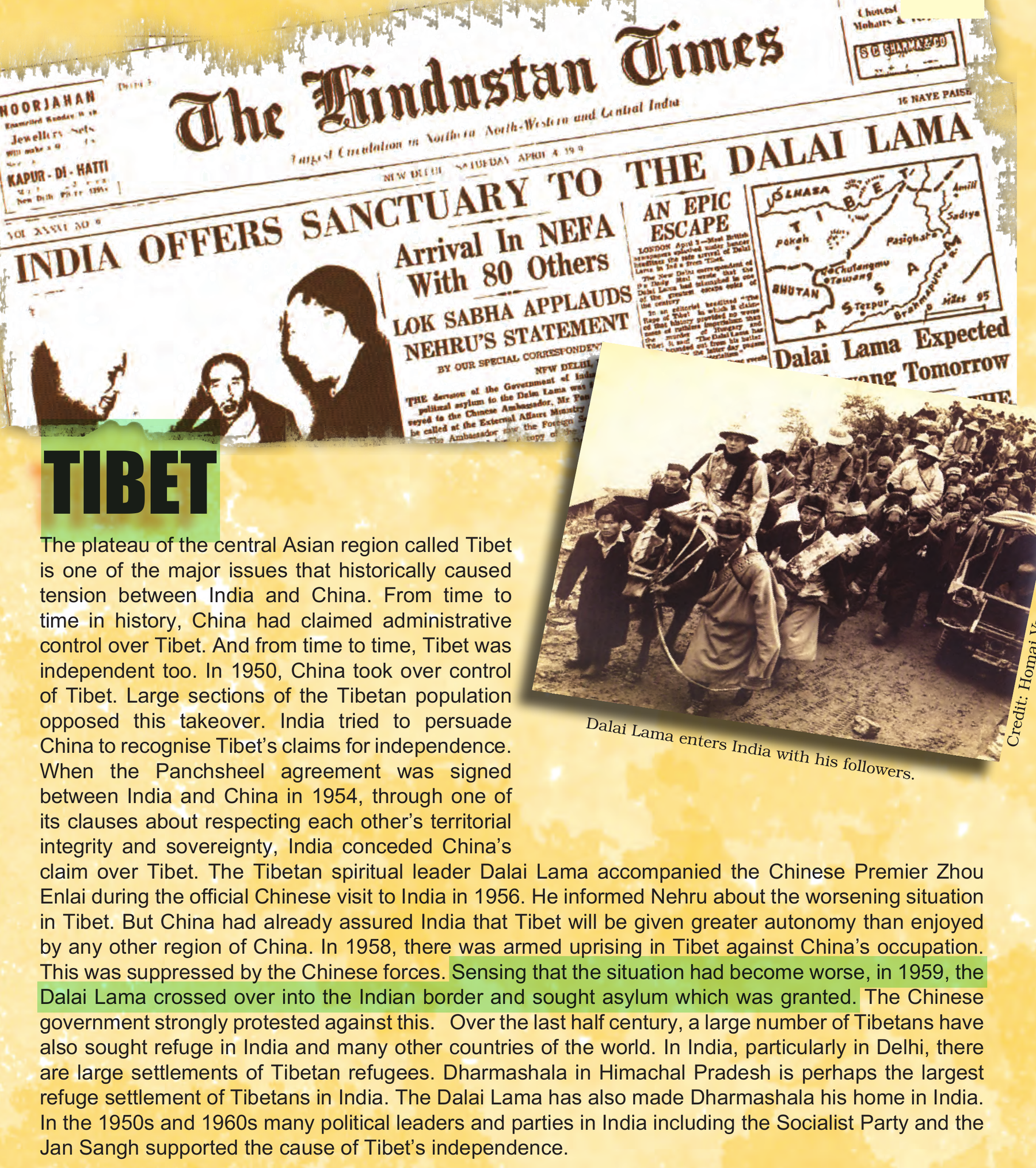
| (A) | Dalai Lama was granted asylum by India | (I) | 1966 |
| (B) | Tashkent Agreement | (II) | 1961 |
| (C) | First NAM Summit in Belgrade | (III) | 1955 |
| (D) | Afro-Asian Conference in Bandung | (IV) | 1959 |
Choose the correct answer from the options given below:
Answer & explanation
Correct answer: option 1
The correct answer is Option (1) → (A) – (IV), (B) – (I), (C) – (II), (D) – (III)
(A) Dalai Lama was granted asylum by India — this matches (IV) 1959.
(B) Tashkent Agreement — this matches (I) 1966.
(C) First NAM Summit in Belgrade — this matches (II) 1961.
(D) Afro-Asian Conference in Bandung — this matches (III) 1955.
NCERT (2025-26): “Afro-Asian unity … India was a staunch supporter of the decolonisation process and firmly opposed racism, especially apartheid in South Africa. The Afro-Asian conference held in the Indonesian city of Bandung in 1955, commonly known as the Bandung Conference, marked the zenith of India’s engagement with the newly independent Asian and African nations. The Bandung Conference later led to the establishment of the NAM. The First Summit of the NAM was held in Belgrade in September 1961. Nehru was a co-founder of the NAM. Wars and Peace with Pakistan … The hostilities came to an end with the UN intervention. Later, Indian Prime Minister Lal Bahadur Shastri and Pakistan’s General Ayub Khan signed the Tashkent Agreement, brokered by the Soviet Union, in January 1966.…”
|