Match the events in List I with their year of occurrence with List II
| LIST I Events | LIST II Year of Occurrence | ||
| (A) | Job Charnock leased three villages | (I) | 1698 |
| (B) | Fort William was established | (II) | 1863 |
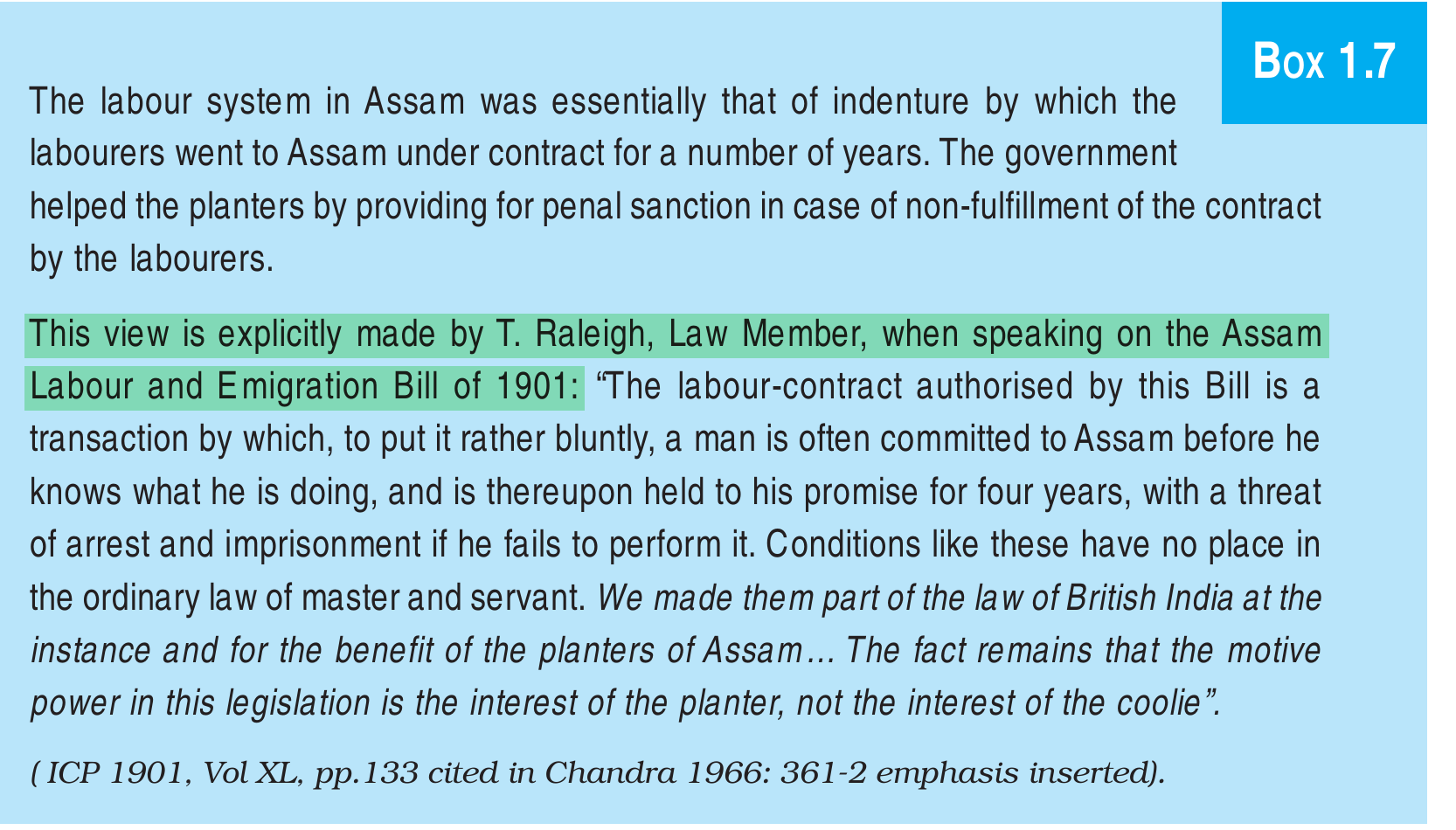
| (C) | Assam labour and emigration bill was passed | (III) | 1901 |
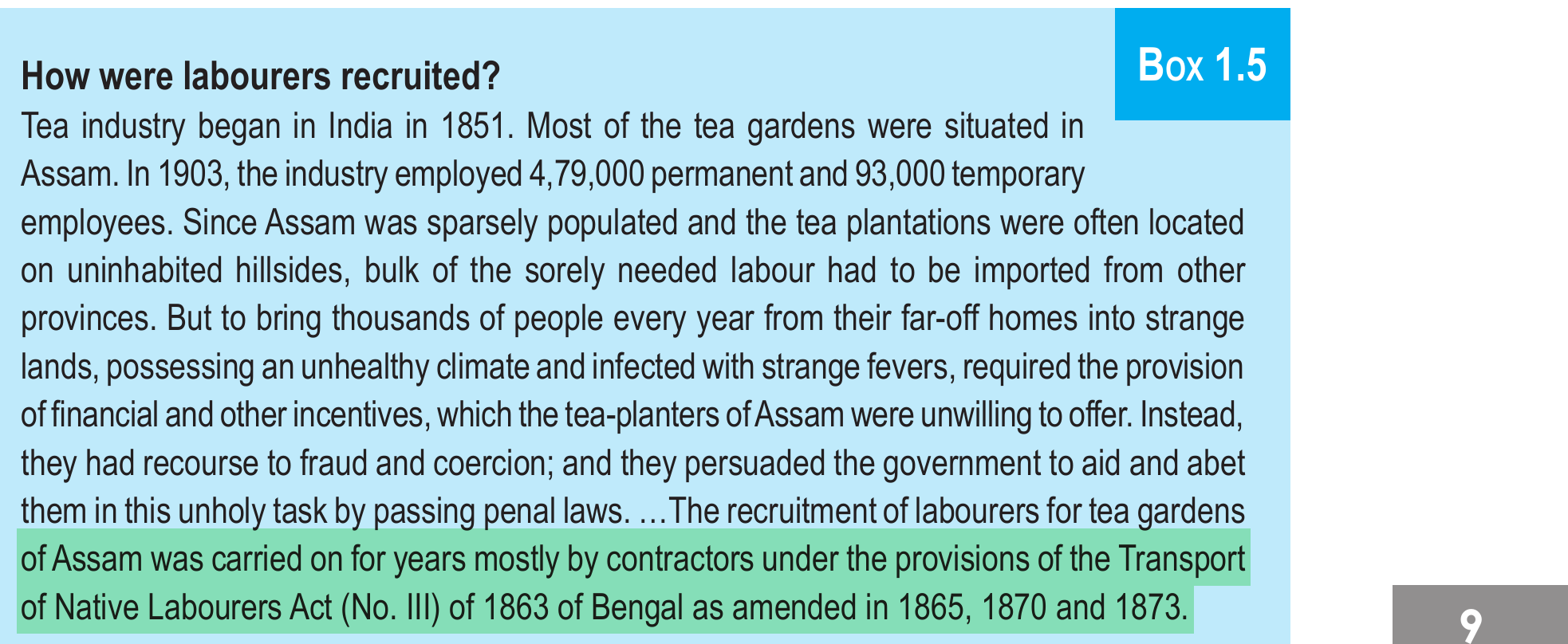
| (D) | Transport of Native labourers Act allowed recruitment of Labourers | (IV) | 1690 |
Choose the correct answer from the options given below:
Answer & explanation
Correct answer: option 2
The correct answer is Option (2) → (A)-(IV), (B)-(I), (C)-(III), (D)-(II)
(A) Job Charnock leased three villages — this matches (IV) 1690.
(B) Fort William was established — this matches (I) 1698.
(C) Assam Labour and Emigration Bill was Passed — this matches (III) 1901.
(D) Transport of Native Labourers Act allowed recruitment of laborers — this matches (II) 1863.
Note: Box 1.7, which speaks of the Assam Labour and Emigration Bill of 1901, was there in the chapter ‘Structural Change’ of the pre-rationalised NCERT, which NTA followed in 2023. This box has been deleted from the NCERT book (2025-26), though the chapter is still there.
NCERT (2025-26): “1.2 Urbanisation and Industrialisation … In 1690, an English merchant named Job Charnock arranged to lease three villages (named Kolikata, Gobindapur, and Sutanuti) by the river Hugli in order to set up a trading post. In 1698, Fort William was established by the river for defensive purposes, and a large open area was cleared around the fort for military engagements. The fort and the open area (called Maidan) formed the core of the city that emerged rather rapidly.”
Box 1.5 (NCERT 2025-26)
Box 1.7 (Pre-rationalised NCERT) |