Match the LIST-I with LIST-II
| LIST-I | LIST-II |
| (Money Market Instrument) | (Features) |
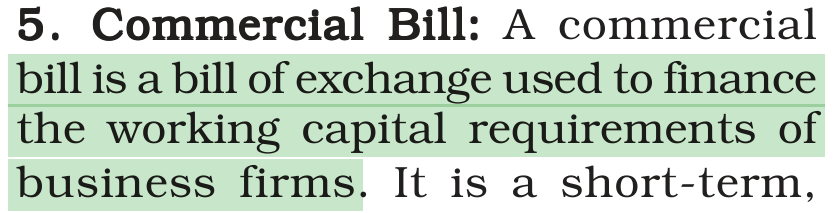
| A. Certificate of Deposit | I. Bill of Exchange used to finance the working capital requirements of business firms. |
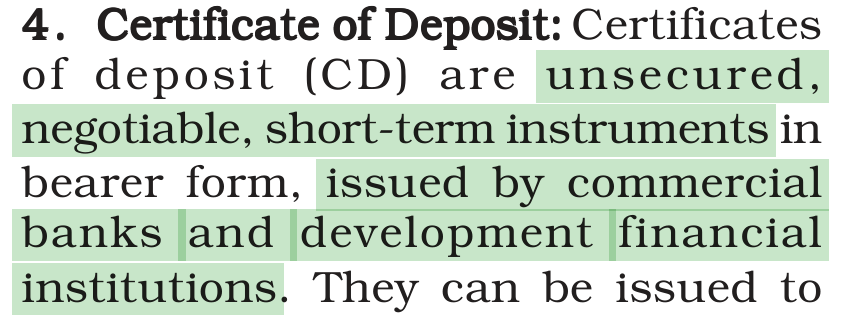
| B. Commercial Paper | II. Short term unsecured, negotiable instruments issued by Commercial Banks and Development Finance Institutions. |
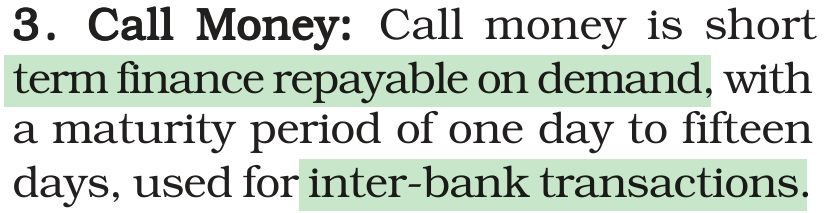
| C. Commercial Bill | III. Short term finance repayable on demand, used for inter bank transactions |
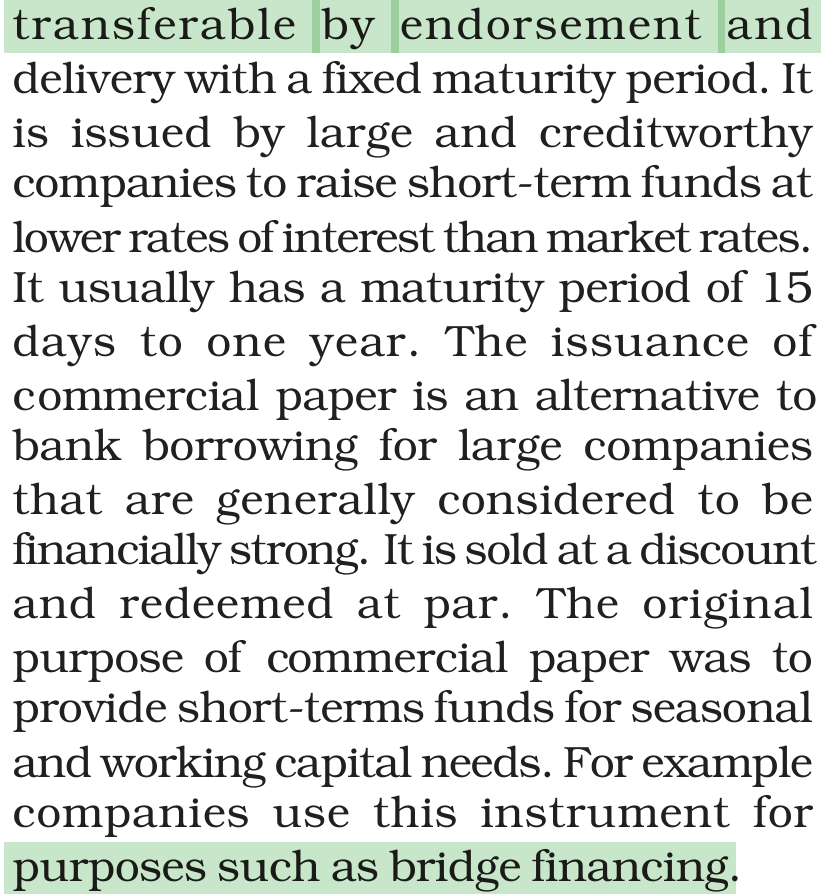
| D. Call Money | IV. Short term, unsecured promissory note, negotiable and transferable by endorsement, used for bridge financing. |
Choose the correct answer from the options given below:
Answer & explanation
Correct answer: option 1
The correct answer is Option (1) → (A) - (II), (B) - (IV), (C) - (I), (D) - (III)
(A) Certificate of Deposit — this matches (II) Short term unsecured, negotiable instruments issued by Commercial Banks and Development Finance Institutions. Banks issue these to individuals and companies to raise money, mostly when funds are short in the market.
(B) Commercial Paper — this matches (IV) Short term, unsecured promissory note, negotiable and transferable by endorsement, used for bridge financing. Large companies with a good credit record issue it. Bridge financing means meeting a cost, such as the expenses of a new issue, until long-term funds come in.
(C) Commercial Bill — this matches (I) Bill of Exchange used to finance the working capital requirements of business firms. A seller who sells on credit draws a bill on the buyer. Once a bank accepts it, it becomes a commercial bill.
(D) Call Money — this matches (III) Short term finance repayable on demand, used for inter bank transactions. Banks lend to one another for one to fifteen days, often to keep up the cash they must hold with the Reserve Bank.
Note: Although the chapter ‘Financial Markets’ was dropped from the NCERT textbooks during rationalisation, it has stayed in the NTA syllabus every year since 2022, except for 2025, and it is part of the syllabus again from 2026. This question is therefore based on the pre-rationalised NCERT, an extract from which is given below.
NCERT (Pre-rationalised Edition):
|