Which one of the following combinations are correct?
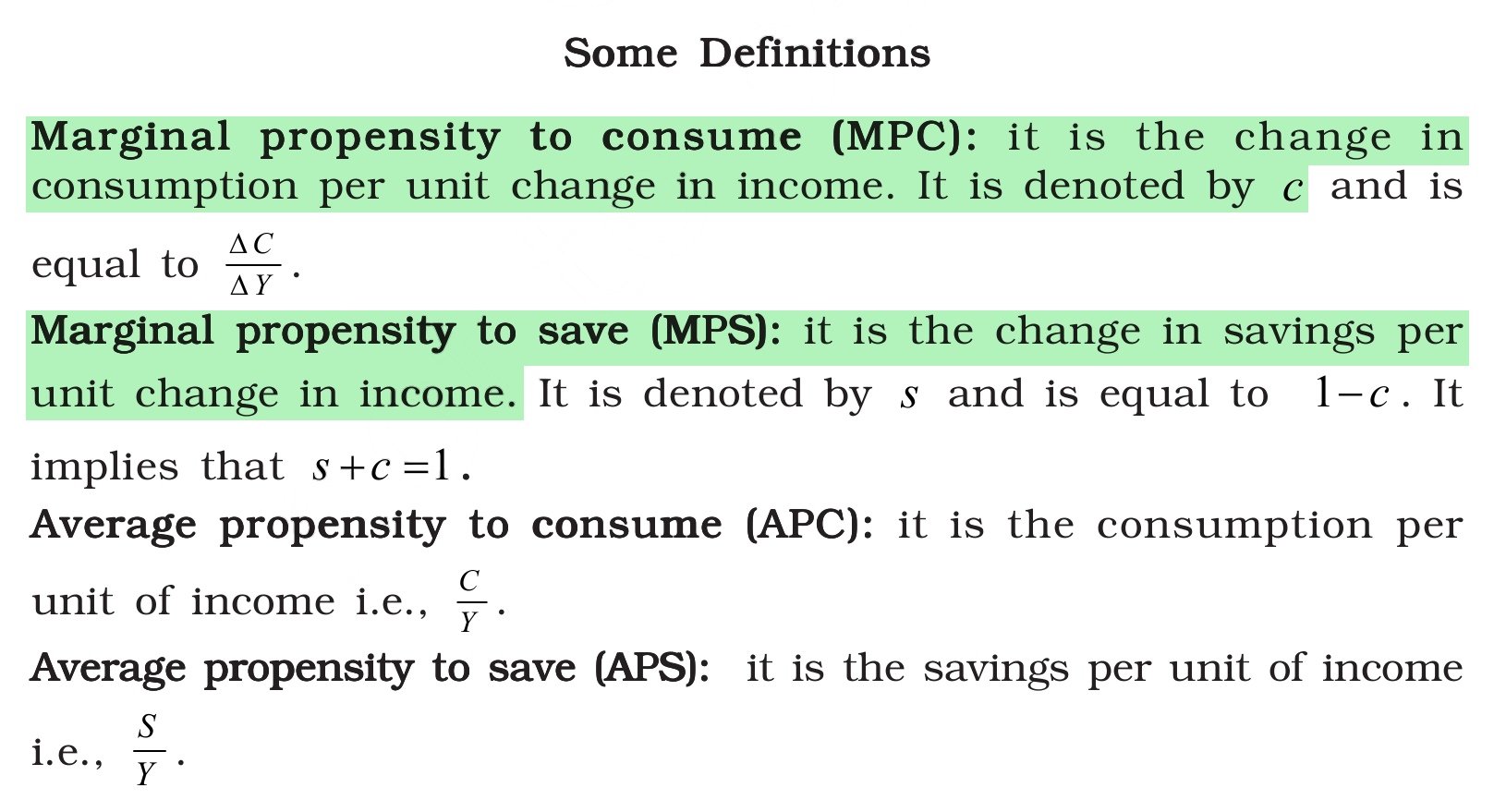
(A) ΔC/ΔY=Marginal Propensity to Consume (MPC).
(B) ΔS/ΔY=Marginal Propensity to Save (MPS).
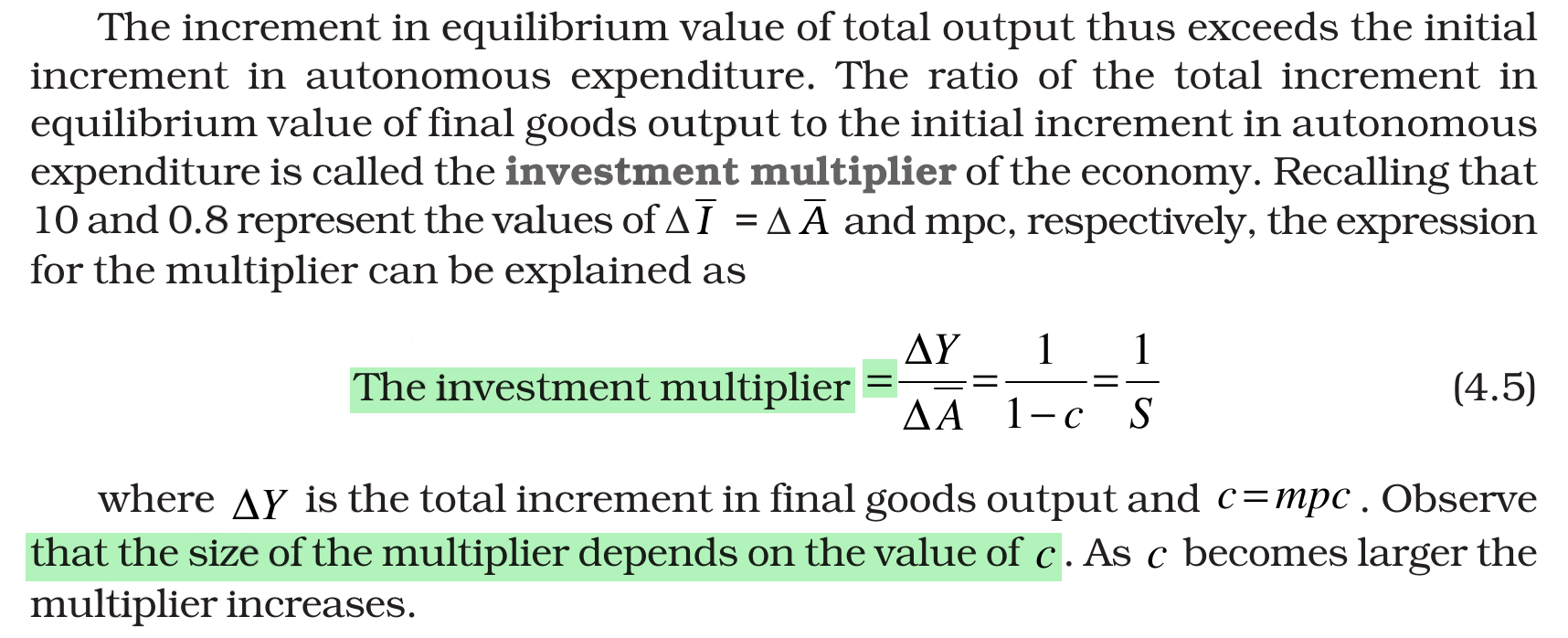
(C) 1/1-APS=Investment Multiplier.
(D) 1/1- C=Investment Multiplier.
Choose the correct answer from the options given below:
Answer & explanation
Correct answer: option 4
The correct answer is Option (4) → (A), (B) and (D) only
When income rises by a rupee, people spend a part of it and save the rest. The part spent is the marginal propensity to consume (MPC, written c) and the part saved the marginal propensity to save (MPS). These marginal ratios, not the averages, decide how much spending each round of new income creates, and so the size of the investment multiplier.
(A) ΔC/ΔY=Marginal Propensity to Consume (MPC). Correct. The MPC is the change in consumption per unit change in income, ΔC/ΔY. It is denoted by c and lies between 0 and 1, since people spend only a part of any extra income.
(B) ΔS/ΔY=Marginal Propensity to Save (MPS). Correct. The MPS is the change in saving per unit change in income, ΔS/ΔY. Every extra rupee of income is either consumed or saved, so MPS = 1 − c, and MPC + MPS = 1.
(C) 1/1-APS=Investment Multiplier. Incorrect. The multiplier is built from the marginal propensities, not from the average propensity to save. APS is total saving divided by total income, S/Y, and tells how much of the whole income is saved; the multiplier depends on how much of each extra rupee of income is spent in the next round. The multiplier is 1/(1 − MPC), which is the same as 1/MPS.
(D) 1/1- C=Investment Multiplier. Correct. The investment multiplier is the total increase in output divided by the increase in autonomous expenditure, ΔY/ΔA = 1/(1 − c), where c is the MPC. The larger the share of extra income that is spent, the larger the multiplier. Statement (D) is this formula, with c printed as a capital C (see the Note below).
Note: It seems that there is a mistake in the original NTA paper, which prints ‘1/1- C’ in statement (D) when it should read 1/(1 − c). In the textbook, capital C stands for consumption itself and small c for the marginal propensity to consume. Statement (D) is the standard formula of the investment multiplier, so it is read with c, the MPC, and is correct; read any other way, none of the options would be correct.
NCERT: Introductory Macroeconomics — Chapter 4: Determination of Income and Employment (2025-26)
|