
Which of the following are surgical methods of birth control?
(A) Vaults
(B) Intra Uterine Devices
(C) Vasectomy
(D) Tubectomy
(E) Coitus interruptus
Choose the correct answer from the options given below:
Answer & explanation
Correct answer: option 2
The correct answer is Option (2) → (C) and (D) only
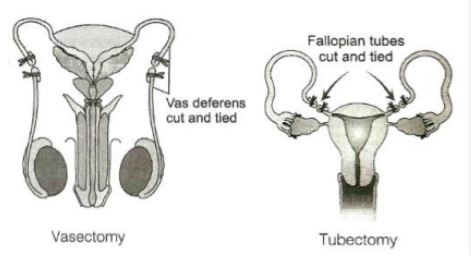
Sterilization provides a permanent and sure birth control. Sterilization are generally advised for the male/female partner as a terminal method to prevent any more pregnancies. Surgical intervention blocks gamete transport and thereby prevent conception. Sterilisation procedure in the male is called ‘vasectomy’ and that in the female, ‘tubectomy’.
In vasectomy, a small part of the vas deferens is removed or tied up through a small incision on the scrotum . So in this surgical intervention sperms are produced but undergo phagocytosis in epididymis .This is why vasectomy is considered a form of permanent contraception, as it prevents sperm from being present in the ejaculate.
In tubectomy, a small part of the fallopian tube is removal or tied up through a small incision in the abdomen or through vagina. These techniques are highly effective but their reversibility is very poor.
Diaphragms, cervical caps and vaults are barriers made of rubber that are inserted into the female reproductive tract to cover the cervix during coitus. They prevent conception by blocking the entry of sperms through the cervix. They are reusable.
An intrauterine device (IUD) is a form of birth control that a healthcare provider inserts into your uterus. Intra Uterine Devices are presently available as the non-medicated IUDs (e.g., Lippes loop), copper releasing IUDs (CuT, Cu7, Multiload 375) and the hormone releasing IUDs (Progestasert, LNG-20).
Withdrawal or coitus interruptus is a method in which the male partner withdraws his penis from the vagina just before ejaculation so as to avoid insemination.