Match the LIST-I with LIST-II:
| LIST-I Terms | LIST-II Associations | ||
| A. | Kudirai-Chettis | I. | A powerful ruling lineage in Orissa |
| B. | Gajapati | II. | Ashvapati |
| C. | Deccan Sultans | III. | Horse merchants |
| D. | Rayas | IV. | Narapati |
Choose the correct answer from the options given below:
Answer & explanation
Correct answer: option 1
The correct answer is Option (1) → A-III, B-I, C-II, D-IV
(A) Kudirai-Chettis — this matches (III) Horse merchants. Warfare then depended on cavalry, and these local merchants took part in the import of horses from Arabia and Central Asia.
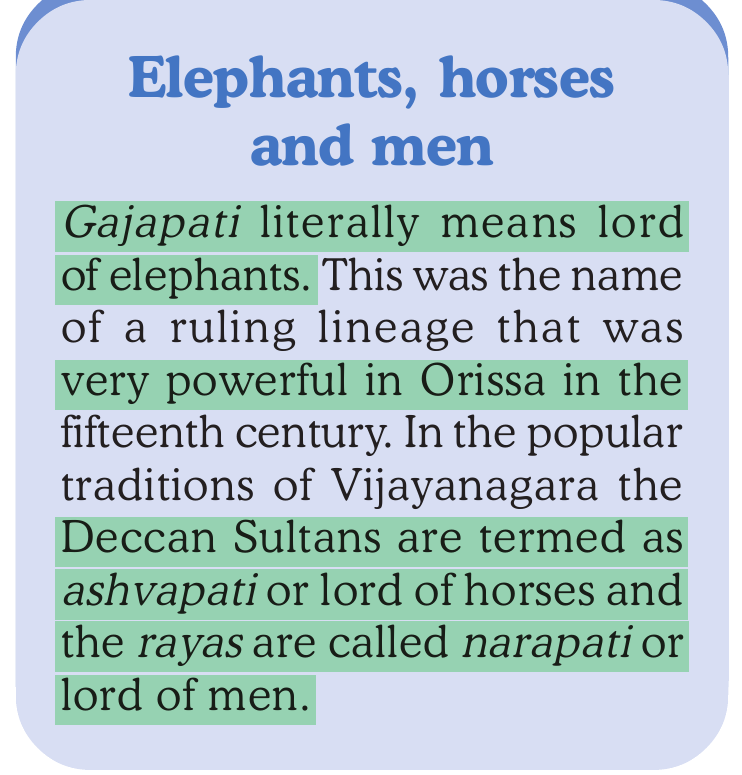
(B) Gajapati — this matches (I) A powerful ruling lineage in Orissa. Gajapati literally means ‘lord of elephants’; the lineage was very powerful in Orissa in the fifteenth century.
(C) Deccan Sultans — this matches (II) Ashvapati. In the popular traditions of Vijayanagara the Deccan Sultans are called ashvapati, ‘lord of horses’.
(D) Rayas — this matches (IV) Narapati. The rayas of Vijayanagara are called narapati, ‘lord of men’.
NCERT (2025-26): “2.1 Kings and traders … As warfare during these times depended upon effective cavalry, the import of horses from Arabia and Central Asia was very important for rival kingdoms. This trade was initially controlled by Arab traders. Local communities of merchants known as kudirai chettis or horse merchants also participated in these exchanges.…”
|