Match List-I with List-II
| List-I | List-II |
| A. Opening of Suez Canal | I. 1907 |
| B. First Census in British India | II. 1932 |
| C. TISCO | III. 1869 |
| D. Establishment of Tata Airlines | IV. 1881 |
Choose the correct answer from the options given below:
Answer & explanation
Correct answer: option 3
The correct answer is Option (3) → A-III, B-IV, C-I, D-II
All four events belong to India under British rule.
| List-I | List-II | Reason |
|---|---|---|
| (A) Opening of Suez Canal | (III) 1869 | The canal opened in 1869. It cut the cost of transport and made the Indian market easier for Britain to reach. |
| (B) First Census in British India | (IV) 1881 | Details of British India’s population were first collected through a census in 1881. |
| (C) TISCO | (I) 1907 | The Tata Iron and Steel Company was set up in 1907, as iron and steel industries began in the early twentieth century. |
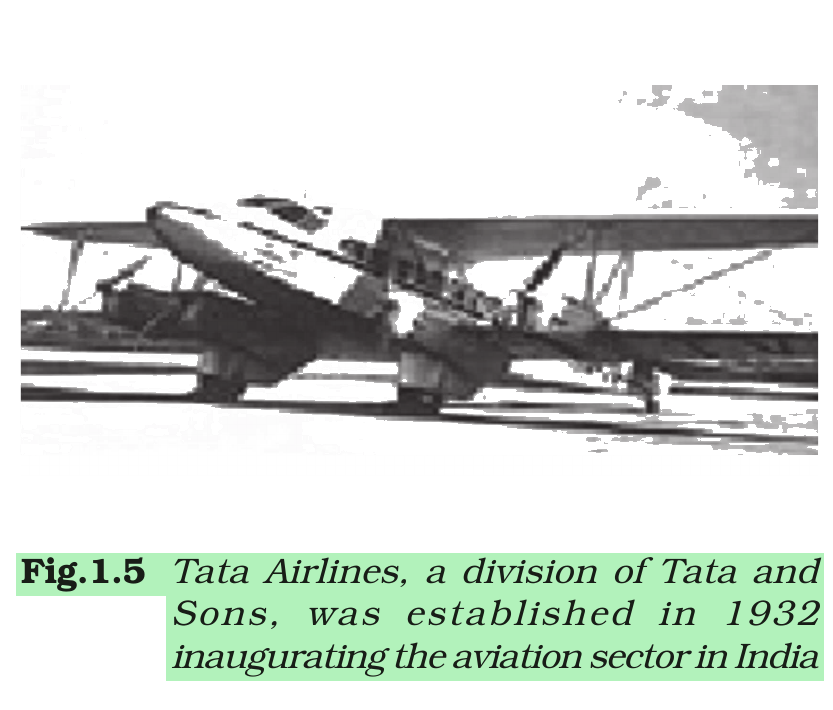
| (D) Establishment of Tata Airlines | (II) 1932 | Tata Airlines, a part of Tata and Sons, began in 1932. It started the aviation sector in India. |
NCERT (2026-27): “1.4 Industrial Sector … During the second half of the nineteenth century, modern industry began to take root in India but its progress remained very slow. Initially, this development was confined to the setting up of cotton and jute textile mills. The cotton textile mills, mainly dominated by Indians, were located in the western parts of the country, namely, Maharashtra and Gujarat, while the jute mills dominated by the foreigners were mainly concentrated in Bengal. Subsequently, the iron and steel industries began coming up in the beginning of the twentieth century. The Tata Iron and Steel Company (TISCO) was incorporated in 1907.… 1.6 Demographic Condition Various details about the population of British India were first collected through a census in 1881. Though suffering from certain limitations, it revealed the unevenness in India’s population growth. Subsequently, every ten years such census operations were carried out.… Box 1.3: Trade Through the Suez Canal Suez Canal is an artificial waterway running from north to south across the Isthmus of Suez in north-eastern Egypt. It connects Port Said on the Mediterranean Sea with the Gulf of Suez, an arm of the Red Sea. The canal provides a direct trade route for ships operating between European or American ports and ports located in South Asia, East Africa and Oceania by doing away with the need to sail around Africa. Strategically and economically, it is one of the most important waterways in the world. Its opening in 1869 reduced the cost of transportation and made access to the Indian market easier.”
|