
Homologous Organs are:
Answer & explanation
Correct answer: option 2
The correct answer is Option (2) → Similar in structure and different in functions
Option (1) Similar in structure and same in functions — Incorrect. Homology is about a common structure that has taken up different jobs. Saying the functions are the same misses the point of homology.
Option (2) Similar in structure and different in functions — Correct. Homologous organs come from divergent evolution: the forelimbs of whales, bats, cheetahs and humans have the same bones but swim, fly, run and hold.
Option (3) Different in structure and same in function — Incorrect. This describes analogous organs, the result of convergent evolution. The wings of a butterfly and of a bird do the same job, but they are not built alike.
Option (4) Similar in structure and have same or different functions — Incorrect. This mixes the two ideas. Homologous organs are defined by a common structure developed along different directions for different needs, so their functions differ.
NCERT Extract:
What Are the Evidences for Evolution? – “… crocodiles and birds Such similarities can be interpreted to understand whether common ancestors were shared or not. For example whales, bats, Cheetah and human (all mammals) share similarities in the pattern of bones of forelimbs (Figure 6.3b). Though these forelimbs perform different functions in these animals, they have similar anatomical structure – all of them have humerus, radius, ulna, carpals, metacarpals and phalanges in their forelimbs. Hence, in these animals, the same structure developed along different directions due to adaptations to different needs. This is divergent evolution and these structures are homologous. Homology indicates common ancestry.”
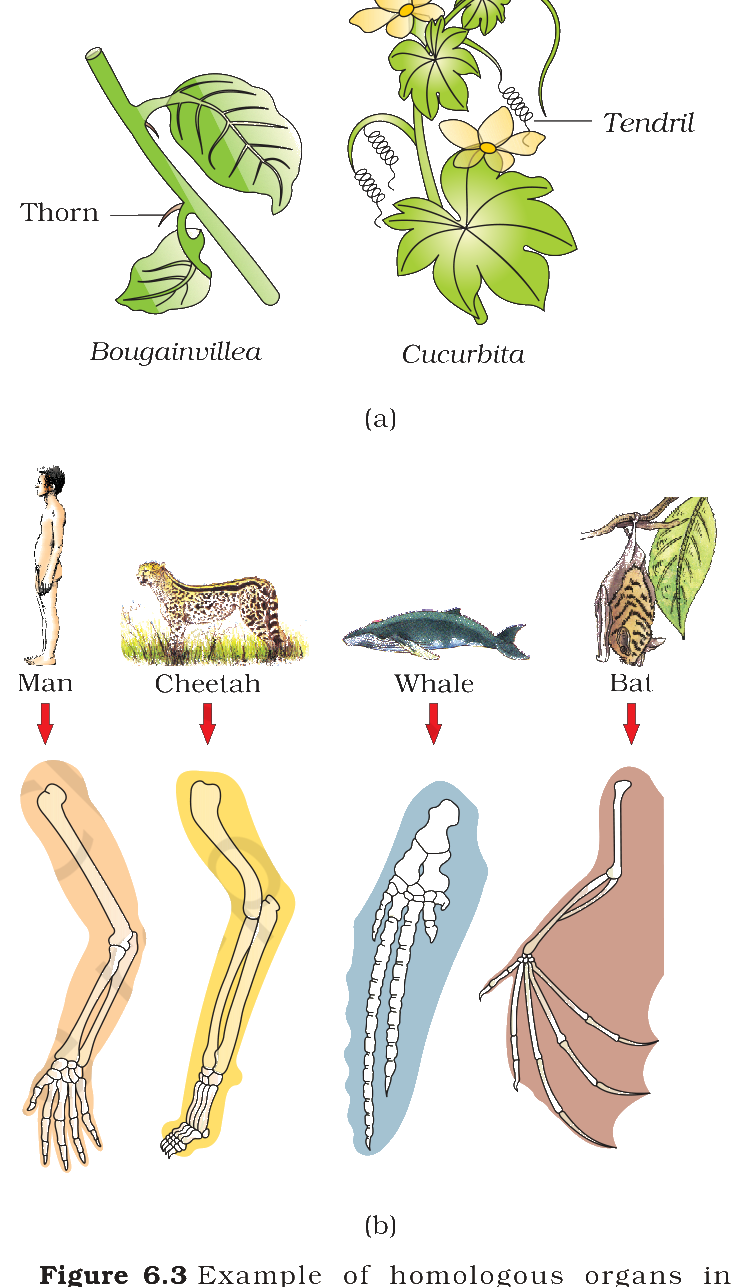
Figure 6.3 Example of homologous organs in (a) Plants and (b) Animals