
After the completion of replication, each DNA molecule will have one parental strand and one newly synthesized strand. This scheme is known as:
Answer & explanation
Correct answer: option 1
The correct answer is Option (1) → Semi-conservative DNA replication
Option (1) Semi-conservative DNA replication — Correct. “Semi-conservative” means half kept: each new DNA molecule keeps one old strand. Meselson and Stahl proved this in 1958 with E. coli grown on heavy nitrogen (15N).
Option (2) Translation — Incorrect. Translation is the making of a protein from mRNA on the ribosomes. It does not copy DNA at all.
Option (3) Polymerization — Incorrect. Polymerisation only means joining small units into a long chain. DNA polymerase does polymerise nucleotides during replication, but the word does not name the scheme of one old and one new strand.
Option (4) Semi-conservative DNA transcription — Incorrect. Transcription copies only one strand of DNA into RNA. It makes no new DNA molecule, so it cannot be “semi-conservative”.
NCERT Extract:
Replication –
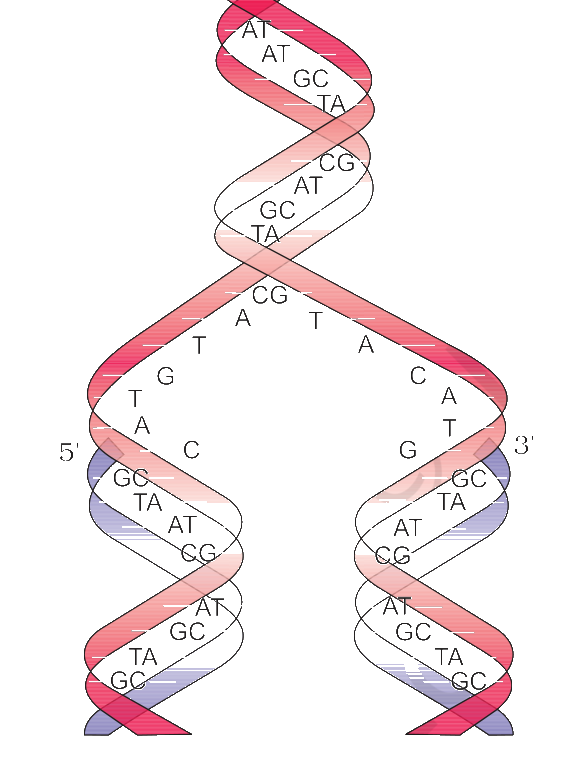
Figure 5.6 Watson-Crick model for semiconservative replication