Match the following books (List-I) with their authors (List-II).
| List-I (Book) | List-II (Author) |
| (A) Suicide | (I) Bishop Joseph Butler |
| (B) Vedic Authorities for Widow Marriage | (II) Thomas Robert Malthus |
| (C) An essay on the Principle of Population | (III) Emile Durkheim |
| (D) Analogy of Religion | (IV) M.G. Ranade |
Choose the correct answer from the options given below:
Answer & explanation
Correct answer: option 4
The correct answer is Option (4) → (A)-(III), (B)-(IV), (C)-(II), (D)-(I)
(A) Suicide — this matches (III) Emile Durkheim.
(B) Vedic Authorities for Widow Marriage — this matches (IV) M.G. Ranade.
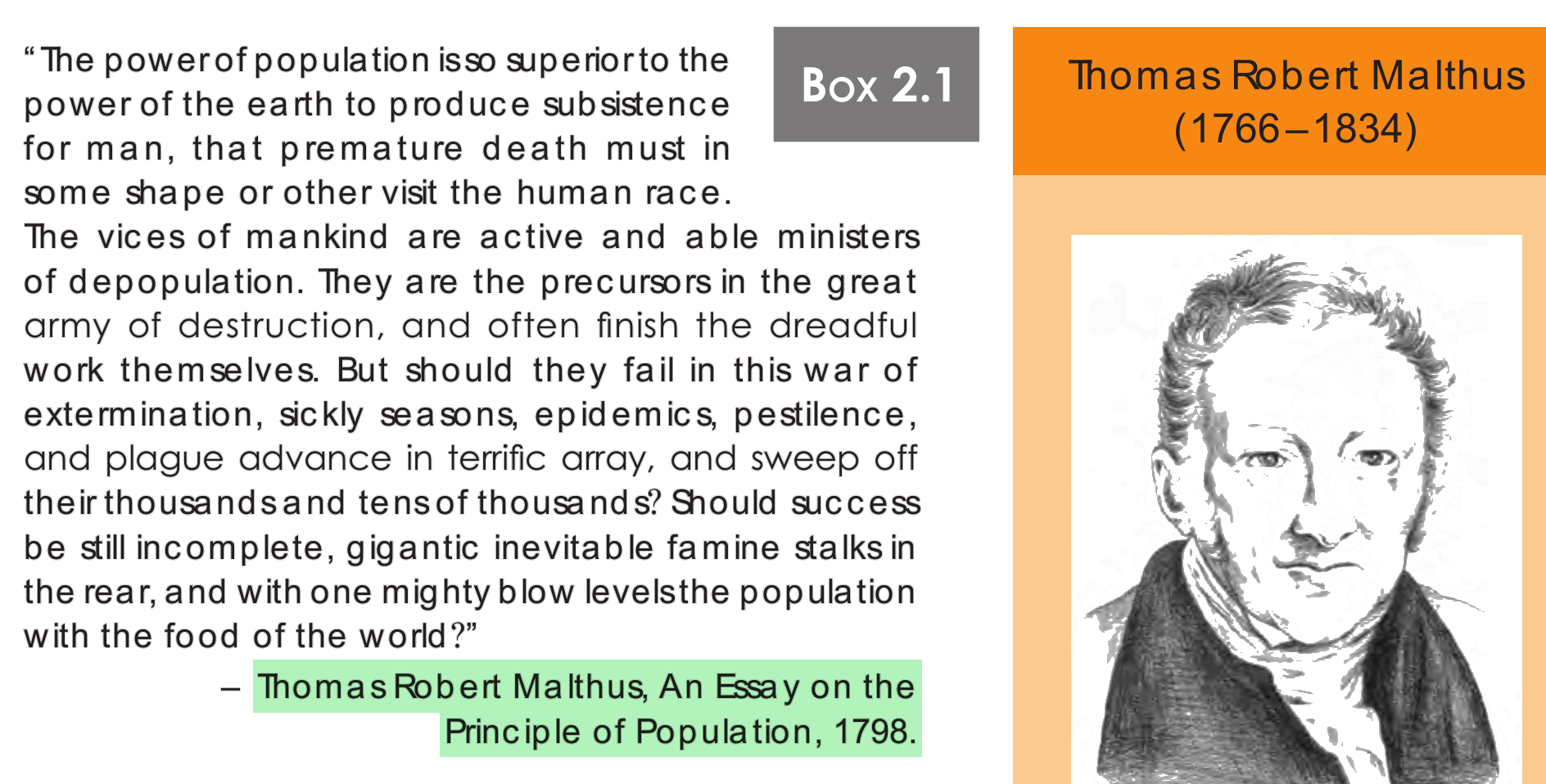
(C) An essay on the Principle of Population — this matches (II) Thomas Robert Malthus.
(D) Analogy of Religion — this matches (I) Bishop Joseph Butler.
Note: NCERT (2025-26) mentions only Durkheim’s famous study explaining the variation in suicide rates; that study is his book ‘Suicide’ (1897).
NCERT (2025-26): “5.3 Struggle for women’s equality and rights … The deplorable and unjust treatment of the Hindu upper caste widows was a major issue taken up by the social reformers. Ranade used the writings of scholars such as Bishop Joseph Butler whose Analogy of Religion and Three Sermons on Human Nature dominated the moral philosophy syllabus of Bombay University in the 1860s. At the same time, M.G. Ranade’s writings entitled the The Texts of the Hindu Law on the Lawfulness of the Remarriage of Widows and Vedic Authorities for Widow Marriage elaborated the shastric sanction for remarriage of widows.” “2.1 Some Theories and Concepts in Demography … Emile Durkheim’s famous study explaining the variation in suicide rates across different countries was a good example of this. Durkheim argued that the rate of suicide (i.e., number of suicides per 100,000 population) had to be explained by social causes even though each particular instance of suicide may have involved reasons specific to that individual or her/his circumstances.…”
|