
Which one of the following organisms shows a haplodiploid sex-determination system?
Answer & explanation
Correct answer: option 3
The correct answer is Option (3) → Honey bee
In a haplodiploid system, sex depends on the number of chromosome sets. A fertilised egg develops into a diploid female. An unfertilised egg develops into a haploid male.
(1) Grasshopper — Incorrect. It has the XO type of sex determination. The male has one X chromosome and the female has two.
(2) Drosophila — Incorrect. It has the XY type. The male has one X and one Y, and the female has XX.
(3) Honey bee — Correct. A queen or a worker develops from a fertilised egg and is diploid, with 32 chromosomes. A drone develops from an unfertilised egg by parthenogenesis and is haploid, with 16 chromosomes.
(4) Bird — Incorrect. Birds have the ZW type. The female has Z and W, and the male has ZZ.
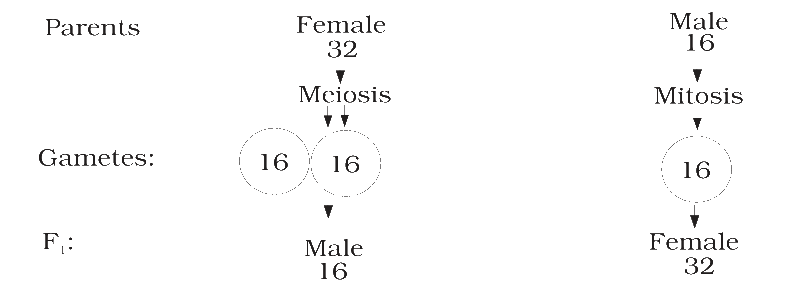
Figure 4.13 Sex determination in honey bee
NCERT Extract:
Sex Determination in Honey Bee – “The sex determination in honey bee is based on the number of sets of chromosomes an individual receives. An offspring formed from the union of a sperm and an egg develops as a female (queen or worker), and an unfertilised egg develops as a male (drone) by means of parthenogenesis. This means that the males have half the number of chromosomes than that of a female. The females are diploid having 32 chromosomes and males are haploid, i.e., having 16 chromosomes.”