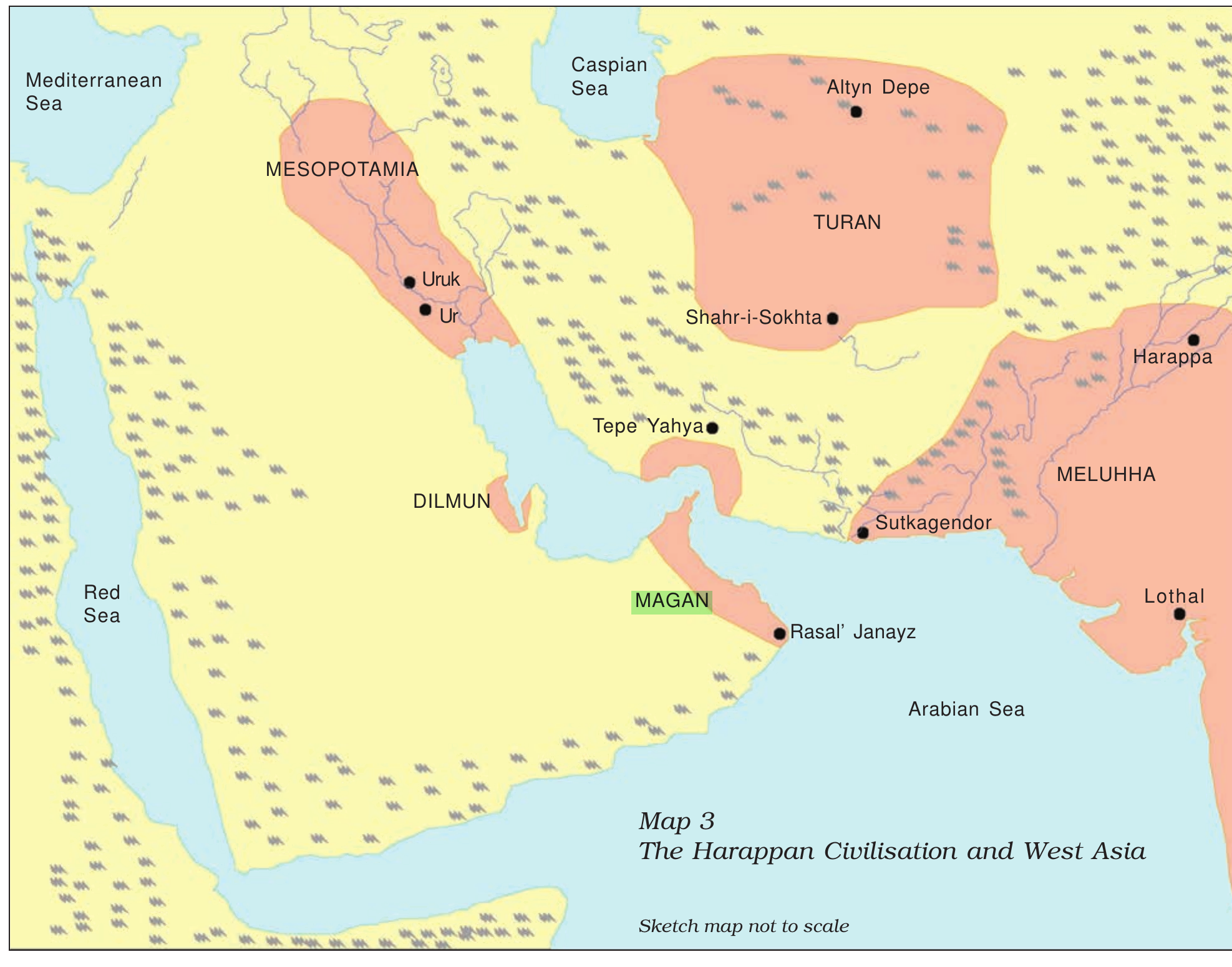
3rd millennium B.C.E. Mesopotamian texts used which of the following name for Oman?
Answer & explanation
Correct answer: option 3
The correct answer is Option (3) → Magan
Mesopotamian texts of the third millennium BCE refer to copper coming from a region called Magan, perhaps a name for Oman.
NCERT (2026-27): “6.2 Contact with distant lands … Recent archaeological finds suggest that copper was also probably brought from Oman, on the southeastern tip of the Arabian peninsula. Chemical analyses have shown that both the Omani copper and Harappan artefacts have traces of nickel, suggesting a common origin. There are other traces of contact as well. A distinctive type of vessel, a large Harappan jar coated with a thick layer of black clay has been found at Omani sites. Such thick coatings prevent the percolation of liquids. We do not know what was carried in these vessels, but it is possible that the Harappans exchanged the contents of these vessels for Omani copper. Mesopotamian texts datable to the third millennium B C E refer to copper coming from a region called Magan, perhaps a name for Oman, and interestingly enough copper found at Mesopotamian sites also contains traces of nickel. Other archaeological finds suggestive of long-distance contacts include Harappan seals, weights, dice and beads. In this context, it is worth noting that Mesopotamian texts mention contact with regions named Dilmun (probably the island of Bahrain), Magan and Meluhha, possibly the Harappan region. They mention the products from Meluhha: carnelian, lapis lazuli, copper, gold, and varieties of wood.…”
|