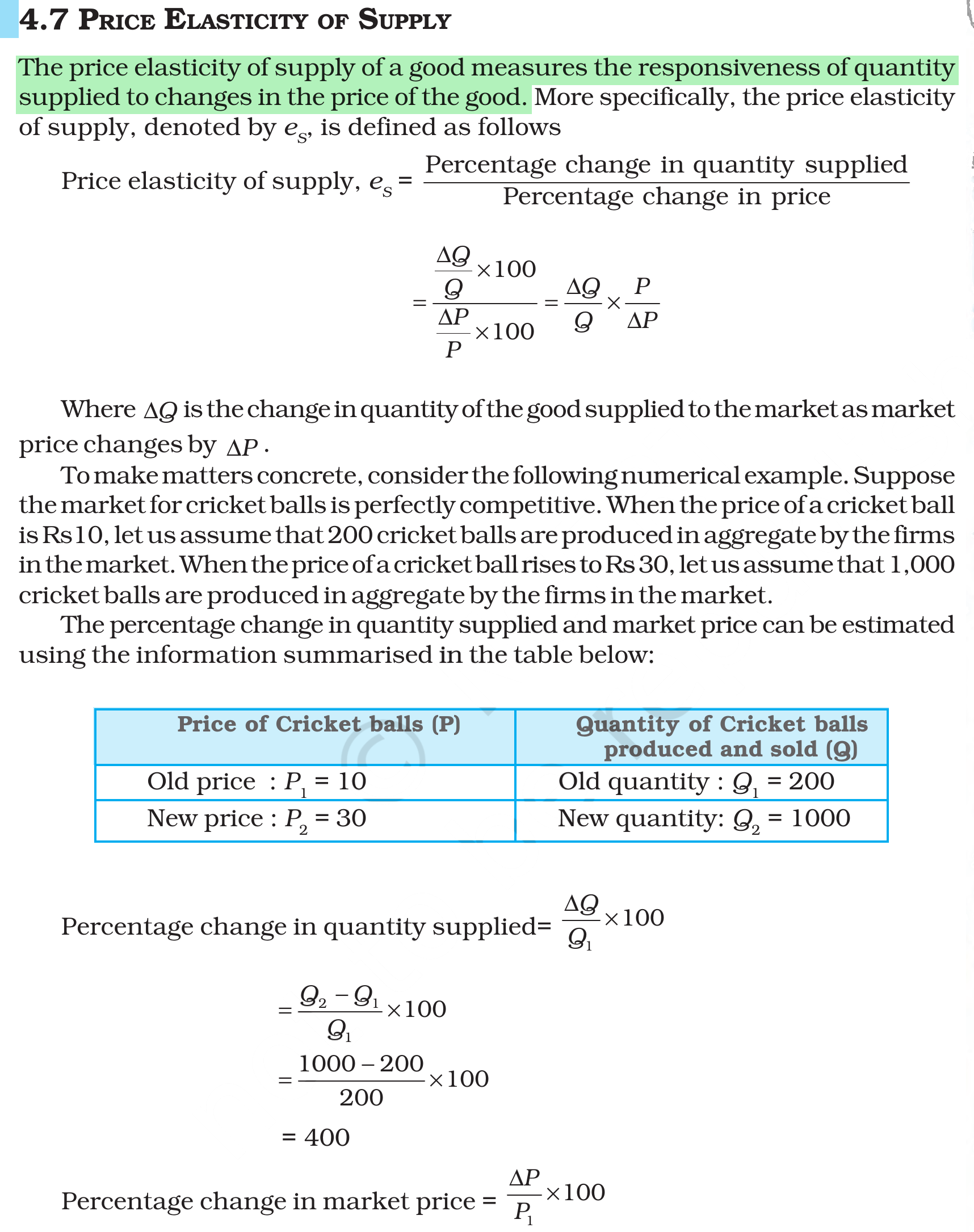
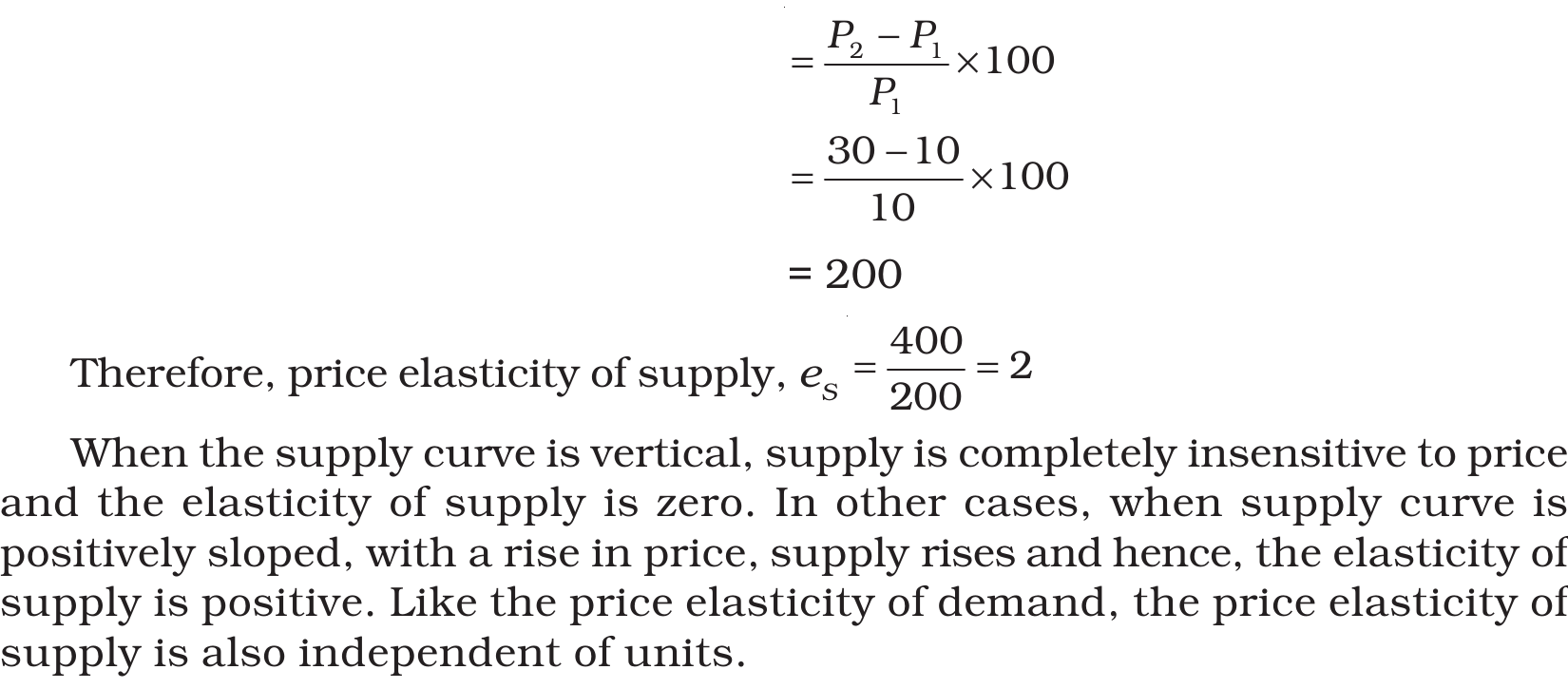
When the price of a ball is Rs 10 then 200 cricket balls are produced by the firm in the market. When the price of a ball rises to Rs 30 then 1000 cricket balls are produced in aggregate by the firm in the market. What will be the value of Price elasticity of supply?
Answer & explanation
Correct answer: option 2
The correct answer is Option (2) → 2
The price elasticity of supply measures how strongly sellers respond to a change in price. It divides the percentage change in quantity supplied by the percentage change in price, both measured from the initial values.
Given:
Initial price = Rs. 10, initial quantity supplied = 200 balls
New price = Rs. 30, new quantity supplied = 1,000 balls
Working it out:
eS = percentage change in quantity supplied ÷ percentage change in price
Change in quantity = 1,000 − 200 = 800, which is 800/200 × 100 = 400%
Change in price = 30 − 10 = 20, which is 20/10 × 100 = 200%
eS = 400 ÷ 200 = 2; being greater than 1, supply is elastic, as the quantity supplied rises by a larger percentage than the price — Option (2).
Note: This question is the worked example on price elasticity of supply in the Theory of the Firm under Perfect Competition chapter of the NCERT book (2025-26), with the same cricket balls and the same figures.
NCERT: Introductory Microeconomics — Chapter 4: The Theory of the Firm under Perfect Competition (2025-26)
|