
Homologous organs indicate:
Answer & explanation
Correct answer: option 2
The correct answer is Option (2) → Divergent evolution
Homologous organs have the same basic structure and the same origin, but they have been changed to do different work. The forelimbs of a whale, a bat, a cheetah and a human all have the same bones (humerus, radius, ulna, carpals, metacarpals and phalanges), yet they are used for swimming, flying, running and holding. The same structure has developed in different directions to suit different needs. This is divergent evolution, and homology points to common ancestry.
(1) Convergent evolution — Incorrect. This is the case for analogous organs. Different structures come to look alike and do the same work, as with the wings of a butterfly and of a bird. Homology is the opposite situation.
(2) Divergent evolution — Correct. A common ancestral structure has spread into different forms.
(3) Natural selection — Incorrect. This is the mechanism that makes some variants survive and reproduce better. It is not what homologous organs indicate. They indicate common ancestry.
(4) Random evolution — Incorrect. This is not a pattern of evolution described in NCERT. The structures have changed because they were adapted to different needs, not at random.
Note: A similar question was also asked in CUET (UG) 2026 on 20-05-2026 (Slot 2).
NCERT Extract:
What Are the Evidences for Evolution? – “… Hence, in these animals, the same structure developed along different directions due to adaptations to different needs. This is divergent evolution and these structures are homologous. Homology indicates common ancestry. Other examples are vertebrate hearts or brains. In plants also, the thorn and tendrils of Bougainvillea and Cucurbita represent homology (Figure 6.3a). Homology is based on divergent evolution whereas analogy refers to a situation exactly opposite.”
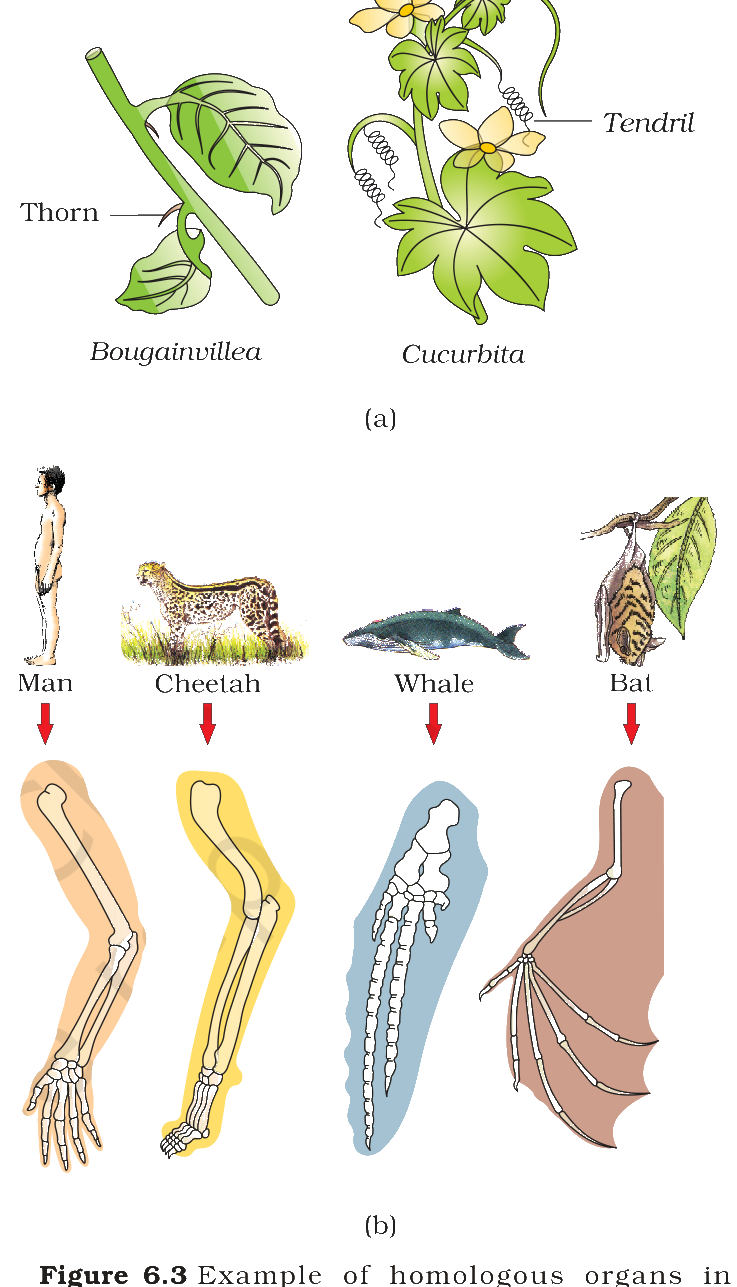
Figure 6.3 Example of homologous organs in (a) Plants and (b) Animals