
The figure shows the market for dollars in India under a flexible exchange rate. The supply curve shifts from S to S′.
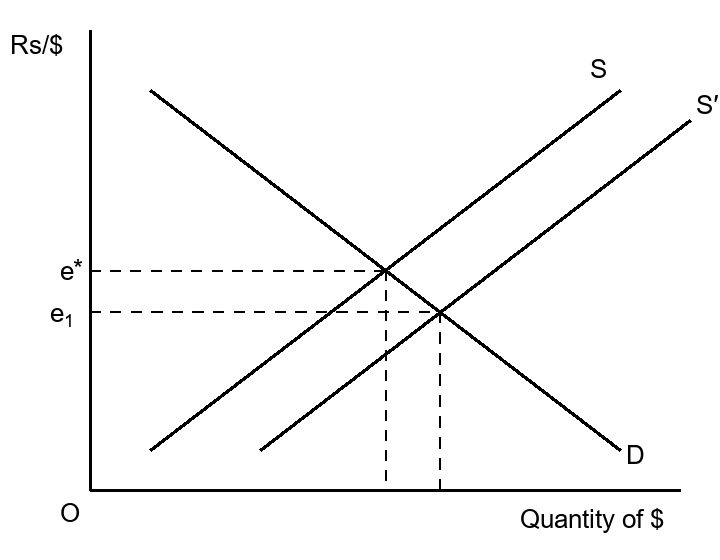
Which of the following could cause this shift, and what is its result?
Answer & explanation
Correct answer: option 2
The correct answer is Option (2) → A rise in India’s exports; the rupee appreciates
The supply of dollars comes from foreigners buying our exports, sending transfers or buying our assets. A rise in exports shifts the supply curve to the right, from S to S′.
The exchange rate falls from e* to e1, so fewer rupees buy one dollar. The rupee’s value has risen: it has appreciated.
Imports and buying foreign assets add to the demand for dollars, so they would shift D, not S.
NCERT (2026-27): “Supply of Foreign Exchange Foreign currency flows into the home country due to the following reasons: exports by a country lead to the purchase of its domestic goods and services by the foreigners; foreigners send gifts or make transfers; and, the assets of a home country are bought by the foreigners. …” “Flexible Exchange Rate … Similarly, in a flexible exchange rate regime, when the price of domestic currency (rupees) in terms of foreign currency (dollars) increases, it is called Appreciation of the domestic currency (rupees) in terms of foreign currency (dollars). This means that the value of rupees relative to dollar has risen and we need to pay fewer rupees in exchange for one dollar.” |