Match List-I with List-II:
| List-I Names | List-II Associations | ||
| (A) | Devaputra | (I) | Lake |
| (B) | Prayaga Prashasti | (II) | Kushana Kings |
| (C) | Sudarshana | (III) | Harishena |
| (D) | Rudradaman | (IV) | Shaka King |
Choose the correct answer from the options given below:
Answer & explanation
Correct answer: option 4
The correct answer is Option (4) → (A)-(II), (B)-(III), (C)-(I), (D)-(IV)
(A) Devaputra — this matches (II) Kushana Kings. Many Kushana rulers adopted the title devaputra, or “son of god”, possibly inspired by Chinese rulers who called themselves sons of heaven.
(B) Prayaga Prashasti — this matches (III) Harishena. The Prayaga Prashasti, also known as the Allahabad Pillar Inscription, was composed in Sanskrit by Harishena, the court poet of Samudragupta.
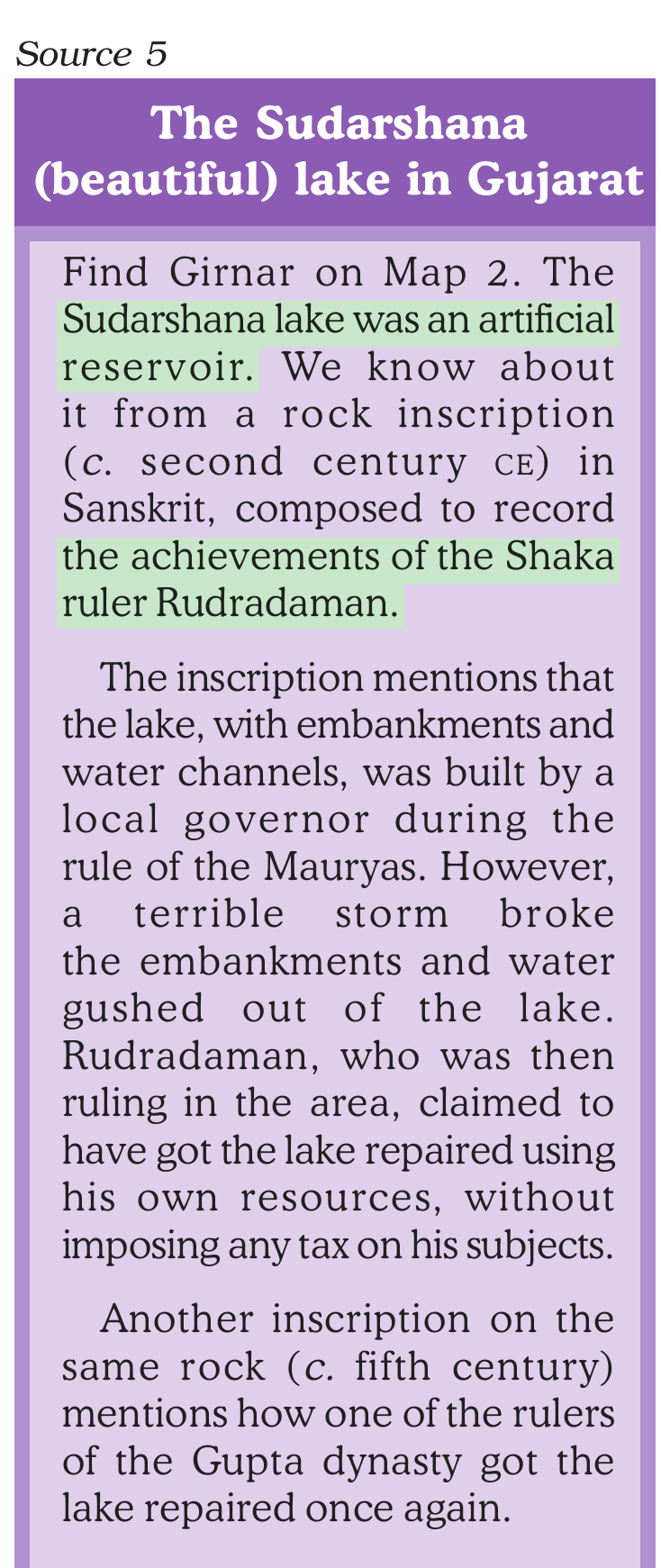
(C) Sudarshana — this matches (I) Lake. The Sudarshana (beautiful) lake in Gujarat was an artificial reservoir, with embankments and water channels.
(D) Rudradaman — this matches (IV) Shaka King. A rock inscription records the achievements of the Shaka ruler Rudradaman, who claimed to have got the Sudarshana lake repaired with his own resources.
NCERT (2026-27): “4.2 Divine kings … Many Kushana rulers also adopted the title devaputra, or ‘son of god’, possibly inspired by Chinese rulers who called themselves sons of heaven.… …The Prayaga Prashasti (also known as the Allahabad Pillar Inscription) composed in Sanskrit by Harishena, the court poet of Samudragupta, arguably the most powerful of the Gupta rulers (c. fourth century CE), is a case in point.…”
|