Match List-I with List-II.
| List-I | List-II |
| Health Infrastructure | Deal With |
| (A) Primary Health Centre | (I) Advanced equipments dealing with complicated health problems |
| (B) Secondary Health Centre | (II) Manned by single doctor, a nurse and limited quantity of medicine |
| (C) Tertiary Health Centre | (III) Better facility for surgery, x-ray, ECG etc |
| (D) AYUSH | (IV) Indian system of medicine |
Choose the correct answer from the options given below:
Answer & explanation
Correct answer: option 4
The correct answer is Option (4) → (A) - (II), (B) - (III), (C) - (I), (D) - (IV)
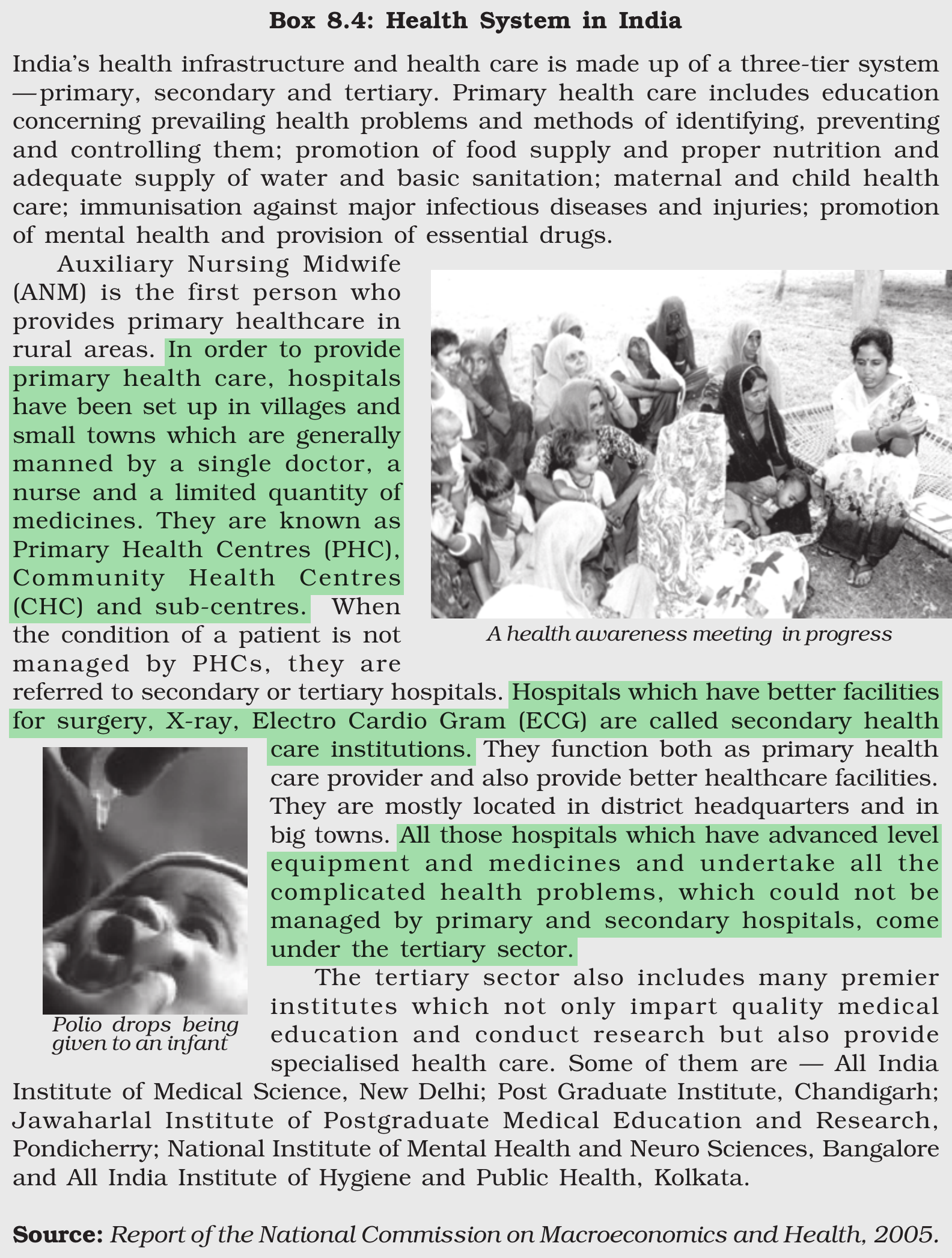
Hospitals in India work at three levels. A patient moves up a level when the lower one cannot manage the condition.
| List-I | List-II | Reason |
|---|---|---|
| (A) Primary Health Centre | (II) Manned by single doctor, a nurse and limited quantity of medicine | These hospitals in villages and small towns are the first level, generally run by one doctor and a nurse. |
| (B) Secondary Health Centre | (III) Better facility for surgery, x-ray, ECG etc | These hospitals have better facilities and are mostly in district headquarters and big towns. |
| (C) Tertiary Health Centre | (I) Advanced equipments dealing with complicated health problems | They take the complicated problems that the first two levels could not manage. |
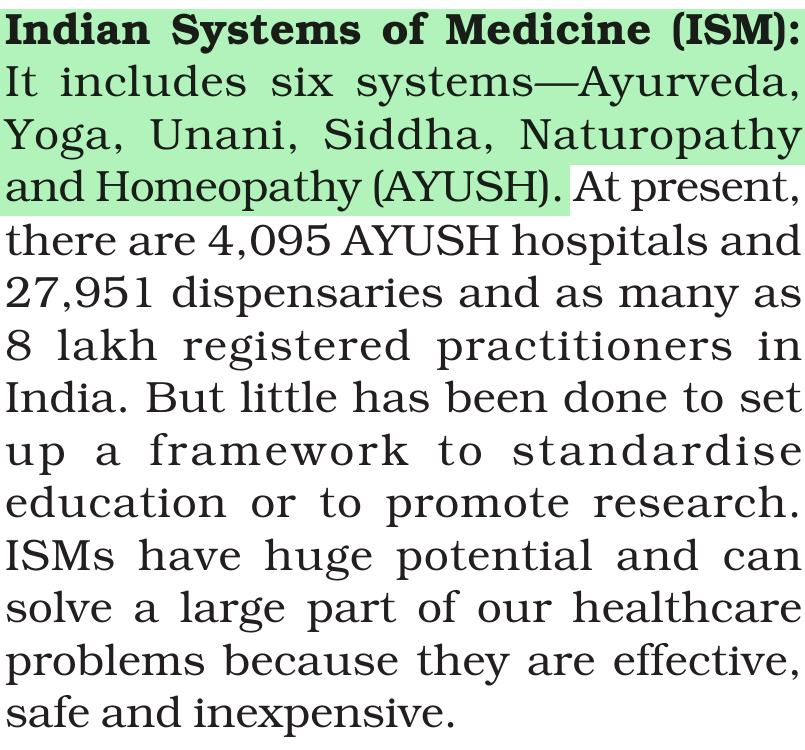
| (D) AYUSH | (IV) Indian system of medicine | It stands for Ayurveda, Yoga, Unani, Siddha, Naturopathy and Homeopathy. |
Note: This question is taken from the chapter ‘Infrastructure’ which was there in the pre-rationalised NCERT and has been deleted from subsequent editions of NCERT, including the NCERT book (2026-27). The chapter was also not in the CUET (UG) 2026 syllabus.
NCERT (Pre-rationalised): Indian Economic Development — Chapter 8: Infrastructure
|