Which of the following are included while calculating national income by expenditure method?
(A) Expenditure on single-use producer goods purchased by firms.
(B) Expenditure incurred by a private trust running an orphanage on the education of the children.
(C) Expenditure incurred by the government on building dams and bridges across the nation.
(D) Expenditure by foreigners on the final goods produced in the country.
Choose the correct answer from the options given below:
Answer & explanation
Correct answer: option 4
The correct answer is Option (4) → (B), (C) and (D) only
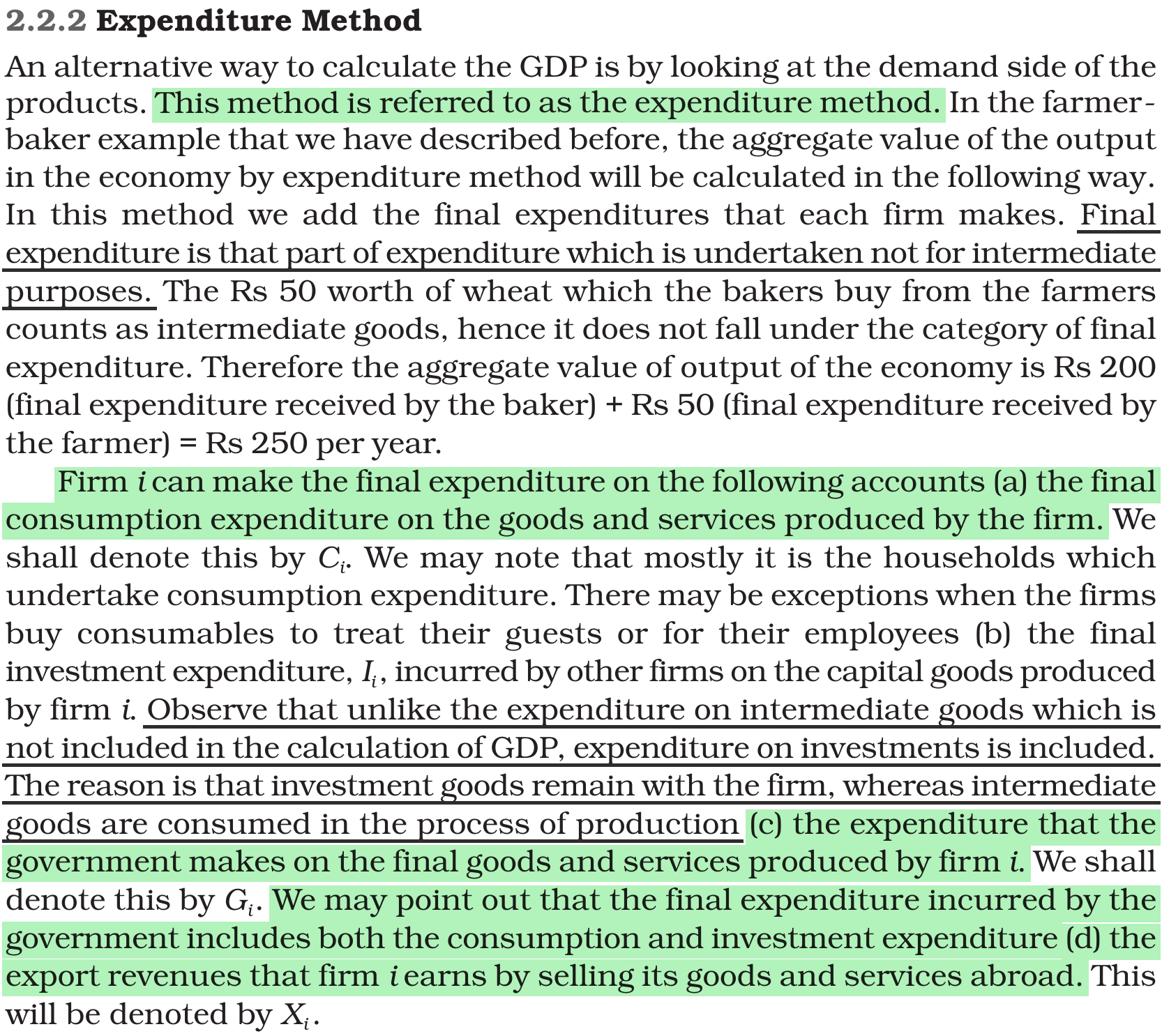
The expenditure method adds up all final expenditure on goods produced in the country: by households, firms, the government and foreigners. Spending on intermediate goods is left out.
(A) Expenditure on single-use producer goods purchased by firms. — Not included. Goods that are used up in one go, like raw materials, are intermediate goods. Their value is already in the final good, so adding them again would be double counting.
(B) Expenditure incurred by a private trust running an orphanage on the education of the children. — Included. The education is for the children’s own final use, and nothing is sold onward. So it is final consumption expenditure.
(C) Expenditure incurred by the government on building dams and bridges across the nation. — Included. Dams and bridges are durable goods used for many years, so this is final spending. It comes under government expenditure (G).
(D) Expenditure by foreigners on the final goods produced in the country. — Included. These are the country’s exports (X), and they are goods produced at home.
Note: None of the NCERT books (2026-27, 2025-26, 2023-24 or pre-rationalised) speaks of spending by a private trust or other non-profit body in national income. In national accounts, such spending is counted with private final consumption expenditure.
NCERT (2026-27): Introductory Macroeconomics — Chapter 2: National Income Accounting
|