Match List I with List II:
| List I | List II | ||
| (A) | Magan | (I) | Harappan region |
| (B) | Dilmun | (II) | Oman |
| (C) | Meluhha | (III) | Afghanistan |
| (D) | Shortughai | (IV) | Bahrain |
Choose the correct answer from the options given below:
Answer & explanation
Correct answer: option 4
The correct answer is Option (4) → A-II, B-IV, C-I, D-III
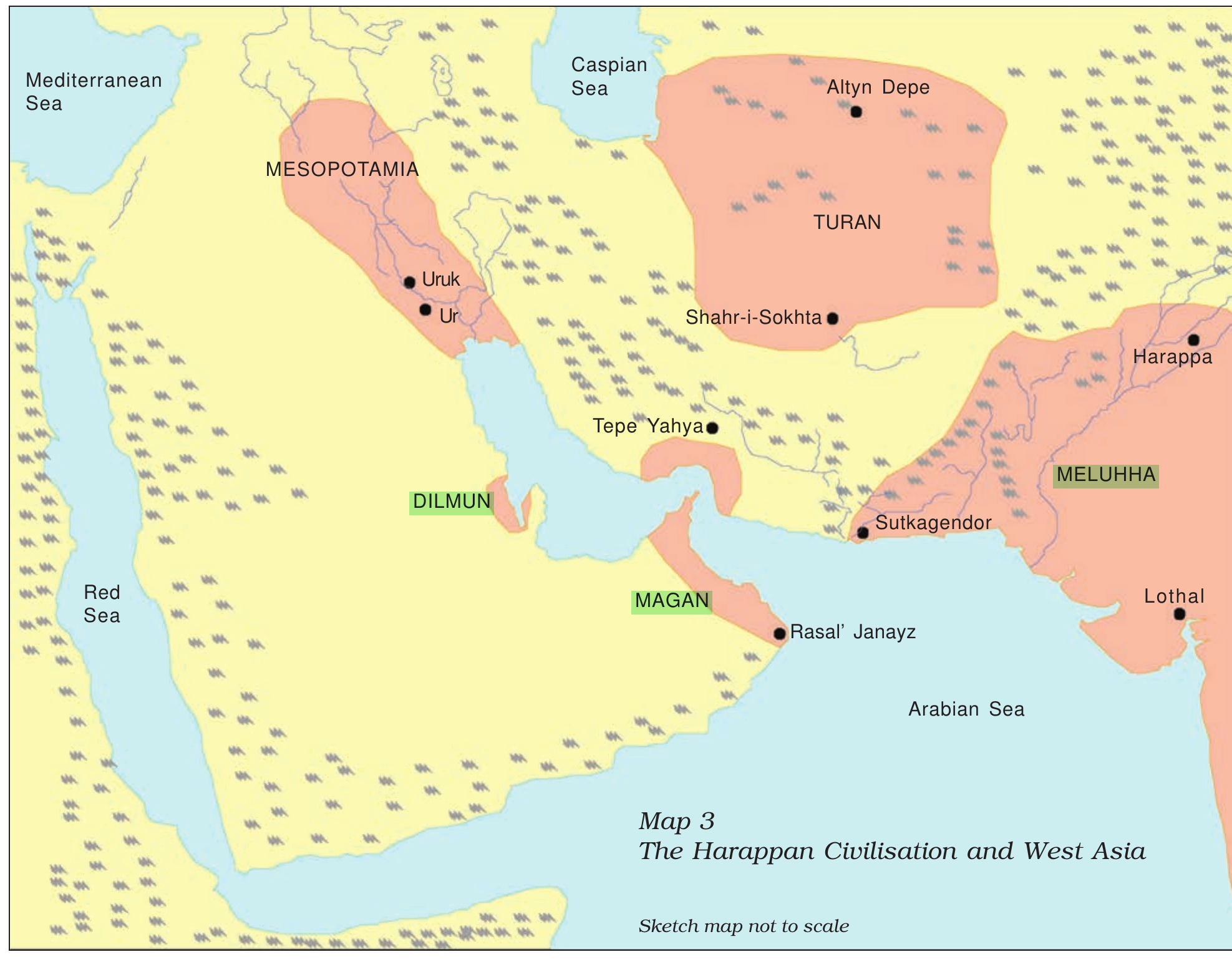
(A) Magan — this matches (II) Oman. Mesopotamian texts refer to copper coming from a region called Magan, perhaps a name for Oman.
(B) Dilmun — this matches (IV) Bahrain. The same texts mention contact with Dilmun, probably the island of Bahrain.
(C) Meluhha — this matches (I) Harappan region. They also mention Meluhha, possibly the Harappan region, and its products: carnelian, lapis lazuli, copper, gold and varieties of wood.
(D) Shortughai — this matches (III) Afghanistan. Traces of canals have been found at the Harappan site of Shortughai in Afghanistan.
NCERT (2026-27): “6.2 Contact with distant lands … Mesopotamian texts datable to the third millennium B C E refer to copper coming from a region called Magan, perhaps a name for Oman,… …Other archaeological finds suggestive of longdistance contacts include Harappan seals, weights, dice and beads. In this context, it is worth noting that Mesopotamian texts mention contact with regions named Dilmun (probably the island of Bahrain), Magan and Meluhha, possibly the Harappan region. They mention the products from Meluhha: carnelian, lapis lazuli, copper, gold, and varieties of wood.… 2.1 Agricultural technologies … Traces of canals have been found at the Harappan site of Shortughai in Afghanistan, but not in Punjab or Sind.…”
|