Consider the following statements about setting standards for control:
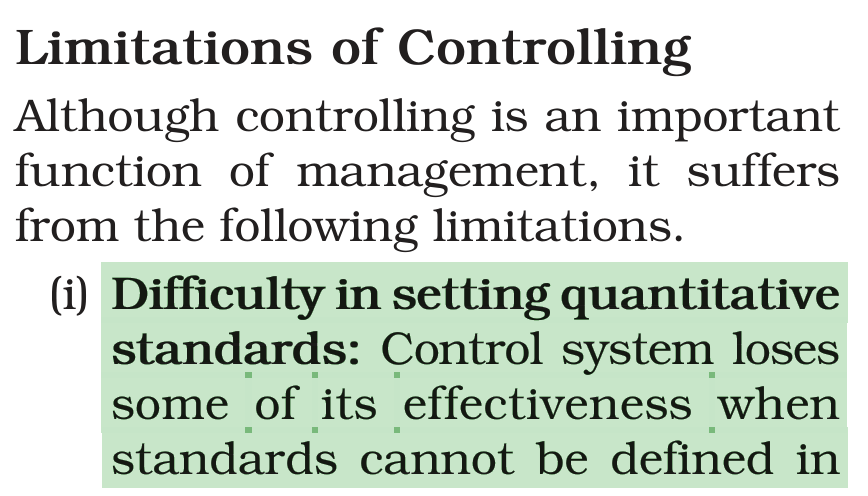
(A) It is not always possible for the management to set quantitative standards of performance.
(B) Difficulty in setting quantitative standards arises in areas such as product units produced and sold.
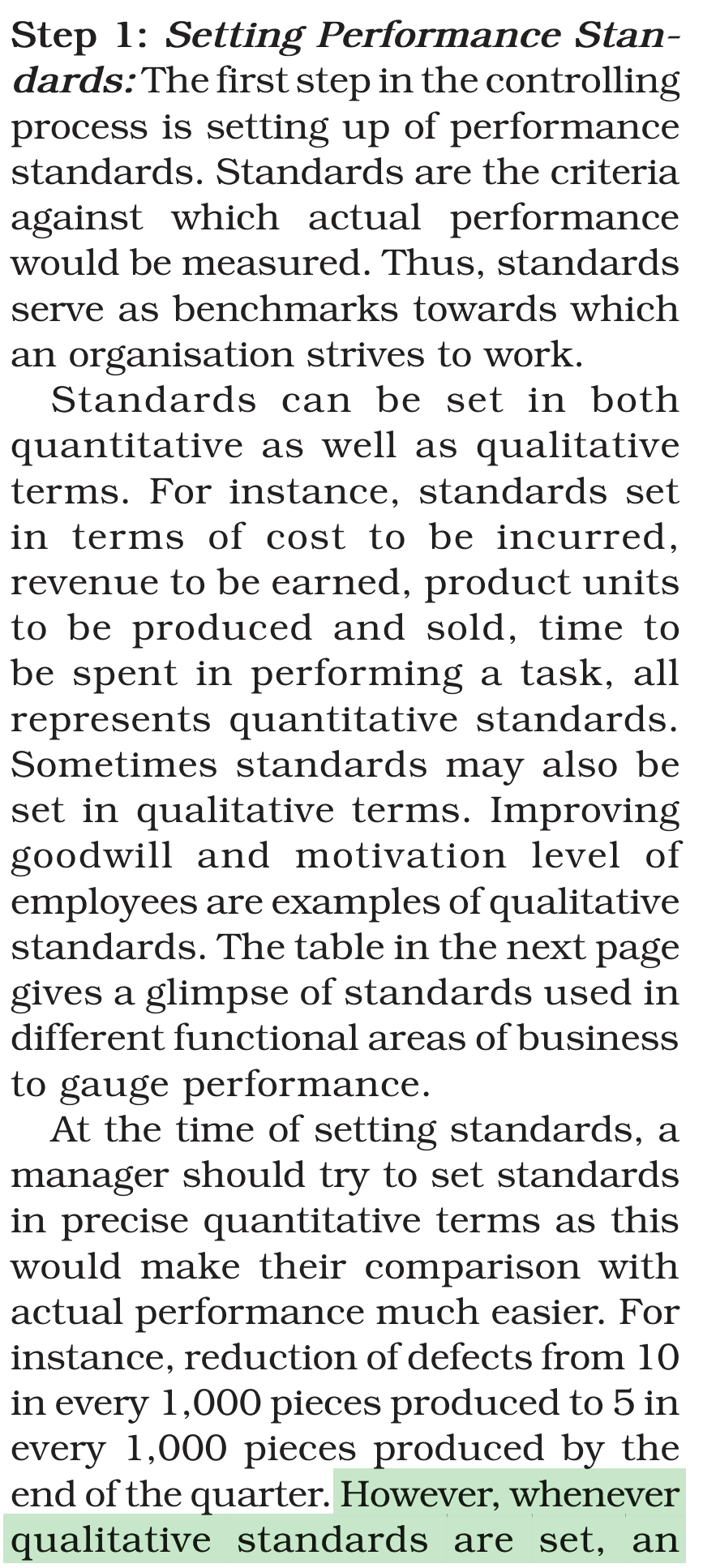
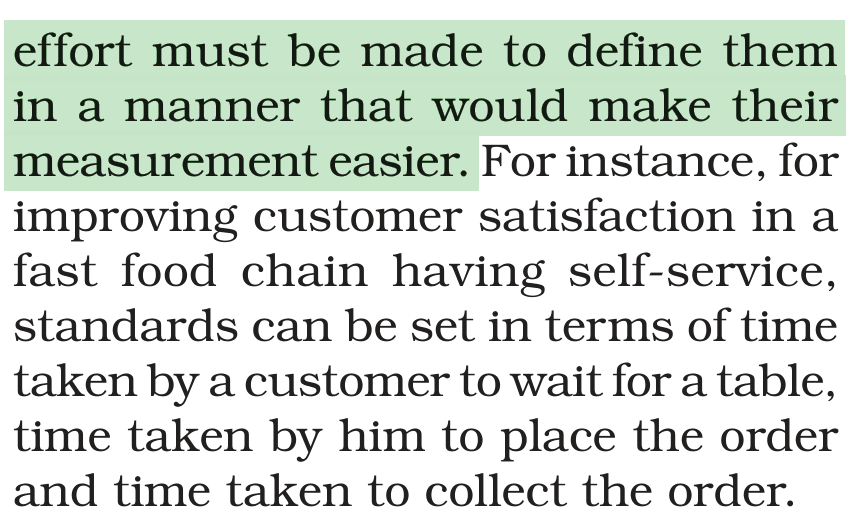
(C) Whenever qualitative standards are set, they should be defined in a manner that makes their measurement easier.
(D) Improving the motivation level of employees is an example of a quantitative standard.
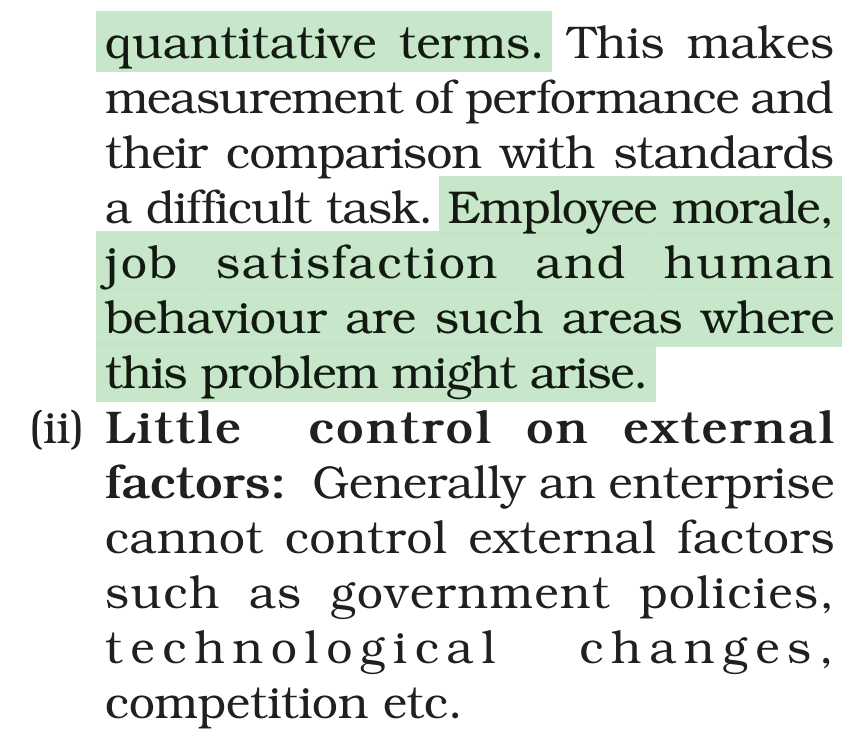
(E) Human behaviour is an area where the problem of setting quantitative standards might arise.
Which of the statements given above are correct?
Choose the correct answer from the options given below:
Answer & explanation
Correct answer: option 3
The correct answer is Option (3) → (A), (C) and (E) only
(A) It is not always possible for the management to set quantitative standards of performance. — Correct. Some areas cannot be put in numbers, so quantitative standards are not always possible. Control then loses some of its effectiveness.
(B) Difficulty in setting quantitative standards arises in areas such as product units produced and sold. — Incorrect. Product units produced and sold can be counted. They are an example of quantitative standards, where no difficulty arises.
(C) Whenever qualitative standards are set, they should be defined in a manner that makes their measurement easier. — Correct. A qualitative standard should be defined so that it can be measured easily. For example, customer satisfaction in a fast food chain can be judged by the time a customer waits.
(D) Improving the motivation level of employees is an example of a quantitative standard. — Incorrect. Improving the motivation level of employees cannot be counted. It is a qualitative standard.
(E) Human behaviour is an area where the problem of setting quantitative standards might arise. — Correct. Employee morale, job satisfaction and human behaviour are hard to put in numbers. So the problem arises here.
NCERT (2026-27 Edition): “Summary … • Controlling suffers from certain limitations also. An organisation has no control over external factors. The control system of an organisation may face resistance from its employees. Sometimes controlling turns out to be a costly affair, especially in case of small organisations. Moreover, it is not always possible for the management to set quantitative standards of performance in the absence of which controlling exercise loses some of its effectiveness.”
|