
Homologous organs support:
Answer & explanation
Correct answer: option 1
The correct answer is Option (1) → Divergent evolution
Homologous organs have the same basic structure but may do different jobs. The forelimbs of a whale, a bat, a cheetah and a human all have the same bones: humerus, radius, ulna, carpals, metacarpals and phalanges. Yet they are used for swimming, flying, running and holding. The same structure has developed in different directions to suit different needs. This is divergent evolution, and homology points to a common ancestor.
(1) Divergent evolution — Correct. A common structure that has diverged to do different jobs.
(2) Convergent evolution — Incorrect. It goes with analogous organs. Their function is the same, but their structure is different, as in the wings of a butterfly and of a bird. Analogy is the opposite of homology.
(3) Natural selection — Incorrect. It is the mechanism that favours the fitter forms. It is not the kind of evolution that homology shows.
(4) Co-evolution — Incorrect. It means two interacting species, such as a flower and its pollinator, changing together.
Note: A similar question was also asked in CUET (UG) 2026 on 26-05-2026 (Slot 2).
NCERT Extract:
What Are the Evidences for Evolution? – …
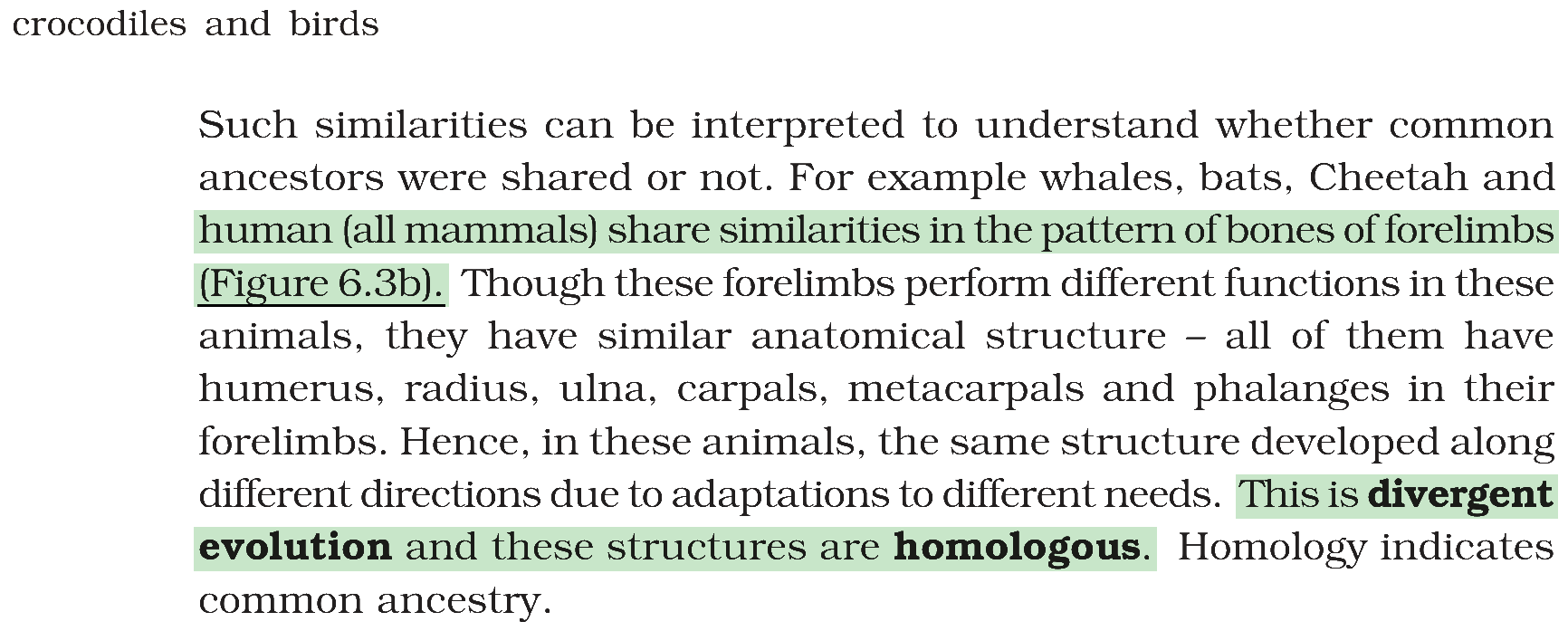
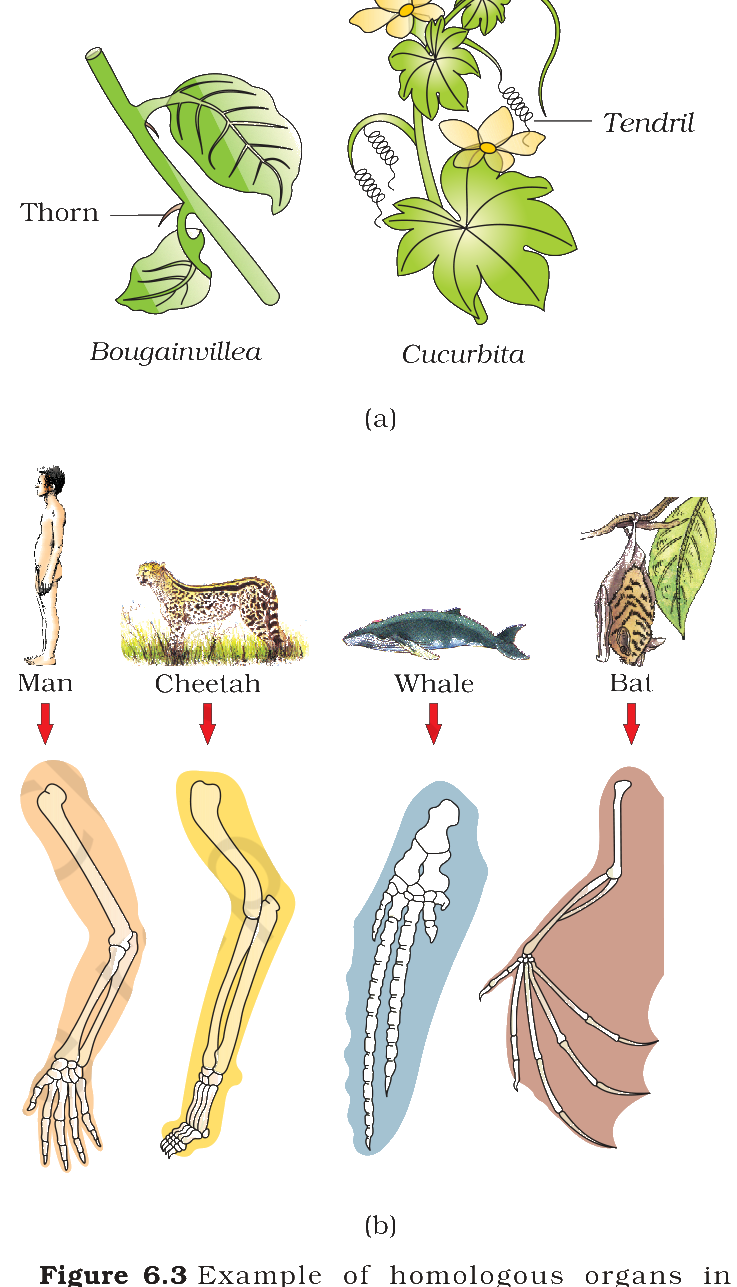
Figure 6.3 Example of homologous organs in (a) Plants and (b) Animals