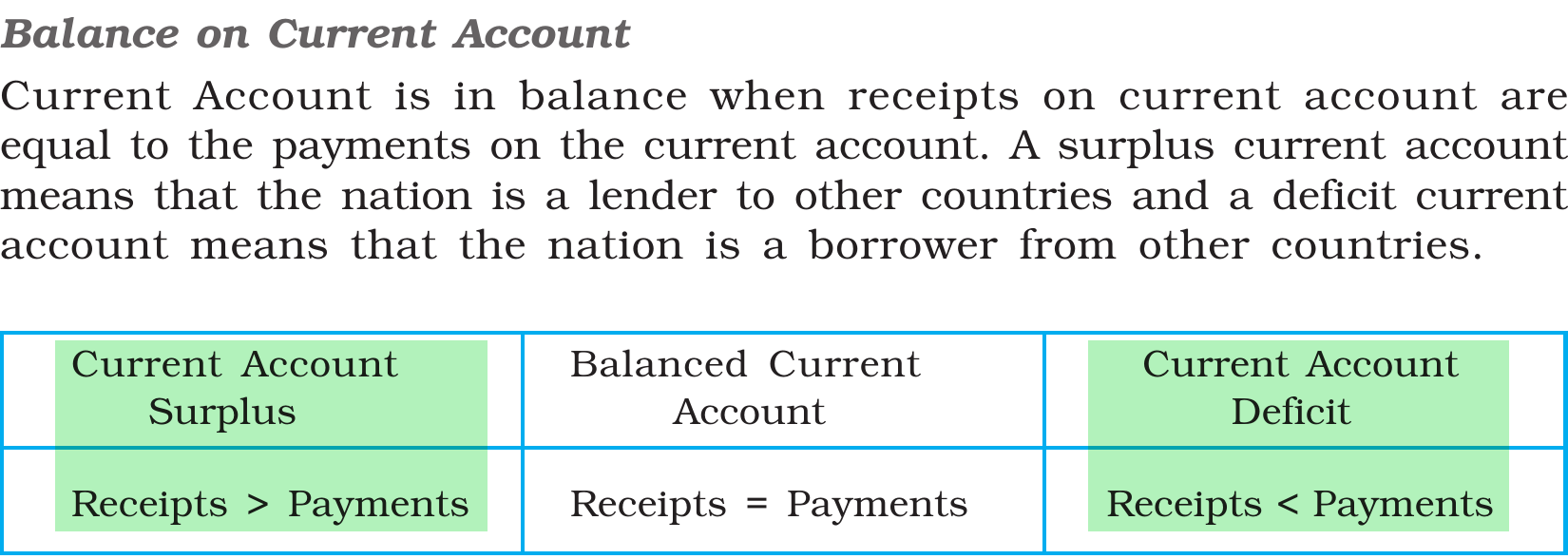
Match List-I with List-II
| List-I | List-II |
| (A) Receipts > Payments | (I) Balance of Payment Deficit |
| (B) Reserve change < 0 | (II) Current Account Deficit |
| (C) Receipts < payment | (III) Balance of Payment surplus |
| (D) Reserve change > 0 | (IV) Current Account surplus |
Choose the correct answer from the options given below:
Answer & explanation
Correct answer: option 1
The correct answer is Option (1) → A-IV, B-III, C-II, D-I
Receipts and payments decide the current account. The change in official reserves decides the balance of payments (BoP) as a whole. The reserve change is the entry that balances the account, so its sign is the opposite of the BoP balance.
| List-I | List-II | Reason |
|---|---|---|
| (A) Receipts > Payments | (IV) Current Account surplus | When receipts on the current account are more than payments, the current account is in surplus. |
| (B) Reserve change < 0 | (III) Balance of Payment surplus | A BoP surplus (BoP balance > 0) goes with a reserve change less than 0, the opposite sign. |
| (C) Receipts < payment | (II) Current Account Deficit | When receipts on the current account are less than payments, the current account is in deficit. |
| (D) Reserve change > 0 | (I) Balance of Payment Deficit | A BoP deficit (BoP balance < 0) goes with a reserve change more than 0, the opposite sign. |
NCERT (2026-27): Introductory Macroeconomics — Chapter 6: Open Economy Macroeconomics, balance of payments boxes
|